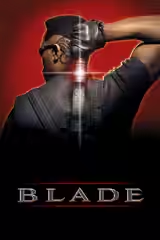
Most critics come down in favour, and the praise clusters in two places. The first is Wesley Snipes, whose physical, unsmiling turn as the half-vampire hunter is credited with defining the character. The second is Stephen Norrington’s action, above all the opening nightclub sequence with its blood sprinklers, which nearly everyone singles out as the high point. The more recent reviews go further and treat the film as an early template for the modern superhero picture, dated but still sharp.
The reservations cluster on the script and the finale. Several critics find the plotting thin and the second half increasingly silly, and more than one calls the CGI in the closing stretch ropy enough to spoil what came before. The spread is wide, and the dissent is mostly contemporary: The Hollywood Reporter and the Los Angeles Times in 1998 find it gruesome or brainless, and Time Out later faults the storytelling. The later reviews are kinder.
G
The Guardian
27 October 2021 · Peter Bradshaw
80*
The critic praises the 1998 film's energetic, macabre action-horror style and Wesley Snipes' charismatic performance as the daywalker vampire hunter. They single out its propulsive energy, inventive set pieces like the blood-sprinkler scene and early bullet-time effect, and its raw edge compared to later entries in the series.
The critic finds the film slick and energetic fun overall, with effective action sequences and a strong central performance from Wesley Snipes. They single out director Stephen Norrington's energetic handling of fights, stunts and the opening nightclub scene for praise, while noting some unevenness and ropy CGI.
The film delivers high visual style and visceral imagery drawn from comic-book aesthetics, ranking it among recent New Line efforts like Dark City. Wesley Snipes brings vulnerability and emotional edge to the half-vampire hero in a story built around spectacular action set pieces rather than coherent plotting.
The hyperkinetic comic-book adaptation drenches nearly every scene in fake blood while delivering cartoonish futuristic action-adventure thrills. It succeeds as low-rent Batman-style escapism driven by Wesley Snipes' enigmatic hero battling vampires intent on a hematological holocaust.
The slick but increasingly silly film struggles to blend horror, superhero fantasy, and straight action into a satisfying whole, with hyperbolic sequences and a strong opening club setpiece undermined by sloppy plotting and thin characters. Production values and techno edge provide some diversion, but it lacks sustained excitement or emotional depth.
The critic calls it a brainless action flick that appeals mainly to kids and comic fans, with bim-bam-boom energy, colorful bloody images, and a plot that does not test anyone's smarts.
The critic finds the film excessively gory and unpleasant, calling for an end to the vampire genre's reworkings. They single out the lack of subtlety and restraint from director Stephen Norrington as a key flaw amid its gruesome effects.
The film attempts to redefine cutting-edge horror as a techno-vampire story but is undermined by weak storytelling and flashy, video-game visuals. Too little attention is paid to the hero's inner conflict, while the villains dominate the best scenes amid messy fights and excessive exposition.
The critic hails the 1998 film as a groundbreaking superhero movie that introduced a new, visceral style of combat and aesthetic to the genre. It singles out Wesley Snipes' authentic martial arts performance and the film's influential dark, futuristic look and sound for particular praise.
The critic celebrates the 1998 film as a pivotal and enduring superhero movie that proved a Black-led comic-book adaptation could succeed commercially and critically. He singles out its inventive, over-the-top action sequences and memorable character moments for particular praise.
The critic finds the film dated in its techno style and leather aesthetics but still thrilling and cool as an early proof-of-concept for modern superhero movies, praising its violence and introduction of the character.
The critic argues that Wesley Snipes’s performance defines the character and sets an unmatched standard for future portrayals in any MCU reboot. He highlights Snipes’s commanding physicality, stoic presence, and stylish action choreography as the film’s standout elements.
The 1998 Blade is quite good overall and charmingly of the 1990s, with horror-tinged action, style, and a straightforward narrative that introduces the charismatic title character effectively; it satisfies as a bloody, hard-edged superhero movie.
The critic praises the film's visceral action, inventive stunts, strong opening nightclub sequence, and Wesley Snipes' perfect embodiment of the daywalker, along with solid supporting turns especially from Stephen Dorff. The ending is singled out as a letdown due to over-the-top CGI silliness that undermines the earlier momentum.
Ordered by the weight we give each publication, then by score. Scores are normalised to 100; * means inferred from an unrated review. Summaries are ours, not quotations; follow the links for the reviews themselves. How we rate