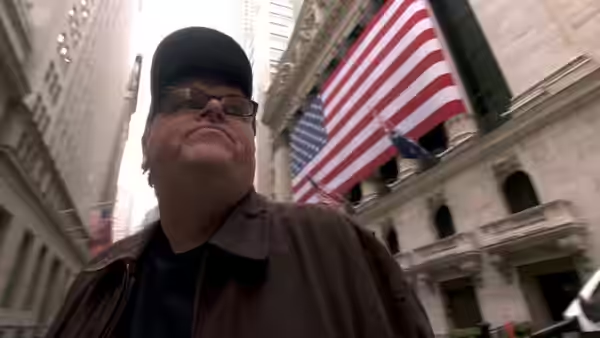
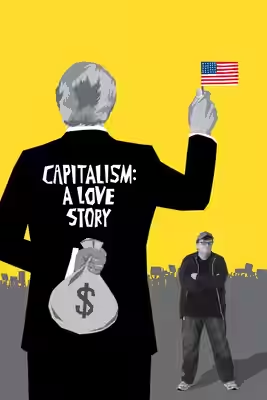
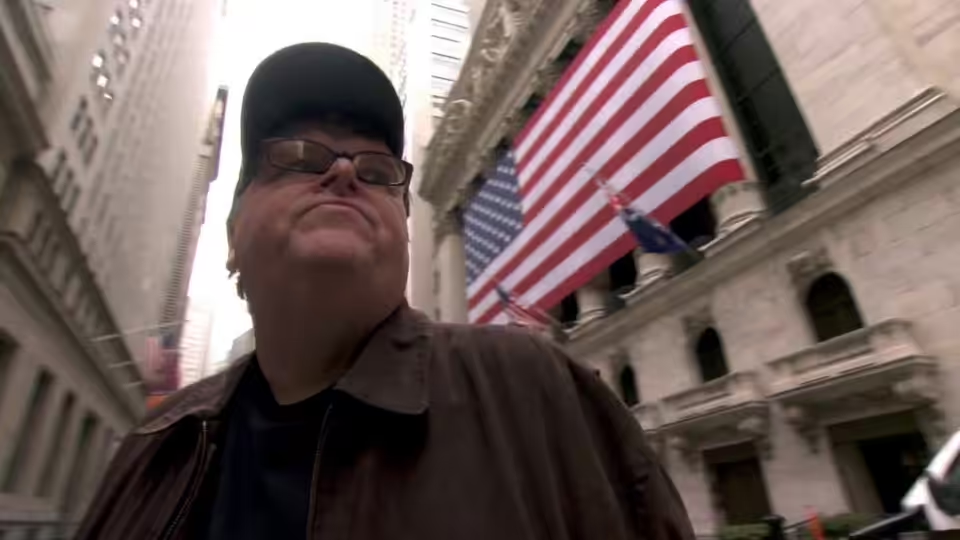
Michael Moore in a cap and glasses stands beneath a large American flag
Film review

Capitalism: A Love Story

2009 · Directed by Michael Moore · 2h 08m · MPA R

In a sentenceTwo hours of a man in a baseball cap trying to arrest Wall Street with a roll of tape

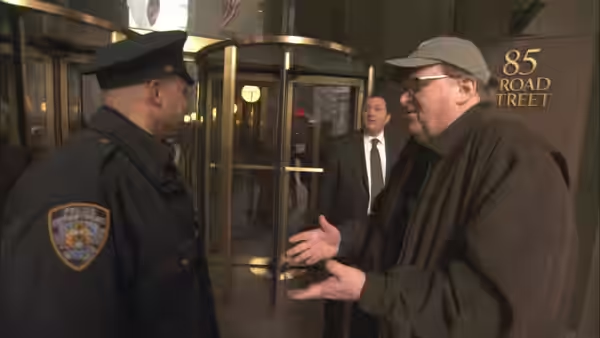
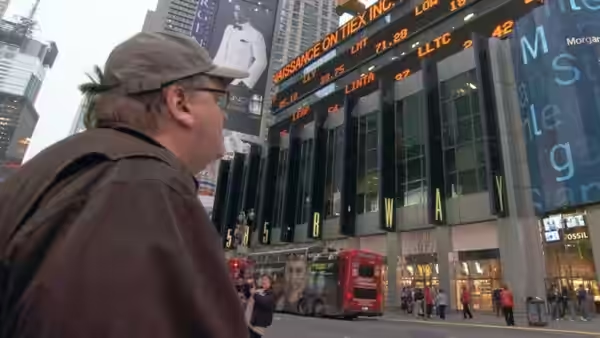
Michael Moore begins in Flint, Michigan, where his father worked for General Motors and where he first turned a camera on what happens when the money leaves town. This time the money has left the whole country. It is the autumn of 2008, Wall Street has been handed seven hundred billion dollars, and families in Illinois and Florida are filming their own evictions. Moore tours repossessed flats with Peter Zalewski, a Florida broker who trades under the name Condo Vultures, listens to Congresswoman Marcy Kaptur tell constituents to stay put in their foreclosed homes, and asks Elizabeth Warren where the bailout money went. Then he drives to New York with an empty sack and a roll of crime scene tape.

Fi1m review

Michael Moore’s film about the 2008 crash is angry, often funny and moving whenever it sits with the people who lost their homes and jobs. As a case against capitalism it heads off in six directions and comes back with a plea to vote.

Michael Moore has spent twenty years going after one company, one industry or one president at a time. Here he goes after the whole arrangement. Capitalism: A Love Story opens with security camera footage of bank robberies, then a schools film about the fall of Rome, and then gets to the point: the crash of 2008, the seven hundred billion dollar bailout that followed, and the people at the bottom who paid for both. It runs 128 minutes and is angry for all of them. The anger carries it, and it stops him finishing a thought.

It works when Moore stops talking and lets people speak. A family in Illinois films the sheriff’s deputies arriving to put them out of their house, and the picture shakes because the man holding the camera is shaking. Peter Zalewski, a broker who trades as Condo Vultures, shows Moore round repossessed flats in Florida. Airline pilots explain that they qualify for food stamps. A widow reads a letter showing that her husband’s employer had taken out a life insurance policy on him and collected when he died, under a practice the industry calls dead peasant insurance. We were angry at that, properly angry, and Moore had done nothing clever to get us there. He held the camera still and let her read.

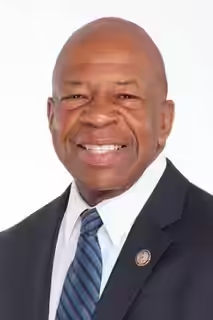
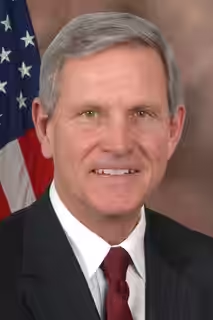
The Washington material is better than his usual. Marcy Kaptur, a congresswoman from Ohio, tells her constituents on camera to stay in their foreclosed homes and make the banks prove they own the paperwork. Elijah Cummings describes the bailout vote with the tiredness of a man who lost it. Elizabeth Warren, asked where the money went, admits she does not know, which is more damning than anything Moore stages. Bernie Sanders gets a few minutes on what he means by socialism, and Wallace Shawn turns up, improbably, to explain what free enterprise was meant to be.

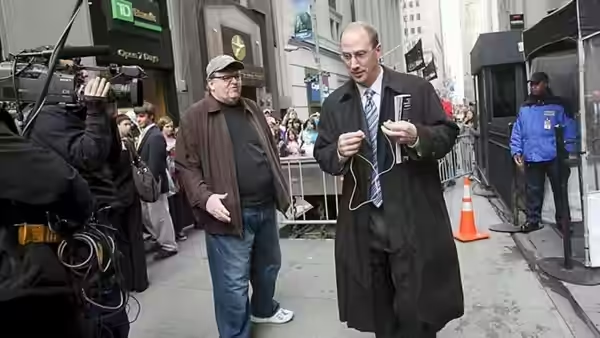
The stunts are the same stunts. Moore drives to Wall Street with an empty sack and asks for the money back on behalf of the American people; he wraps the Stock Exchange in yellow crime scene tape; he is politely turned away by security guards. Twenty years ago this was the film. Now it is a break between segments. The archive is more skilful: Bill Clinton signing away the wall between high street banking and the casino kind, and a reel of Franklin Roosevelt, visibly ill, reading out a second bill of rights that never became law. Jeff Gibbs’s score sits under it without fuss and never competes.

The trouble is the charge. The title says capitalism is the defendant, and for stretches the film means it, with Catholic priests calling the system a sin. Then the defendant changes. For twenty minutes it is Ronald Reagan and deregulation; then greed, then a few bad laws, and by the end the remedy on offer is Roosevelt, a factory occupation in Chicago and the word democracy said with feeling. Moore films the election of Barack Obama as the night things turned, and by the time the film reached British cinemas on 26 February 2010 that hope looked dated. We wanted to know what he would put in capitalism’s place. He tells us to vote.

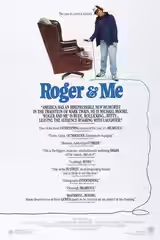
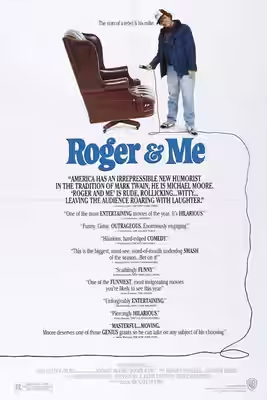
Against his own record it is the loosest thing he has made. Roger & Me (1989) had one town, one company and a chairman who would not come to the door. Fahrenheit 9/11 (2004) was scattershot too, but it kept returning to one question. This one has a dozen. It is also an odd film to be lectured by from a British sofa, since much of what it presents as scandal, that health or housing might be a public matter, is the ordinary arrangement here.

See it for the people. The widow, the pilots, the family with the shaking camera, Kaptur telling her voters to stay put: those scenes are as good as anything Moore has shot. Watch at home, where you can skip the lectures, though we suspect you will not, because he is hard to switch off even when he is wrong. It carries a 12A.

Critical consensus AI synthesised

58
Positive
9
Mixed
5
Negative
6

Most critics come out warm but not far past it. The agreement is that Moore is back on home ground: the film is called punchy, timely and entertaining, and the praise clusters on his stunts, his comic timing and the interviews with families losing their homes, which several reviews find moving. The archive footage of Roosevelt and the passages on dead peasant insurance and derivatives are singled out as the moments where the film explains something rather than shouts it. Variety goes furthest, calling it one of his best.

The reservations cluster on the argument. Even friendly reviews say the film is scattershot, offers no coherent account of the crash or the bailout, and proposes nothing beyond faith in democracy and, several note, in Obama. The spread is wide. Sight and Sound dismisses it as didactic agit-prop without analytic rigour, Slant as a simplistic diatribe, and two British reviews written after the 2010 release find it already old news.

Evening Standard
10 April 2012
80*

Moore returns to his roots with a timely, fiery exposé of corporate greed and its human cost, full of shocking revelations and moral fury. The film succeeds as an entertaining, inflammatory call to arms even if it is preachy and archive-heavy.

Read the full review →
Variety
5 September 2009 · festival review · Leslie Felperin
80*

By returning to his roots, Moore turns in one of his best films, skewering the banking industry and explaining the meltdown accessibly; it has plenty to annoy critics but delivers a pugnacious, upbeat message despite some sentimentality.

Read the full review →
RogerEbert.com
30 September 2009 · Roger Ebert
75*

The film speaks eloquently at times through archival footage of FDR and revelations about corporate practices like dead peasant insurance and derivatives, but Moore's message is sometimes unclear and he offers no clear solutions beyond faith in democracy.

Read the full review →
Los Angeles Times
23 September 2009 · Kenneth Turan
70*

Moore picks a timely big subject and retains his provocateur skills and comedic instincts, but the scattershot approach means the film is the sum of its parts; it reveals him as a New Deal Democrat rather than a socialist.

Read the full review →
The Guardian
25 February 2010 · Peter Bradshaw
70*

Moore's punchy, entertaining documentary takes on bankers and the bailout with his familiar mix of stunts, revelations and victim interviews. The critic is won over by the energy, wit and pertinence despite familiar format and omissions.

Read the full review →
The Hollywood Reporter
6 September 2009 · festival review · The Associated Press
70*

The critic finds the film a typical Moore work that is funny and over-the-top with dubious documentation but makes strong points about corporate America's impact on ordinary people. It is less focused than his earlier films due to its abstract subject but features genuinely moving personal stories.

Read the full review →

Straight answers AI written, from our review

Is Capitalism: A Love Story worth watching?
Capitalism: A Love Story is worth watching for the people Michael Moore films losing their homes and jobs, not for its case against capitalism, and we scored it 56. The eviction footage, the pilots on food stamps and the widow reading the insurance letter are as good as anything he has shot. The argument wanders and ends with a plea to vote.
How long is Capitalism: A Love Story, and what is it rated?
Capitalism: A Love Story runs 2h 08m and is rated R by the MPA in the US. It is a documentary and history film.
Where can I watch Capitalism: A Love Story in the US?
Capitalism: A Love Story is streaming on Tubi, The Roku Channel and Amazon Prime Video in the US, and it is also available to rent from Apple TV and Amazon Prime Video from $3.99. It leaves Tubi on 1 October. Availability is checked daily; the links above go straight to each service.
How violent or frightening is Capitalism: A Love Story, and is it suitable for children?
Capitalism: A Love Story is a documentary with no violence to speak of, certified 12A in the UK, and the distress in it comes from watching real families put out of their houses by sheriff's deputies. There is nothing frightening for teenagers, though younger children will find two hours of bailouts and foreclosures hard going. Adults angry about 2008 are the audience.
How does Capitalism: A Love Story compare to Roger & Me?
Capitalism: A Love Story is the looser film: Roger & Me had one town, one company and a chairman who would not come to the door, and its grip on the argument is tighter. The later film has a dozen defendants and better Washington interviews. Start with Roger & Me for Moore at his most focused; come to this one for the people, not the thesis.
What should I watch after Capitalism: A Love Story?
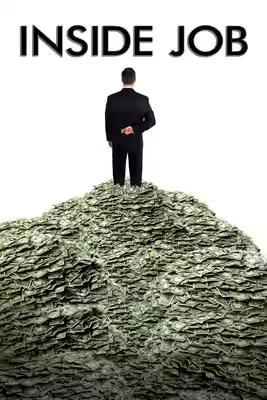
After Capitalism: A Love Story, try Roger & Me (1989, Fi1m 78): Moore’s first film: one town, one company, and a tighter grip on the argument. Then Inside Job (2010, Fi1m 82): The same crash explained patiently, with the bankers interviewed rather than ambushed; and Margin Call (2011, Fi1m 82): One long night inside a bank as it decides who will pay for its mistake.

Cast

If you liked this, try…

  1. Roger & Me (1989, Fi1m 78)Moore’s first film: one town, one company, and a tighter grip on the argument.

  2. Inside Job (2010, Fi1m 82)The same crash explained patiently, with the bankers interviewed rather than ambushed.

  3. The Take (2004) · not reviewed yetArgentine workers occupy their shuttered factories; the alternative Moore only gestures at.

  4. Margin Call (2011, Fi1m 82)One long night inside a bank as it decides who will pay for its mistake.

  5. Harlan County, USA (1976, Fi1m 88)A Kentucky miners’ strike filmed from the picket line, with no stunts needed.

Free account

Know what to watch tonight

Two lists that know where things are streaming, collections you can share, your own score beside ours, and Discover that remembers what you have seen.

  • Want to see, sorted by what is streaming now
  • Seen, with your score out of ten
  • No adverts, ever