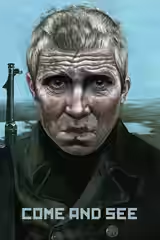
Twelve of the thirteen reviews are positive, and many rank it among the war films they most admire. The praise gathers around Aleksei Kravchenko as the boy who joins the partisans, and above all the long close-ups on his face, which several critics single out. The sound design is the other recurring point, especially a bombing raid heard through the boy’s damaged ears as a high whine. Critics also agree on the film’s manner, a mixture of lyrical images and expressionist nightmare that most find disorienting on purpose.
The spread is narrow, and both reservations date from the 1987 American release. The New York Times finds the village-burning sequence powerful but the surrounding intrusions heavy-handed, with the boy serving as a vehicle for the director rather than a character. The Los Angeles Times admires the hallucinatory sweep but faults the ending as sentimental and the ageing makeup as too obvious. Later reviews raise neither complaint.