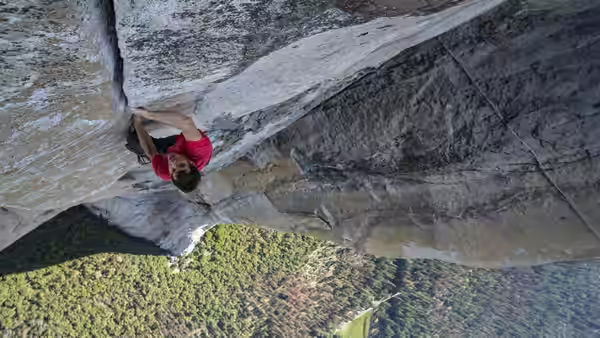
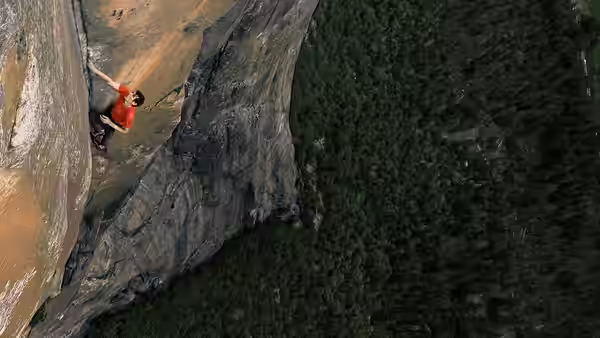
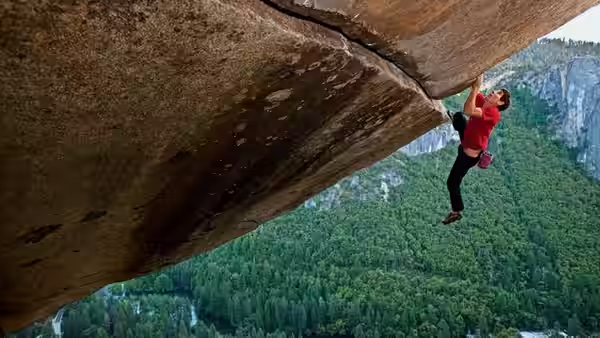
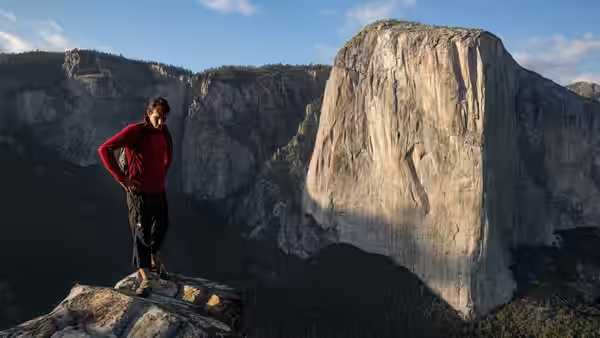
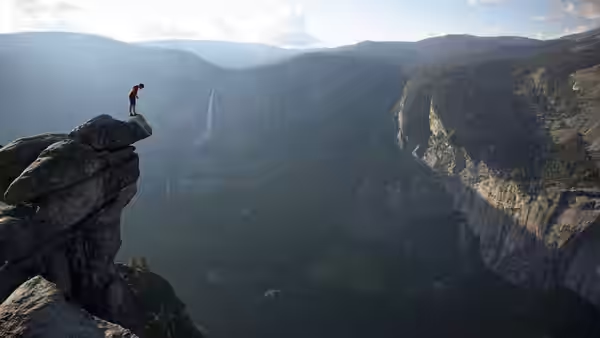
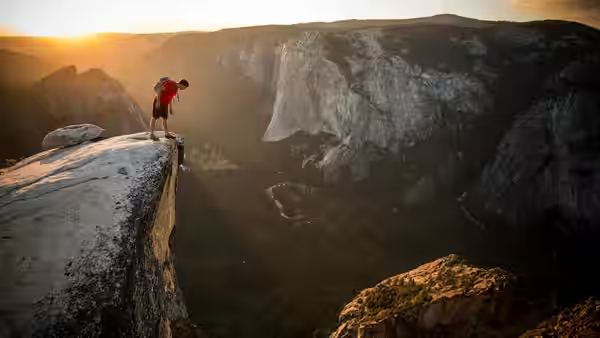
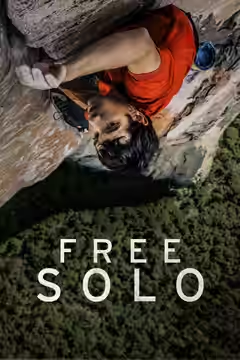
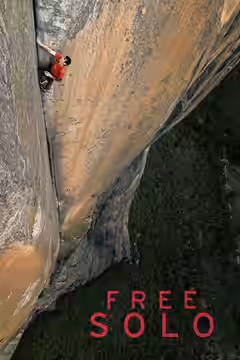
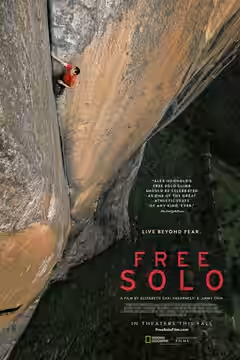
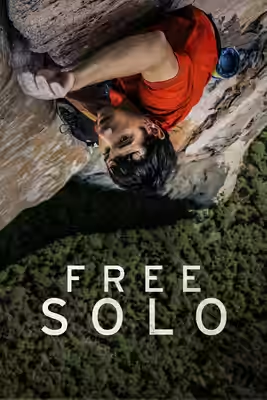
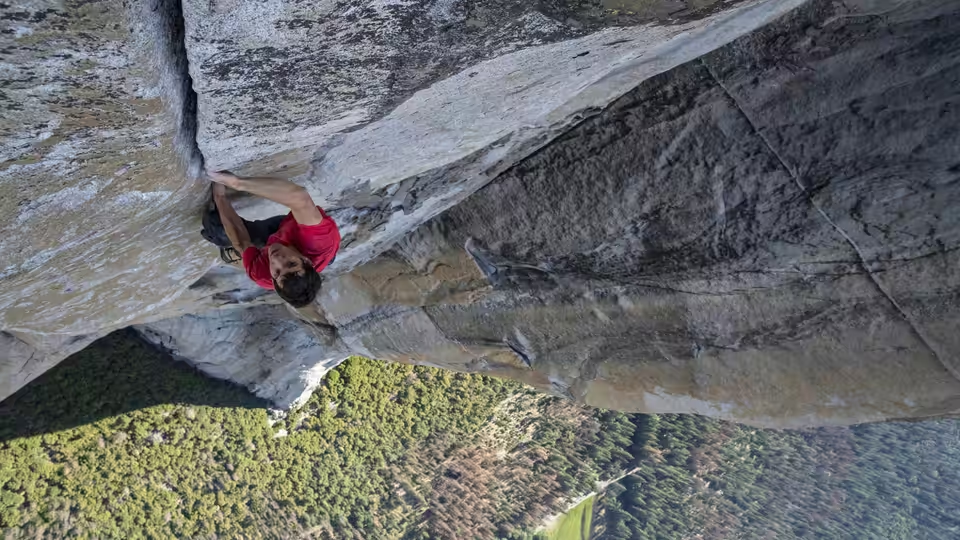
Alex Honnold free soloing a sheer granite wall high above a valley
Film review

Free Solo

2018 · Directed by Jimmy Chin, Elizabeth Chai Vasarhelyi · 1h 40m · MPA PG-13

In a sentenceEighty minutes of a man explaining why he is not frightened, then twenty in which we were

Alex Honnold wants to climb El Capitan, the 3,000-foot granite wall in Yosemite, without a rope or any protection. Nobody has done it. Directors Jimmy Chin and Elizabeth Chai Vasarhelyi follow him through two years of preparation. He lives in a van, rehearses the route on ropes with his friend Tommy Caldwell, and lets a scanner look at the part of his brain that should register fear. His girlfriend, Sanni McCandless, moves into the van and wonders aloud where she fits. Chin and his crew, climbers themselves, rig cameras on the wall and argue about whether filming him will change his odds, and what they will do if he falls.

Plays from YouTube when you press play; nothing loads from them until then.

Fi1m review

Chin and Vasarhelyi have filmed something that should not have been filmable, and the final stretch on the wall is as frightening as anything we have watched in years. The hour of preparation around it is honest but thinner than the film thinks.

Alex Honnold wants to climb El Capitan, the 3,000-foot granite wall in Yosemite, without a rope. Nobody has done it. Jimmy Chin and Elizabeth Chai Vasarhelyi follow him through two years of preparation, and their film is two things at once: a record of the attempt, and a record of the crew arguing about whether recording it is decent. It is superb at the first. It is more interesting at the second than we expected. It is least sure of itself when it tries to explain the man.

Honnold is an odd subject and the film knows it. He lives in a van, eats supper straight from the pan, and talks about the possibility of his own death the way other people talk about a long drive. The directors put him in an MRI scanner and a scientist tells him that the part of his brain that registers fear barely responds. They interview his mother, Dierdre Wolownick, about his childhood. These scenes are honest and they are also thin; the film keeps asking why and settling for the first answer it is given, and Honnold is far more revealing when he is simply chalking his hands.

Sanni McCandless has the hardest part in it. She is Honnold’s girlfriend, she moves into the van, and the film treats her, more or less openly, as the variable in the equation. He is hurt twice during the preparation, both times on a rope, and the film lets the question of whether happiness makes a climber careless hang in the air over her. She is funnier and clearer-eyed than that framing allows, and there is a conversation in a car where she asks him a plain question about her place in his life and gets an answer we found hard to hear. We wanted more of her and less of the film’s theory about her.

Tommy Caldwell, a climber of Honnold’s standing, is the film’s conscience. He rehearses the route with him on ropes, pitch by pitch, and he is the one person on screen who speaks about the odds as a colleague rather than a fan. The route has a section high on the wall called the Boulder Problem, a sequence of small holds that ends in a karate kick across a gap, and the film returns to it again and again until we could see it with our eyes closed. That repetition is Bob Eisenhardt’s best decision as editor. By the time Honnold reaches it without a rope, we know precisely what a wrong foot means.

Around them stand the crew: Chin, Mikey Schaefer, Cheyne Lempe and others, professional climbers with cameras, who are also his friends. The film shows them working out where to hang so that they cannot be seen, whether a lens at his shoulder changes his odds, and what they will do if he falls. Older climbers, Peter Croft and Mark Synnott, sit in the valley and worry aloud. Some critics have found this self-regarding. We found it the most truthful part of the film, because the crew’s problem is also the audience’s problem. We paid to watch this. We are on the rope too.

The climb itself takes the final twenty minutes, and it is as frightening as anything we have sat through. Schaefer, Clair Popkin and Chin shoot it from cameras rigged on the wall and from long lenses in the meadow below, so that Honnold is at one moment a pair of hands on a fingernail of rock and at the next a red dot on a grey wall the size of a city. Eisenhardt cuts between the wall and Schaefer at his monitor on the valley floor, who at one point turns away because he cannot watch. Neither could we, quite. We watched his feet, then his fingers, then the meadow, and at the Boulder Problem we realised we had stopped breathing. Marco Beltrami’s score presses where it does not need to; the pictures had already done the work.

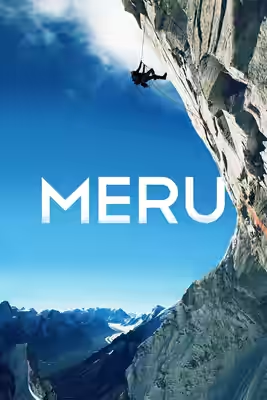
We will not say how the last minutes end. Many readers will already know, and the film has the good sense to make the knowing irrelevant. Chin and Vasarhelyi’s Meru (2015) was about three men and a mountain; this is a smaller and stranger film, about one man, a wall and the people who love him standing at the bottom looking up. See it on the largest screen you can, and not on a phone, where the wall shrinks to nothing and the point goes with it. Certificate 12A, 100 minutes, and about twenty of them you will want to spend behind your hands.
Critical consensus AI synthesised

79
Positive
12
Mixed
0
Negative
1

Most critics are won over: twelve of the thirteen reviews are positive, and the praise gathers in the same place. The climbing footage, shot by a crew hanging beside Honnold on El Capitan, is credited with producing real terror and suspense, and the final ascent is repeatedly named as the film’s strongest passage. Several reviews also welcome the decision to widen the frame, to Honnold’s childhood, to his relationship with his girlfriend, and to the crew’s own qualms about filming a man who might fall.

The reservations are scattered and mostly mild. The AV Club finds the attempts to explain Honnold’s motives pat; Variety thinks him a cold presence and the build-up overlong; The Hollywood Reporter senses a brand exercise beneath the vertigo. The spread is narrow but for one outlier: Little White Lies objects to the film’s celebration of masculine individualism and its casting of Honnold’s partner as an obstacle.

The Times
14 December 2018 · ★★★★★ · Kevin Maher
100

The critic calls it a Trojan horse documentary that reveals much about human ambition, praising its psychological depth on Honnold's childhood and relationships alongside the thrilling climbing footage.

Read the full review →
Financial Times
12 December 2018 · Nigel Andrews
90*

The review finds the film terrifying, dumbfounding and enthralling, singling out the powerful suspense of the climb and the way it draws viewers into the ordeal of facing extinction.

Read the full review →
IndieWire
1 September 2018 · festival review · David Ehrlich
90*

The stomach-churning documentary rivetingly captures one man's quest to climb El Capitan bare-handed. The filmmaking team delivers a strong, queasily effective look at the preparation and the climb itself.

Read the full review →
Los Angeles Times
27 September 2018 · Kenneth Turan
85*

Both intimate and expansive, the documentary is beautifully calculated to take your breath away with its account of Honnold's spectacular feat. Turan singles out the meticulous planning and personal glimpses of the climber's relationship with his girlfriend as elements that deepen the film beyond pure spectacle.

Read the full review →
The Guardian
13 December 2018 · Peter Bradshaw
85*

The critic finds the documentary visually staggering and jaw-dropping, praising its intimate look at Honnold's intense free solo climb of El Capitan and the ethical dilemmas faced by the crew filming it.

Read the full review →
Empire
13 December 2018 · Helen O'Hara
80*

The critic highlights the vertiginous, breathtaking climbing cinematography and the exploration of Alex Honnold's motivations, personality and relationships that heighten the sense of risk and tension in this passionate documentary.

Read the full review →

Straight answers AI written, from our review

Is Free Solo worth watching?
Free Solo is worth watching, and we scored it 82. The final twenty minutes, in which Alex Honnold climbs El Capitan without a rope, are as frightening as anything we have sat through in years. The hour of preparation around them is honest but thinner than the film thinks, and it suits anyone who can bear to watch a man risk his life on purpose.
How long is Free Solo, and what is it rated?
Free Solo runs 1h 40m and is rated PG-13 by the MPA in the US. It is a documentary and adventure film.
Where can I watch Free Solo in the US?
Free Solo is streaming on Hulu and Disney+ in the US, and it is also available to rent from Amazon Prime Video and Apple TV from $3.99. Availability is checked daily; the links above go straight to each service.
How violent or frightening is Free Solo, and is it suitable for children?
Free Solo is a 12A documentary with no violence, but the closing climb is intensely frightening: one man on a 3,000-foot wall with nothing to catch him, and we found we had stopped breathing. There is no blood on screen; the fear comes from what could happen. Older children who understand the stakes will cope, and anyone with a fear of heights should think twice.
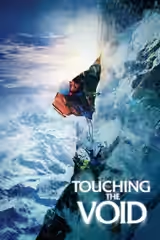
How does Free Solo compare to Touching the Void?
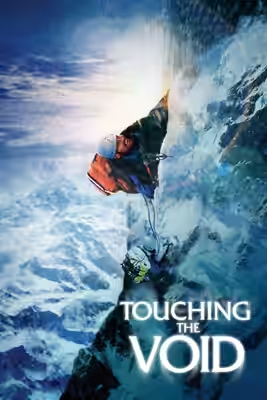
Free Solo films a dangerous climb as it happens, while Touching the Void reconstructs one that went wrong, told by the two Britons who survived it. Ours is the more frightening of the two, because the outcome is unfolding in front of the cameras; Macdonald's is the calmer and better-built story. Choose Free Solo for suspense, Touching the Void for the account of survival.
What should I watch after Free Solo?
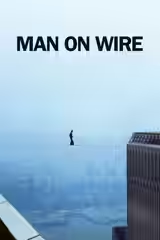
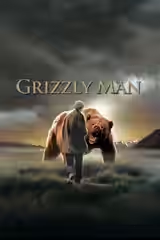
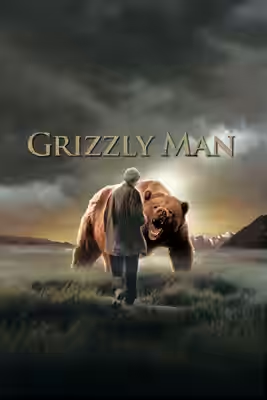
After Free Solo, try Touching the Void (2003, Fi1m 87): Two Britons on a Peruvian mountain and a rope that had to be cut; told with terrible calm. Then Man on Wire (2008, Fi1m 90): A tightrope between the Twin Towers, built like a heist film and just as tense; and Grizzly Man (2005, Fi1m 85): Herzog on a man who loved bears more than his own safety; a sadder cousin to Honnold.

Cast

Awards

Academy Awards, 2019

Won
Best Documentary Feature Film

If you liked this, try…

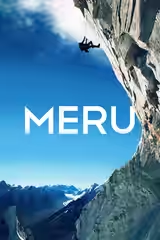
  1. Meru (2015) · not reviewed yetChin and Vasarhelyi’s earlier film: three climbers, one Himalayan peak, and the cost of trying again.

  2. Touching the Void (2003, Fi1m 87)Two Britons on a Peruvian mountain and a rope that had to be cut; told with terrible calm.

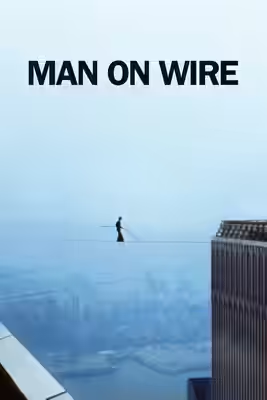
  3. Man on Wire (2008, Fi1m 90)A tightrope between the Twin Towers, built like a heist film and just as tense.

  4. Grizzly Man (2005, Fi1m 85)Herzog on a man who loved bears more than his own safety; a sadder cousin to Honnold.

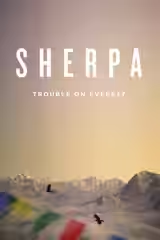
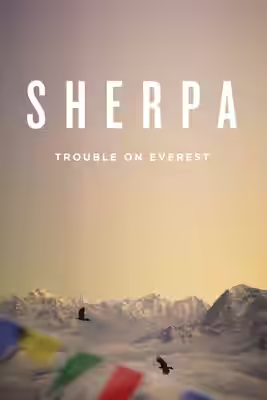
  5. Sherpa (2015, Fi1m 82)Everest from the side of the people who carry the ropes, after a season of disaster.

Free account

Know what to watch tonight

Two lists that know where things are streaming, collections you can share, your own score beside ours, and Discover that remembers what you have seen.

  • Want to see, sorted by what is streaming now
  • Seen, with your score out of ten
  • No adverts, ever