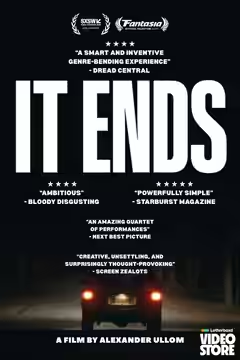
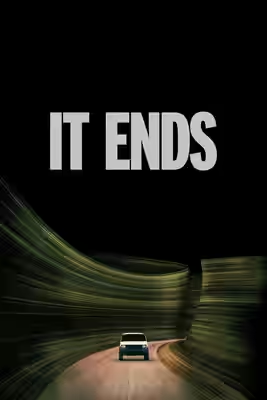
Alexander Ullom’s first film puts four friends on a road that does not end and gets an hour of real dread out of a car and some headlights. Then it keeps going, and dread thins into repetition. Worth an evening if you can forgive that.
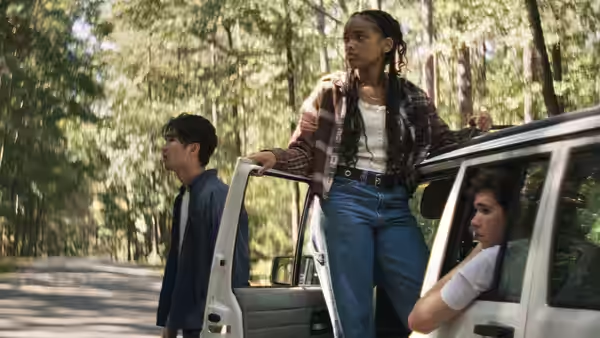
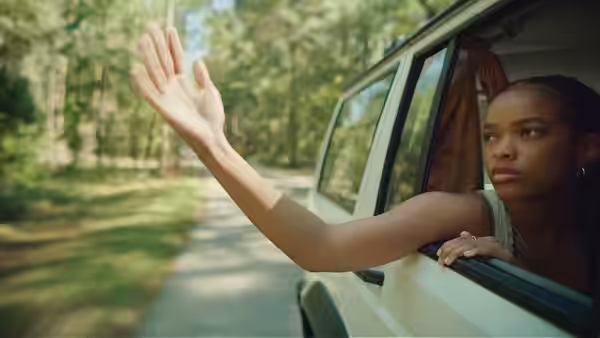
Four friends are in a car. James (Phinehas Yoon), Day (Akira Jackson), Fisher (Noah Toth) and Tyler (Mitchell Cole) are at the age where college runs out and nothing obvious replaces it, and they talk the way people that age talk, which is to say about everything except that. Then they take a wrong turn. The road does not end. There is no exit, no turning, no town, and the longer they drive the clearer it becomes that driving is all there is.
That is the whole of It Ends, and Alexander Ullom, who wrote, directed and edited it as his first feature on almost no money, is right to think it is enough for a film. It is a good idea, handled with more patience than most debuts manage, and it is about twenty minutes too long. We would rather have that problem than the other one.
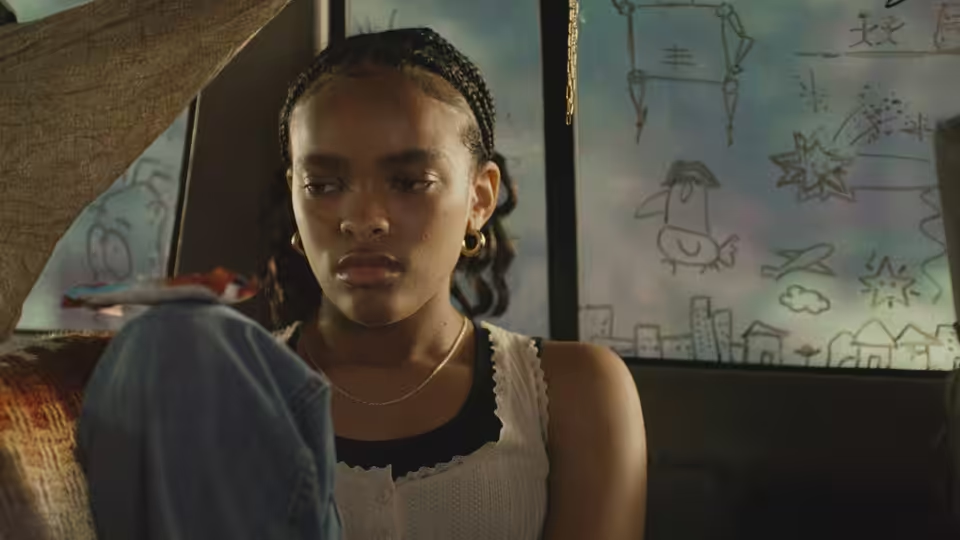
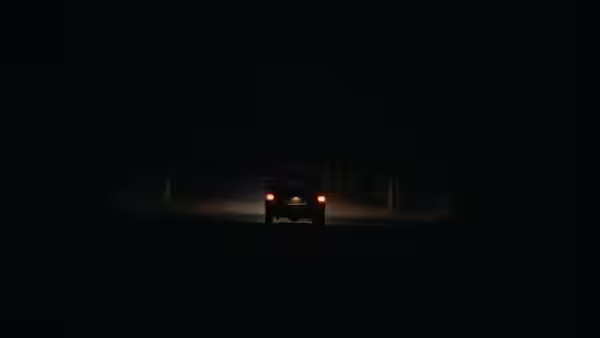
The car is the set. Carrie Carusone, who produced the film with Evan Barber and designed it as well, makes it look like a place people have sat in for too long, which is the only thing it needed to look like. Jazleana Jones and Evan Draper share the cinematography, and their job is mostly faces lit from the dashboard and a strip of tarmac lit from the headlights. They do it well. The world beyond the beam is simply not there, and after a while we stopped expecting it to be. Matthew Robert Cooper’s score is used sparingly, and the engine does much of the work a score would.
Ullom’s script gets the four across quickly, through ordinary car talk, and the talk is good: funny in the first twenty minutes, then funny in a way nobody in the car is enjoying. Yoon gives James a stubbornness that reads as leadership until it does not. Jackson’s Day is the one who notices things first and says them last. Toth’s Fisher has the film’s most human thread, a mother (Jenny Doyle) who is heard and never seen, and Toth plays every exchange with her as though it might be the last. Cole’s Tyler is the joker, and Cole is wise enough to let the jokes get worse. They are unknowns, and they hold the frame.
We were frightened, properly, around the half-hour mark, and by nothing more than a road carrying on when it should have stopped. It is the dream where the corridor lengthens as you run, and Ullom has the nerve to let it lengthen slowly, without a jump or a face at the window to let us off. Then, somewhere past the hour, we were bored, and then cross about being bored, because the film had earned better. The road is endless; the film does not have to be. There are encounters along the way, with a lost man (Ian Weir) among others, that we will not describe, and they sharpen things for a few minutes each before the car pulls away and the same conversation starts again. The repetition is deliberate. We felt it anyway.
The people are the casualty. Ullom establishes his four with real economy and then does not take them much further; by the end we knew how each of them would react to bad news and little else. As editor he is disciplined shot to shot and less so scene to scene, and a version of this film at sixty minutes would lose nothing we would miss. At 89 minutes it is not long, but it feels longer.
The road horror has an honourable history, from The Twilight Zone to Dead End, and Ullom knows it. What he adds is a generation’s particular dread about the years after education, when the map runs out. Most critics have been warmer than us, and a few have been a great deal warmer. We understand the enthusiasm for a first film made with this little that looks and sounds this assured. We wanted it to go somewhere, and it is a fair reply that not going anywhere is the subject.
Watch it late, with the lights off, and not the night before a long drive.