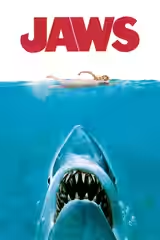
The reviews are almost unanimous. Most critics call it a near-flawless piece of suspense, and the praise clusters around Spielberg’s direction, above all his decision to keep the shark out of sight and build dread from reaction shots and empty water. The three lead performances, Robert Shaw’s Quint most often, and John Williams’ score come up in nearly every notice, along with the drinking-and-scars scene as the film’s centre. Several critics also credit the film with inventing the summer blockbuster.
The spread is narrow. Only one review dissents: the Los Angeles Times, in 1975, finds the film coarse and exploitative, too reliant on gruesome attacks, and objects to its PG rating. Collider admires it as a thriller but ends up rooting for the shark, unhappy at what the film did to the reputation of real ones. A few of the older notices are cooler, calling it cracking entertainment rather than anything more, but nobody else calls it a failure.
R
Radio Times
★★★★★ · Alan Jones
100
The critic hails it as the scariest sea saga ever filmed and a classic of suspense that launched the summer blockbuster era, praising Spielberg's direction, the lead performances and the score's tension-building power.
The critic calls it a complete and flawless film where every element from plot to score works impeccably despite troubled production, establishing it as the origin of the modern blockbuster.
The critic hails Jaws as a demonstration of Spielberg's intuitive gifts as a filmmaker. It singles out the director's masterful use of off-screen space, reaction shots, and misdirection over explicit effects for building tension.
The critic praises Jaws as Spielberg's breakthrough and the first summer blockbuster, highlighting its visceral terror, suspenseful unseen shark, and masterful direction including the reverse zoom and score. Production difficulties are noted but the final result is seen as a film of immense power that has lost none of its ability to terrify.
Steven Spielberg’s “Jaws” is a sensationally effective action picture and scary thriller that succeeds because it populates the story with developed, relatable human characters. The critic singles out the strong performances, particularly Richard Dreyfuss, and the brilliant, clean-cut storytelling for praise.
The piece celebrates Jaws as a pop masterpiece and happy accident that restructured Hollywood. It praises the film's sly storytelling, attention to working-class detail, and harmonious blend of controlled and chaotic elements as the source of its lasting power.
The critic calls Jaws a perfectly constructed horror story and one of the most gripping adventure tales on screen, praising Spielberg's direction, the performances especially by Robert Shaw, and the effective use of unseen menace and editing.
The critic hails the restored film as an unassumingly great work by a young Spielberg who turned a creature feature into something richer with humor, character depth, and inventive suspense. It singles out the ensemble performances and the way the movie balances terror with summery, satirical warmth.
The review celebrates the restored Blu-ray edition of the 1975 blockbuster that redefined summer moviegoing with its wide release and marketing. It praises Spielberg's direction and notes the film's lasting cultural impact without digital enhancements to the shark.
“Jaws” is an artistic and commercial smash that delivers consummate suspense, tension and terror through expert direction and a literate screenplay. The review singles out the assured logistics and drama from Spielberg along with excellent lead performances by Scheider, Shaw and Dreyfuss for praise.
The critic finds Jaws a cracking good piece of entertainment and a shrewd cinematic equation that delivers nasty turns at the right moments while knowing when to hold back. He praises Spielberg and the team for technically challenging the film with clarity and panache while concentrating on the basics of good storytelling rather than trying to transcend its limitations.
The original review faults the film as coarse-grained and exploitative, overly reliant on graphic violence and excess for impact, and criticizes the misleading PG rating. It singles out the gruesome shark attacks and weak script elements for complaint while acknowledging some effective tension.
The critic found the film effective as a thriller but ended up rooting for the shark and viewing the ending as a tragedy rather than triumph, due to its real-world impact on shark perception.
The critic calls Jaws a masterclass in blockbuster entertainment and a tense, exciting thriller that redefined contemporary cinema. They single out the raw, relatable terror from the concealed shark, John Williams' score, strong performances (especially Scheider, Shaw, and Dreyfuss), and smart observations on authority and greed.
The critic celebrates Jaws as a modern classic that changed Hollywood by launching the summer blockbuster era and blending New Hollywood character work with disaster-movie thrills. They single out the memorable ensemble cast and the way the malfunctioning shark forced stronger performances and storytelling.
The critic hails Jaws as the perfect blockbuster that works equally as a thrilling shark attack movie or a biting allegory about institutional failure and economic priorities. He singles out the rich character work and memorable supporting performances, especially Robert Shaw's Quint, for deepening the film's impact beyond its scares.
The critic calls Jaws a well-made, nuanced gamble that paid off and assured Spielberg's future. They single out the iconic characters, inventive camerawork including the dolly zoom, and John Williams' ominous score for praise.
The piece celebrates Jaws as a still-thrilling classic whose tension and entertainment value hold up decades later thanks to its restrained approach to the shark and strong lead characters. It highlights the famous drinking-and-scars bonding scene among the three leads as a standout example of the film's character-driven appeal amid the suspense.
The critic praises Jaws as an effective and original thriller that remains fresh and terrifyingly memorable, crediting its invention of the summer blockbuster format along with strong characters and John Williams' score. They single out the USS Indianapolis monologue and ad-libbed lines for particular note.
Ordered by the weight we give each publication, then by score. Scores are normalised to 100; * means inferred from an unrated review. Summaries are ours, not quotations; follow the links for the reviews themselves. How we rate