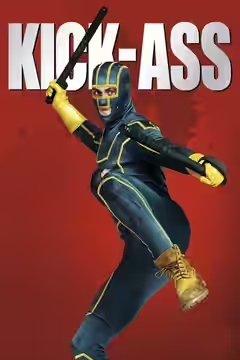
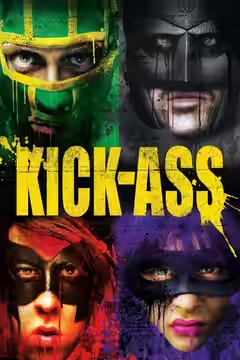
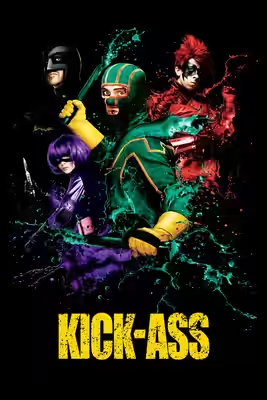
Matthew Vaughn delivers an energetic, funny superhero comedy, helped enormously by Chloë Grace Moretz and Nicolas Cage. Its violence is expertly sold, though the satire becomes harder to defend whenever the film asks us to cheer.
An ordinary teenager decides that becoming a superhero is a practical option, and Kick-Ass has considerable fun with his lack of qualifications. Matthew Vaughn makes a good, rowdy action comedy, with a reservation: the jokes about superhero fantasies grow less convincing as the film gets more excited by its own. The screenplay, by Matthew Vaughn and Jane Goldman, begins with a useful question about why somebody might volunteer for this work. It gradually loses interest in asking what that willingness says about them.
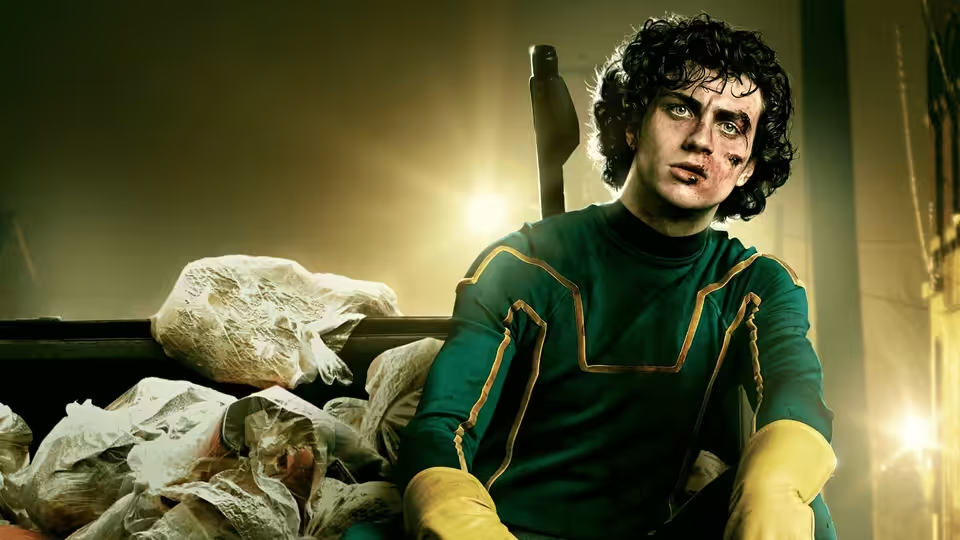
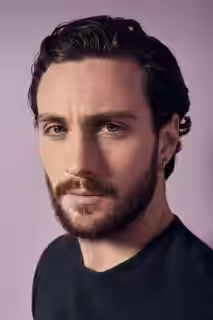
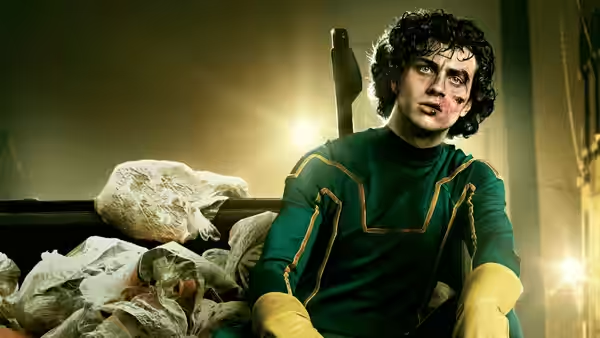
Aaron Taylor-Johnson gives Dave Lizewski enough awkwardness to make the initial proposition work. The teenage embarrassment matters because it gives us someone to recognise before the fighting takes over. His eagerness is funny without making him contemptible, and the performance keeps some uncertainty alive inside a role built around wish fulfilment. The writing does not always give him enough beyond that eagerness, however, and the other vigilantes have the stronger personalities.
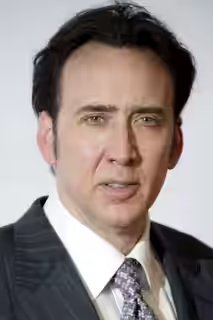
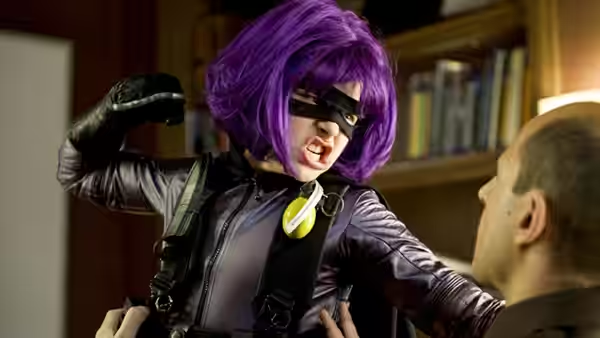
Chloë Grace Moretz makes Hit Girl so assured that the adults seem to be taking an unnecessary amount of time over everything. Her matter-of-fact delivery makes the profanity funnier than the words deserve. We laughed at her swearing, then felt uncomfortable when the same brisk competence made the violence funny. Nicolas Cage, as Big Daddy, makes the father-daughter partnership both affectionate and disturbing. He treats their shared enthusiasm as ordinary parental business, which is where the comedy gets properly unpleasant.
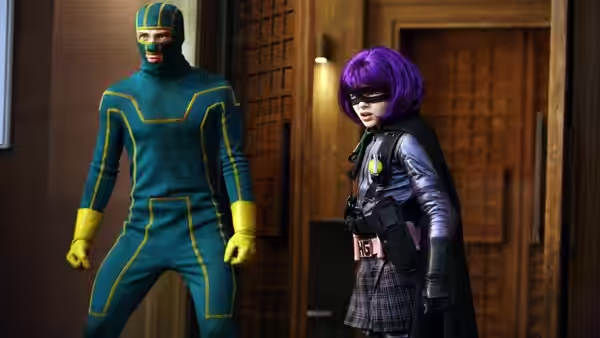
Ben Davis’s cinematography gives the violence a polished, graphic finish that suits the film’s taste for excess. Bodies and costumes register quickly, and the images help the jokes survive the speed of the action. Russell De Rozario’s production design supports that heightened look, giving the costumed figures surroundings in which they do not seem entirely misplaced. The resulting exaggeration works for the comedy, although it makes the suggestion of real danger harder to sustain.
Editors Pietro Scalia, Eddie Hamilton and Jon Harris keep the shifts from embarrassment to aggression brisk, with enough room for a performance to land before the next burst of mayhem. Some transitions are deliberately rude, and the speed mostly carries them. The music credited to Ilan Eshkeri, Henry Jackman, Liam Howlett, John Murphy and Marius de Vries gives the action plenty of encouragement. It helps the fighting feel exciting, though it also makes the film’s occasional unease about violence easier to ignore.
The trouble is that Matthew Vaughn is so good at making these vigilantes entertaining that his objections to superhero fantasy begin to look optional. The film invites us to notice how absurd and dangerous the whole business is, then supplies action calculated to make us cheer it on. We can enjoy that, and often did, without accepting every provocation as a clever point. A child handling brutality with adult confidence is a strong comic shock, but repeating it does not give it much more to say.
The violence and profanity are part of the attraction, so there is little point approaching Kick-Ass in the hope of a gentler teenage adventure. Its 118 minutes require a taste for excess and a willingness to find some of that excess funny. Watch it for the performers and the action, with no expectation that the film will examine every ugly joke it enjoys.