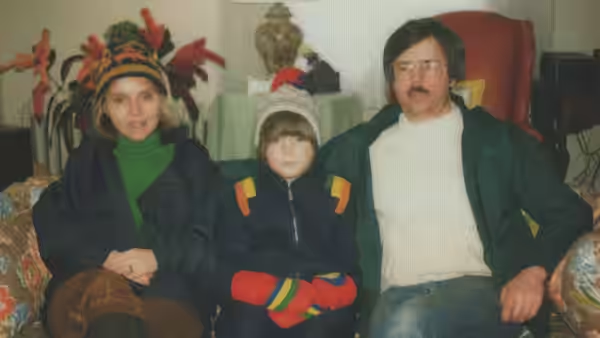
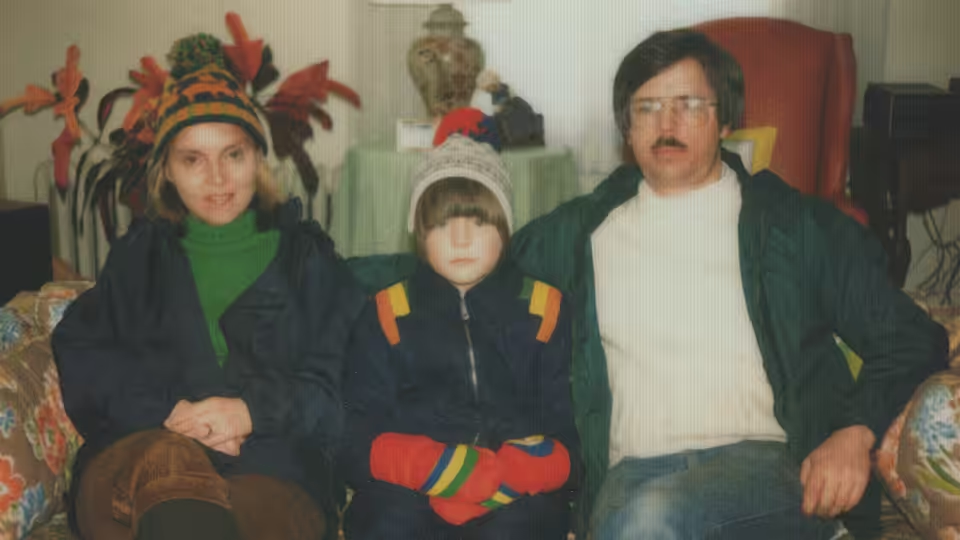
A woman, a child, and a mustached man sit together on a couch
Film review

Paralyzed by Hope: The Maria Bamford Story

2026 · Directed by Judd Apatow, Neil Berkeley · 1h 56m

In a sentenceMaria Bamford is funny enough without a documentary working quite this hard to reassure us that she matters

Maria Bamford appears as herself in a documentary that connects her comedy with her experiences of mental illness and personal hardship. Judd Apatow and Neil Berkeley place her accounts alongside interviews with family members, people who also figure in her work. Her relationship with her husband forms another part of the portrait, bringing her recent life into view. As she talks about mental health, the film follows the connection between what she has lived through and what she tells an audience. Her confessional comedy shares space with the people and experiences behind it.

Fi1m review

Maria Bamford makes this affectionate documentary funny and moving through her candour about mental illness. Judd Apatow and Neil Berkeley give her a generous hearing, though their crowded, conventional approach needs more restraint.

Paralyzed by Hope: The Maria Bamford Story is a funny, affecting documentary that spends rather too long establishing how much its subject deserves our attention. Judd Apatow and Neil Berkeley approach Maria Bamford with affection and an interest in how her experiences become comedy. That gives the film something worth pursuing beyond a comedian’s professional achievements. We recommend it for her candour, with a warning that its 116 minutes feel crowded.

Her confessional comedy is disorienting, and the film helps explain why those unsettling changes of direction belong in her work. The accounts of mental illness give the jokes a personal context without requiring the audience to treat laughter as an inappropriate response. The directors make room for humour alongside hardship, which is essential to the portrait. A film that asked us to stop finding her funny whenever she spoke about something painful would miss much of what makes her worth listening to.

The family interviews are especially useful because they bring us closer to people who already figure in her work. Hearing from them gives the comedy a setting beyond the stage, and the film benefits from having someone else help tell the story. The portrait of her relationship with her husband is warm without making domestic contentment seem like a solution to everything. These sections give us reasons to care about her life beyond the question of how much recognition her work receives.

We were moved by the encounters at the mental health convention. The people who speak with her there give the film a wider interest than its account of a single performer might suggest. Her openness about mental illness has already given the documentary weight, and these conversations make the directors’ concern for other people convincing. This is where the affectionate approach feels most useful, because the attention is shared with people who are not the subject of a feature-length tribute.

Neil Berkeley’s cinematography fits the film’s straightforward approach, keeping the attention on the people speaking. There is no need for elaborate visual invention in every interview, though the familiar presentation contributes to the feeling that the film could take more chances. James Leche’s editing has to accommodate comedy, family testimony and accounts of mental illness, and the resulting portrait is overfull. Too many worthwhile pieces have been kept, and the film becomes tiring through accumulation. A little less material would have allowed the most revealing conversations to stay with us longer.

Among documentaries about comedians, this is a good, recognisable example of the affectionate approach. Judd Apatow and Neil Berkeley take the work seriously and make its relationship to the life comprehensible, but viewers who know the story already may find little to surprise them. Their admiration also makes the film feel safer than the comedy it contains, and a more selective account might have served her better. Come for Maria Bamford, with patience for the extra time spent establishing that she deserves the attention.

Critical consensus AI synthesised

76
Positive
6
Mixed
0
Negative
0

The reviews are consistently positive, finding a funny, moving portrait whose chief strength is Bamford’s openness about her comedy and mental health. Praise centres on the connection between her disorienting stage work and lived experience, with family interviews and accounts of personal hardship helping to make that connection clear. Critics also welcome the attention to her relationships, particularly the warmth of the material involving her husband, and the balance between humour and difficult subjects.

The reservations concern the documentary’s shape and familiarity rather than its subject, and the spread of opinion is narrow. IndieWire finds it overstuffed but still moving and worthwhile, while The Hollywood Reporter argues that its conventional approach offers little new to those who already know Bamford’s story. The Wrap likewise finds the approach conventional, but singles out her encounters at a mental health convention as revealing the humanity that makes the portrait effective.

Vulture
23 January 2026 · festival review · Bilge Ebiri
80*

Ebiri finds the documentary charming and illuminating, driven by Apatow’s genuine curiosity about Bamford. He particularly praises how the film makes her confessional, disorienting comedy feel grounded in lived experience.

Read the full review →
IndieWire
29 January 2026 · B · Kate Erbland
77

Erbland finds the documentary overstuffed but ultimately moving and worthwhile. She praises Bamford’s remarkable honesty and openness about her mental health struggles.

Read the full review →
Variety
29 January 2026 · festival review · Lisa Kennedy
75*

Kennedy finds the documentary an admiring, often funny portrait of Bamford and her singular comedy. She especially praises the family interviews for grounding the film in the people who figure prominently in Bamford’s work.

Read the full review →
The Hollywood Reporter
23 January 2026 · festival review · Daniel Fienberg
70*

Fienberg finds the documentary funny, emotional and involving, though its conventional approach adds little for viewers who already know Bamford’s story. He praises Bamford’s candor and the recent-life chapters, especially the warm portrait of her relationship with her husband.

Read the full review →
Collider
23 January 2026 · 8/10 · Ross Bonaime
80

Bonaime calls the documentary a loving tribute that shows why Bamford deserves wider recognition. He praises how Apatow and Berkeley balance her comedy with candid accounts of mental illness and personal hardship.

Read the full review →
The Wrap
23 January 2026 · festival review
75*

The critic finds the documentary conventional but effective, and ultimately a moving portrait of Bamford. The people she speaks with at a mental health convention particularly reveal the humanity that Apatow and Berkeley want viewers to recognize.

Read the full review →

Straight answers AI written, from our review

Is Paralyzed by Hope: The Maria Bamford Story worth watching?
Paralyzed by Hope: The Maria Bamford Story is worth watching for Maria Bamford’s funny, moving candour about mental illness, and we scored it 75. We recommend it to viewers interested in how personal hardship becomes comedy, though its crowded 116 minutes spend too long reassuring us of her importance.
How long is Paralyzed by Hope: The Maria Bamford Story, and what is it rated?
Paralyzed by Hope: The Maria Bamford Story runs 1h 56m. It is a documentary film.
Where can I watch Paralyzed by Hope: The Maria Bamford Story in the US?
Paralyzed by Hope: The Maria Bamford Story is not on any streaming or rental service in the US at the moment. Availability is checked daily.
How does Paralyzed by Hope: The Maria Bamford Story compare to Crumb?
Paralyzed by Hope: The Maria Bamford Story is a warmer, more reassuring portrait than Crumb, which we recommend more strongly for its unflinching treatment of an artist and his family. Both use family interviews to illuminate uncomfortable personal material, but Bamford’s documentary suits viewers seeking an affectionate account; Crumb offers greater candour and is harder to sit through.
What should I watch after Paralyzed by Hope: The Maria Bamford Story?
After Paralyzed by Hope: The Maria Bamford Story, try Crumb (1994, Fi1m 87): Family interviews make an artist’s uncomfortable inner life harder to tidy away. Then The Arbor (2010, Fi1m 83): A much tougher portrait, using family testimony to question an artist’s legacy; and Mary and Max (2009, Fi1m 80): An animated friendship with a similar willingness to let distress and humour coexist.

Cast

If you liked this, try…

  1. The Zen Diaries of Garry Shandling (2018) · not reviewed yetAnother patient look at a comedian whose private doubts complicate the laughter.

  2. Crumb (1994, Fi1m 87)Family interviews make an artist’s uncomfortable inner life harder to tidy away.

  3. The Beaches of Agnès (2008) · not reviewed yetA more formally adventurous self-portrait, with humour, vulnerability and room for digression.

  4. The Arbor (2010, Fi1m 83)A much tougher portrait, using family testimony to question an artist’s legacy.

  5. Mary and Max (2009, Fi1m 80)An animated friendship with a similar willingness to let distress and humour coexist.

Free account

Know what to watch tonight

Two lists that know where things are streaming, collections you can share, your own score beside ours, and Discover that remembers what you have seen.

  • Want to see, sorted by what is streaming now
  • Seen, with your score out of ten
  • No adverts, ever