Zach Cregger starts again with one frightened man, one delivery and one long night. For an hour it is tight, funny and horrible; then it gets bigger and gets worse. Worth your evening if this is your genre.
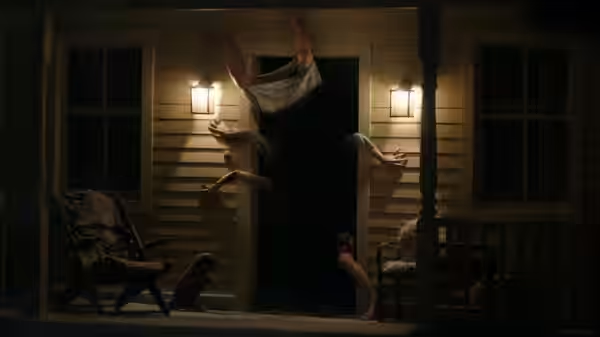
Zach Cregger has spent two films, Barbarian and Weapons, teaching audiences to wait for the moment the film they are watching becomes a different film. For Resident Evil he has taken on a video game series that has already been through a long run of earlier films, and he has thrown out all of it. No squad, no lore, no heroine who can do a backflip. His hero is Bryan (Austin Abrams), a medical courier with a parcel to deliver in Raccoon City, and the film is his one terrible night. It runs 90 minutes, it is funny and horrible in about equal measure, and for an hour it is as good as this sort of thing gets. Then it grows, and it is not as good big as it was small.
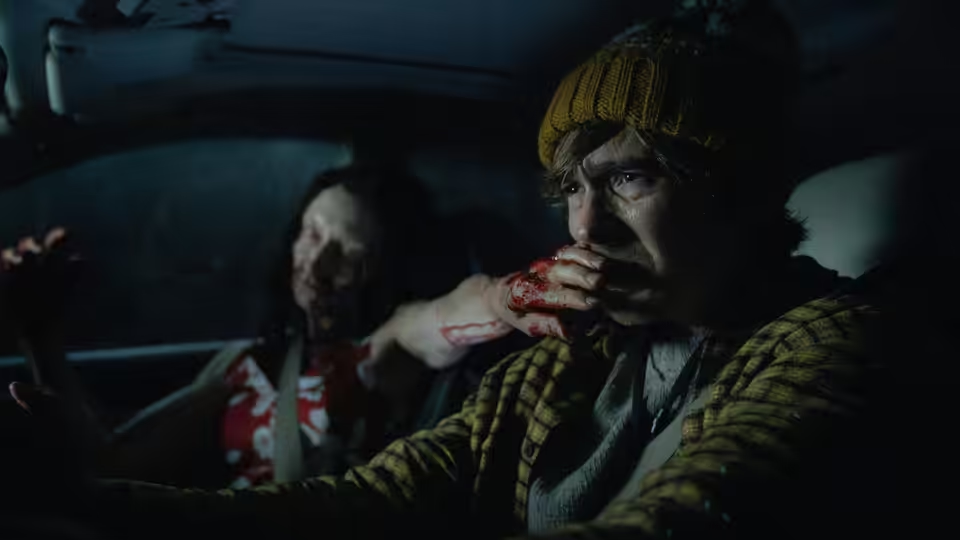
Abrams is the reason it works. Bryan is not a soldier or a scientist; he is a man in a job he would rather not be doing, and Abrams plays him as frightened from the first reel to the last and going forward anyway, which is a harder thing to act than courage. He makes bad decisions at speed. He runs out of things. When he does something brave, his face tells you he cannot believe he is doing it, and the audience we saw it with laughed and cheered at the same moment. It is a proper leading performance in a genre that usually gets by on a jawline.
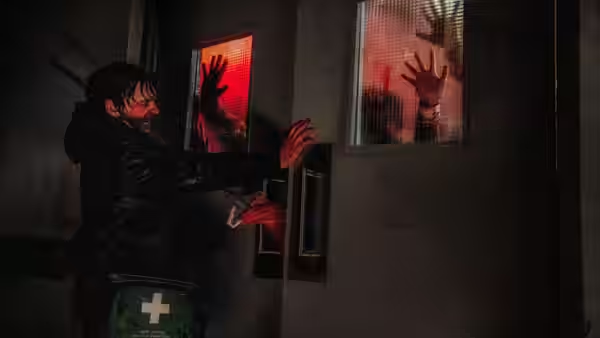
Cregger’s best idea is borrowed from the source, and he knows it. At intervals Dariusz Wolski’s camera drops to Bryan’s eye line and stays there, so that a corridor becomes a corridor in the game: a door at the end, something behind it, a mental count of what is left in the bag. It is used sparingly, which is why it works, and it makes the audience do the arithmetic with him. Joe Murphy cuts the first hour tight, one problem at a time, and Tom Hammock keeps the city ordinary: the back doors and service corridors a courier actually uses, lit as if the building has not been told anything is wrong. Hays Holladay and Ryan Holladay’s score stays low under all of it and lets the sound of things in the walls do the frightening.
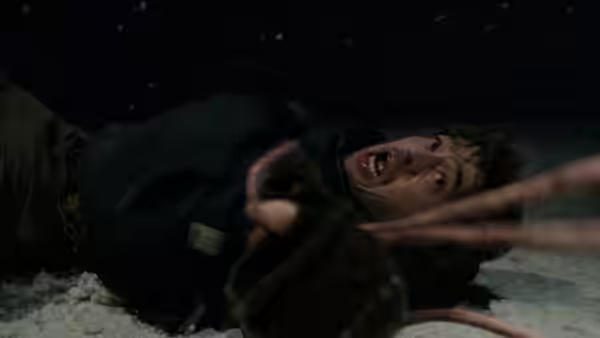
About forty minutes in there is a sequence we will not describe, involving something that should not be able to move the way it moves, and we laughed out loud at it and were frightened within the same breath. That is Cregger’s trick, the joke and the scare arriving together so you cannot tell which one made you grab the armrest, and nobody else working in horror does it as well. The creature work looks practical where it matters, and the row behind us groaned as one. We had a good time. We want to say that plainly before we say the rest.
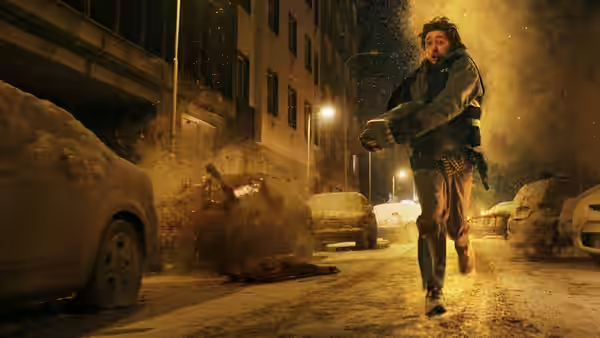
The rest is the last half hour. The film leaves the small places and goes somewhere larger, and the set pieces get louder without getting more frightening; the camera pulls back from Bryan’s shoulder, and the moment it does, he becomes one more person in a crowd being chased. Cregger and Shay Hatten’s script has threads it does not finish. Dave (Zach Cherry), Pauline (Kali Reis) and Carl (Paul Walter Hauser) each get a scene or two and a personality, and then the film has to move on, and Hauser in particular could have carried more than he is given. The ending does not land. We found ourselves checking the time in the final stretch, and were cross about it, because the hour before had earned better.
Set against the earlier Resident Evil films, this is comfortably the best, though that is a bar you could step over. Set against Cregger’s own work, it is his most straightforward film: there is no turn, no second film hiding inside the first, and if you come expecting one you will wait for it in vain. Most of the reviews so far are warmer than we are, and we understand why. The first hour buys a great deal of goodwill, and 90 minutes is a length that forgives a lot.
Go on a Friday night, with a loud crowd, and do not eat first.