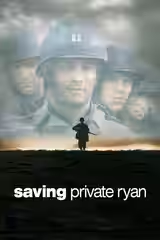
Most critics admire the film, and nearly all of them admire the same thing: the opening half-hour on Omaha Beach. Review after review calls it the most convincing depiction of combat yet put on screen, praising its chaos, its matter-of-fact horror and the handheld camerawork that makes it look like newsreel. Praise also goes to Tom Hanks as a leader coming apart under pressure and to Jeremy Davies as the terrified translator.
The reservations gather around everything after the beach. Several critics find the middle section conventional, the characters thin and the sentiment laid on too thickly, and a few say the film plays its strongest card first. The Guardian goes furthest, calling the central mission bogus and the ending feelgood. Time Out faults it for an American-centric view with little political or historical perspective, and The Independent questions its claims to show events exactly as they happened. The spread is wide, from outright raves to the merely respectful.
E
Empire
1 January 2000 · ★★★★★ · William Thomas
100
The critic hails the film as a modern masterpiece with the most shocking and searing battle sequences in cinema history. They single out the visceral, numbing realism of the combat and Tom Hanks' performance as a crumbling leader for particular praise.
Read the full review →R
RogerEbert.com
24 July 1998 · Roger Ebert
90*
The critic praises the film's visceral and realistic depiction of combat, particularly the Omaha Beach landing, as a powerful philosophical statement on war conveyed through action. He highlights the strong performances, especially Jeremy Davies as the terrified translator, and notes its emotional and intellectual impact.
Read the full review →S
Sight and Sound
1 September 1998
90*
The critic praises the film's graphic and immediate depiction of war in the action sequences, comparing them favorably to Come and See for their believability and matter-of-fact horror. Spielberg is commended for maturing as an artist by avoiding overt manipulation and leaving the film's meaning open to interpretation.
Read the full review →N
The New York Times
24 July 1998 · Critic's Pick · Janet Maslin
90*
The critic praises Spielberg's war film as a soberly magnificent achievement that restores passion and meaning to the combat genre through visceral immediacy. They single out the intense, realistic battle sequences and empathetic characters for their groundbreaking impact.
Read the full review →A
The AV Club
30 October 2020 · Tom Breihan
85*
The critic views the film as a raw, serious, and masterful exception among 1998's loud summer spectacles, crediting its success to the visceral D-Day opening and strong performances. They single out the unrelenting, hellish beach sequence for its innovative horror and intent to honor veterans while confronting audiences with war's brutality.
Read the full review →R
Radio Times
★★★★ · David Parkinson
80
The review highlights the gut-wrenching D-Day landing sequence and its success in conveying chaos, while noting that away from the fighting the film falls into combat-picture clichés and lacks the resonance of classics like All Quiet on the Western Front. It concludes that the film is still well-meaning, strongly acted, and among Spielberg's very best.
Read the full review →V
Variety
20 July 1998 · Todd McCarthy
80*
The review lauds the searingly visceral combat sequences as unmatched in realism and intensity. It notes the film is grim and demanding but occasionally undermined by conventional or windy script elements.
Read the full review →L
Los Angeles Times
24 July 1998 · Kenneth Turan
75*
The critic calls it a raw and powerful work that overcomes a conventional script with its unprecedented realistic combat scenes. He notes strengths in direction and performances but points to some overdone sentiment and familiar elements.
Read the full review →S
Slant Magazine
10 May 2010 · Eric Henderson
70*
The review sees the film as a transitional work whose technical virtuosity in the Omaha Beach sequence remains impressive but whose middle act and simplistic tribute to the 'greatest generation' feel less nuanced over time. They single out the opening half-hour's kinetic, documentary-like intensity for approximating the terror of combat.
Read the full review →H
The Hollywood Reporter
20 July 1998 · Michael Rechtshaffen
70*
The critic praises the film as a harrowing, uncompromisingly powerful WWII epic that finds Spielberg at the top of his craft, with heart-pounding action and gut-wrenching emotion, especially in the visceral D-Day sequence. However, the script relies too often on generic conventions and fails to match the personal depth of Schindler's List.
Read the full review →T
The Telegraph
23 December 2014
70*
The film is a modern war classic despite playing its strongest card first and having an uneven middle section with some sentimentality. The unforgettable 27-minute Omaha Beach sequence is as graphic as any war footage and forces confrontation with the chaos faced by troops.
Read the full review →G
The Guardian
11 September 1998 · Richard Williams
65*
The critic praises the visceral and groundbreaking opening 30-minute battle sequence on Omaha Beach for its raw immediacy and skill but criticizes the rest of the film for falling into conventional sentimental Hollywood tropes, including a bogus central mission and a feelgood ending.
Read the full review →T
Total Film
11 September 1998
60*
The critic praises the intensity and technical brilliance of the combat sequences as the most believably shocking ever seen. They single out the dramatically weak middle section, sketchy characters and lack of emotional depth for complaint.
Read the full review →T
Time Out
25 January 2012 · GA
55*
The film opens with a visceral, chaotic D-Day sequence that leaves no doubt war is hell, but the subsequent mission story becomes more conventional and less intense. It is ultimately an American-centric WWII tale lacking deeper political, ethical or historical perspective.
Read the full review →I
The Independent
12 September 1998 · Charles Wheeler
50*
Broadly speaking the depiction of Omaha as sheer hell is valid based on eyewitness accounts, though the film includes gratuitous bloodshed. The narrative follows the mission to save Ryan with multiple battles but the author questions specific claims of telling it exactly as it was.
Read the full review →E
Eye for Film
19 January 2001 · Angus Wolfe Murray
90*
Spielberg surpasses himself with a tougher, stronger film than Schindler's List that captures the chaos and terror of war with visceral immediacy. The critic singles out the electrifying, newsreel-like D-Day landing sequence and Janusz Kaminski's handheld cinematography for particular praise.
Read the full review →P
Polygon
2 September 2026 · Rachel Tolleson
90*
The critic calls the film one of the greatest war movies ever made and praises its focus on the human condition amid violence rather than war itself. They single out the unflinching Omaha Beach sequence as one of the best war scenes in film history and a lasting history lesson.
Read the full review →D
Den of Geek
25 June 2018 · Mark Allison
75*
Twenty years on, the critic argues the film remains powerful for its one-sided depiction of Germans as faceless enemies, which underscores war's dehumanizing effect on soldiers. They single out this deliberate lack of balance and the resulting audience complicity in the violence as central to understanding the story's themes.
Read the full review →Ordered by the weight we give each publication, then by score. Scores are normalised to 100; * means inferred from an unrated review. Summaries are ours, not quotations; follow the links for the reviews themselves. How we rate