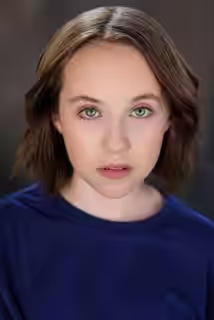
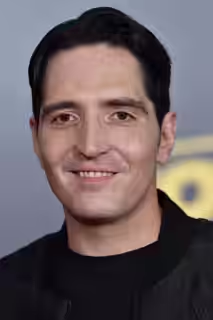
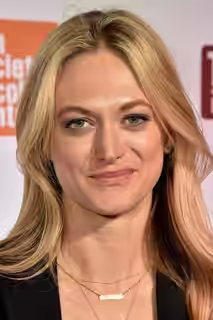
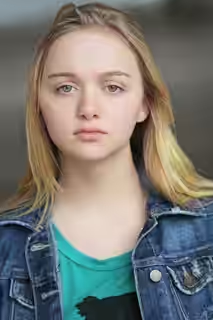
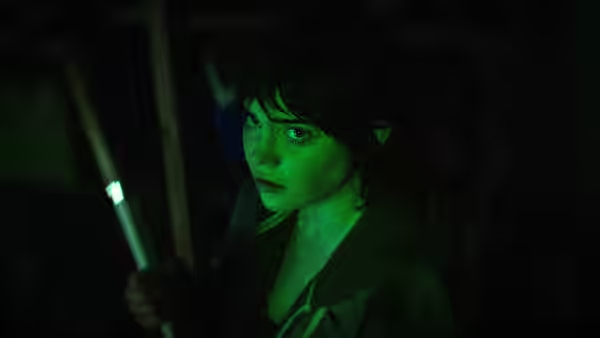
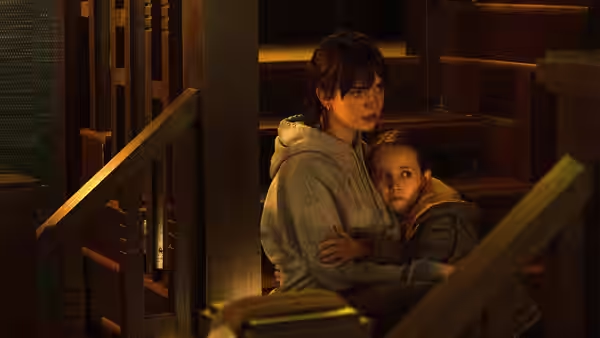
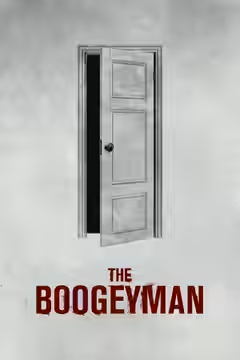
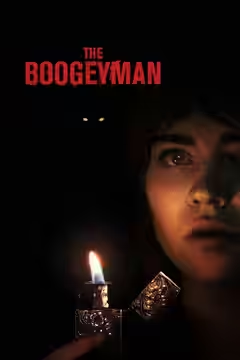
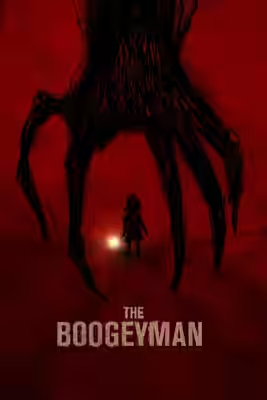
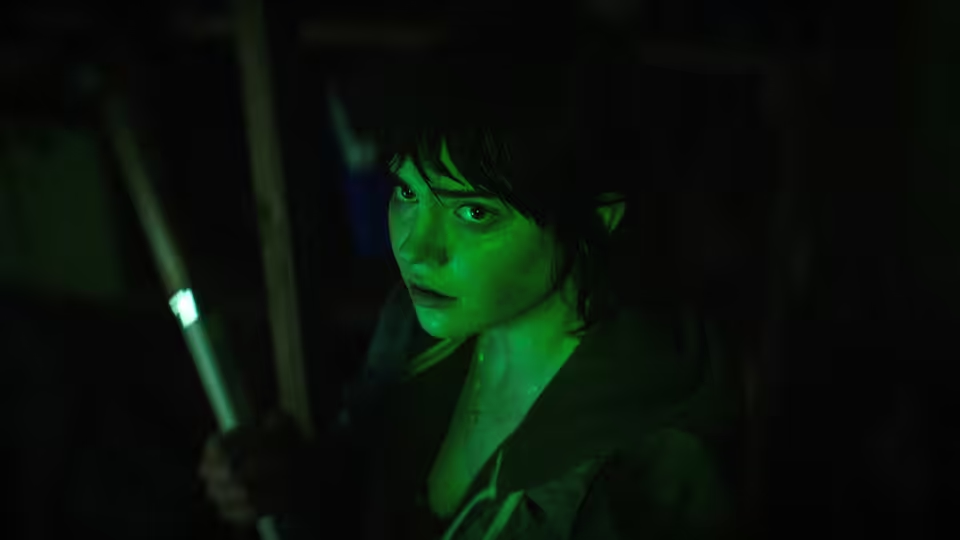
Sadie Harper (Sophie Thatcher) gripping a glowing rod in a dark cluttered space
Film review

The Boogeyman

2023 · Directed by Rob Savage · 1h 39m · MPA PG-13

In a sentenceThe lamp rolling under the bed is scarier than anything that eventually crawls out from under it

Sadie Harper (Sophie Thatcher) is a teenager whose mother has just died. Her younger sister Sawyer (Vivien Lyra Blair) will not sleep without a light on, and their father Will (Chris Messina), a therapist, sees patients in the front room of the house and says almost nothing to his daughters. One afternoon a stranger, Lester Billings (David Dastmalchian), arrives at the door without an appointment and tells Will that something in the dark killed his three children, one after another. After his visit the house is no longer safe. Sadie starts to see things at the edge of the light; Sawyer already has. Rob Savage directs, from a Stephen King short story. It runs 99 minutes and carries a 15 certificate.

Plays from YouTube when you press play; nothing loads from them until then.

Fi1m review

Rob Savage’s Stephen King adaptation is a tidy, well-acted film that frightens properly whenever the lights are low and loses its nerve when they come up. Sophie Thatcher holds it together; the script gives her little to hold.

Rob Savage has taken a Stephen King short story that fits inside one conversation and stretched it over a house with three grieving people in it. Sadie Harper (Sophie Thatcher) has lost her mother; her little sister Sawyer (Vivien Lyra Blair) sleeps with a glowing plastic moon; their father Will (Chris Messina) listens to strangers for a living and cannot manage five minutes with his own children. Then Lester Billings (David Dastmalchian) turns up in Will’s front room, uninvited, and says something took his kids. That is the setup, and it is a good one. What follows is a well-built film that is properly frightening for an hour and then stops being frightening, and the reason is simple: it shows us the thing.

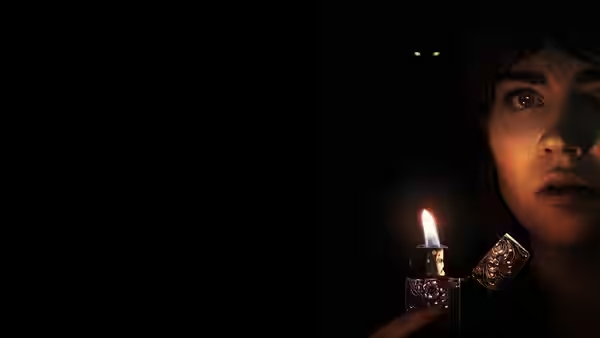
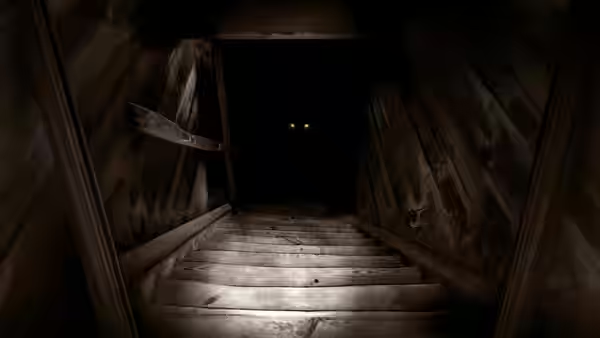
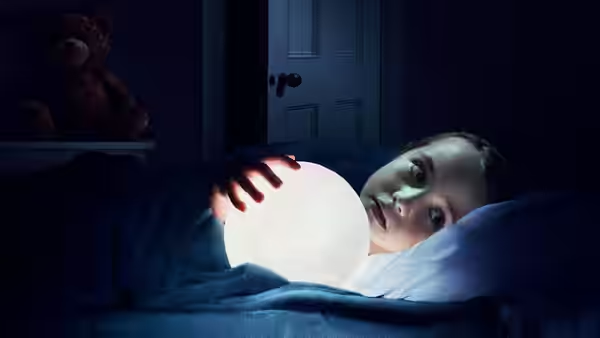
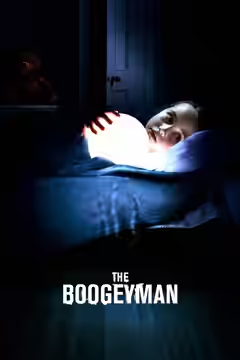
While it keeps the thing in the dark, it is a pleasure. Eli Born lights the house so that the darkness begins about a foot from every lamp, and Jeremy Woodward gives him a house full of half-open doors, a closet that will not stay shut and a basement that nobody has a reason to enter and everybody does. The best scene is built out of a child’s toy. Sawyer rolls her light across the bedroom floor and under the bed, and each time it comes back we are shown a little more than the time before. We were, for about ninety seconds, as frightened as we have been in a cinema for a while, and it was done with a nightlight, a bed and a child who has decided to look.

Thatcher is the reason the rest of it holds. She plays Sadie as a girl who has decided that being angry is easier than being sad, and she does it without a single speech about grief, which is more than the script manages. Blair is unusually good for a child actor at being scared rather than acting scared. Messina has the harder job, a father written as a closed door, and he mostly plays the door. Dastmalchian has one scene and makes a whole life out of it, hunched and apologetic and plainly not right. Marin Ireland, as his wife Rita, appears later and plays her as someone who has not slept in a year.

Savage is patient with his scares. Peter Gvozdas holds a shot a beat longer than we expect and then another beat, so that we are looking at the wrong part of the frame when it happens. Patrick Jonsson’s score stays low, mostly a hum with something under it, and for long stretches Savage does without music altogether and lets the house creak. Kari Perkins dresses Sadie in her dead mother’s clothes, which the film uses once, quietly, and then leaves alone.

The script is where it thins. Scott Beck, Bryan Woods and Mark Heyman have made the monster a metaphor for grief and then, in case we missed it, have a therapist (LisaGay Hamilton, as Dr Weller) explain it to Sadie in a consulting room. The school scenes, in which Bethany (Madison Hu) and her friends are cruel to Sadie about her mother, belong to a different and duller film and are cut in as if the editor knew it. Nobody in the house buys a torch, and the film knows we have noticed and has no answer.

The last half hour is the weakest, for reasons we will not go into. It is enough to say that the film becomes a more ordinary horror film than the one it had been for an hour, and that somewhere in it we stopped being frightened. We were watching an effect, and thinking about the nightlight, and wishing the film had trusted itself.

Savage made Host (2020) on a laptop screen in a locked-down flat, and it was cleverer than this. Here he has proved he can do the old kind of horror, the dark room and the held breath, and do it well, inside a studio film that wants a creature at the end. Beck and Woods wrote A Quiet Place (2018), and this has the same shape: a family, a rule about the dark, and a third act that gives up on the rule.

Watch it with the lights off, because that is the only condition under which its best trick works. Ninety-nine minutes, a 15 certificate, and one scene with a plastic moon that we would set against most of what horror has offered in the last few years. The rest is competent, and it knows it.
Critical consensus AI synthesised

57
Positive
7
Mixed
6
Negative
4

The reviews split widely on The Boogeyman, from warm to hostile, and settle in the middle. Most critics agree on where the craft is: Rob Savage’s use of light and shadow, with every lamp and glowing screen made a source of fear, and Sophie Thatcher’s lead performance, which several single out as the thing that sells the monster. The jump scares are generally judged effective, at least early on.

The reservations cluster around the script. Many find the grief-and-trauma framing rote and the story thin, borrowed from a current horror fashion rather than earned, and a recurring complaint is that the film loses its nerve once the creature is shown too clearly in the final act. The negative reviews go further: RogerEbert.com calls it emotionally numbing, The New York Times finds the plotting coy and illogical, and Slant judges that mood has been put ahead of substance. The kinder notices, Empire and /Film among them, see a sturdy, traditional ghost story.

Empire
25 May 2023 · Kim Newman
80*

The critic praises Savage for delivering an involving, ungimmicky ghost story with perfectly constructed menace and mayhem that wrings scares from a basic premise. It shows the director can handle traditional horror effectively while focusing on how kids react to tragedy.

Read the full review →
The AV Club
26 May 2023 · B · Leigh Monson
77

The critic praises the effective use of light, shadow, and perspective to create genuine scares and tension in the monster-in-the-closet thriller, while noting the film could be tighter and loses impact when the creature is overexposed. The taunting playfulness of the monster and strong horror execution are highlighted positively.

Read the full review →
The Independent
1 June 2023
70*

The critic finds the film well-constructed and well-acted with decent scares and twists that elevate it above most generic horror. It is ultimately conventional but comfortably so, delivering a few frights in a mainstream Stephen King adaptation.

Read the full review →
Variety
26 May 2023 · Todd Gilchrist
70*

This effectively scary but not especially memorable Stephen King adaptation succeeds through style and Sophie Thatcher's bold lead performance amid tropes of trauma and a creature feature. The critic singles out Thatcher's clear-eyed portrayal as selling the reality of the monster while noting the effect doesn't linger.

Read the full review →
Little White Lies
30 May 2023 · 3/3/4 · Anton Bitel
60

Savage abandons his earlier screen-life experimentation for conventional mainstream studio horror but taps effectively into the household’s uncanny interiors. The film is deftly done, with child-focused stakes that are never less than alarming and an ambiguous, closeted ending that rings true.

Read the full review →
Radio Times
★★★ · Jeremy Aspinall
60

This is watchable, well-edited horror with effective jump-scares from director Rob Savage, who keeps the creature in the dark until the incendiary climax. The biggest puzzle is why no one has a torch to deter a being that thrives in the shadows.

Read the full review →

Straight answers AI written, from our review

Is The Boogeyman worth watching?
The Boogeyman is worth watching for anyone who wants a properly frightening hour in a dark house, and we scored it 62. Rob Savage keeps the thing in the shadows and Sophie Thatcher holds the family together, but the script explains its grief metaphor out loud and the last half hour turns into a more ordinary creature film. Watch it with the lights off.
How long is The Boogeyman, and what is it rated?
The Boogeyman runs 1h 39m and is rated PG-13 by the MPA in the US. It is a horror film.
Where can I watch The Boogeyman in the US?
The Boogeyman is streaming on Hulu and Disney+ in the US, and it is also available to rent from Amazon Prime Video from $3.99. It leaves Hulu on 5 October. Availability is checked daily; the links above go straight to each service.
How violent or frightening is The Boogeyman, and is it suitable for children?
The Boogeyman carries a 15 certificate in the UK and is a horror film built on dread rather than gore: dark rooms, half-open doors and something seen at the edge of the light. One scene with a child's nightlight is among the most frightening we have sat through, so it is not for young children or the easily unsettled, though older teenagers who like being scared should manage.
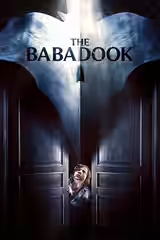
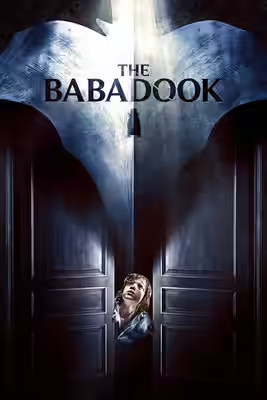
How does The Boogeyman compare to The Babadook?
The Boogeyman and The Babadook share a grieving household and a thing in the dark, and The Babadook is the better film because it trusts its metaphor to the end. Rob Savage's film is patient and frightening for an hour, then shows its creature and loses its nerve; Jennifer Kent's stays with Essie Davis's exhausted mother, though the pressure can become wearing. Pick The Babadook for character and The Boogeyman for the tidier evening.
What should I watch after The Boogeyman?
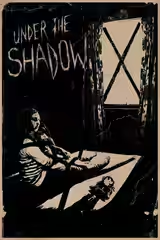
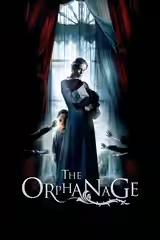
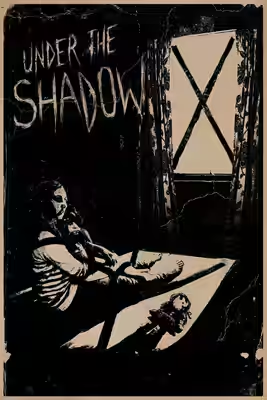
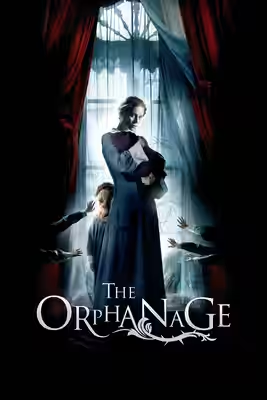
After The Boogeyman, try The Babadook (2014, Fi1m 86): A grieving household, a thing in the dark, and a film that trusts the metaphor to the end. Then Under the Shadow (2016, Fi1m 80): A mother and daughter, a flat in wartime Tehran, and fear that lives in the ceiling; and The Orphanage (2007, Fi1m 81): Spanish ghost story about a missing child, patient and sad, with one game of knock-knock we still think about.

Cast

If you liked this, try…

  1. The Babadook (2014, Fi1m 86)A grieving household, a thing in the dark, and a film that trusts the metaphor to the end.

  2. Under the Shadow (2016, Fi1m 80)A mother and daughter, a flat in wartime Tehran, and fear that lives in the ceiling.

  3. The Orphanage (2007, Fi1m 81)Spanish ghost story about a missing child, patient and sad, with one game of knock-knock we still think about.

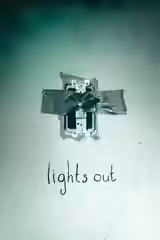
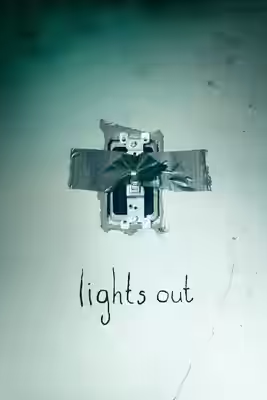
  4. Lights Out (2016) · not reviewed yetThe same idea, a monster that exists only where the light is not, done leaner and sillier.

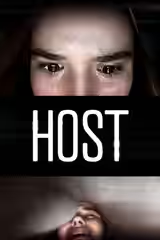
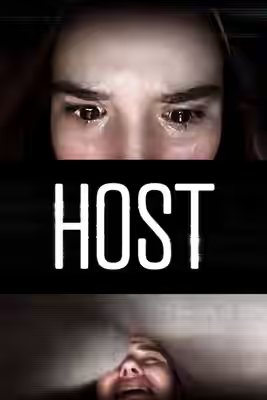
  5. Host (2020) · not reviewed yetSavage’s earlier film, fifty-six minutes on a video call, and considerably more frightening than this.

Free account

Know what to watch tonight

Two lists that know where things are streaming, collections you can share, your own score beside ours, and Discover that remembers what you have seen.

  • Want to see, sorted by what is streaming now
  • Seen, with your score out of ten
  • No adverts, ever