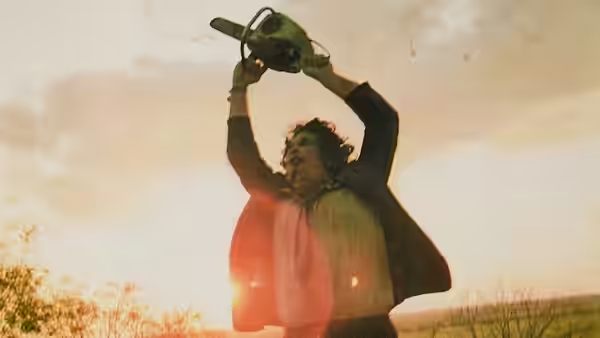
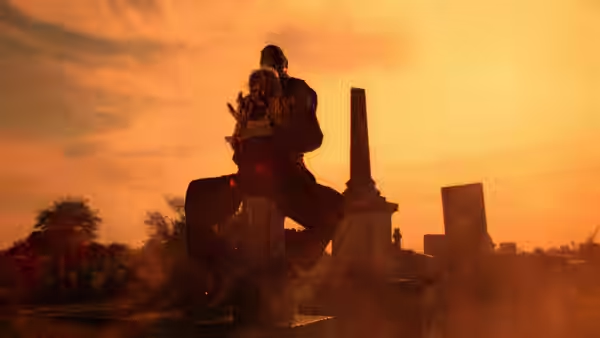
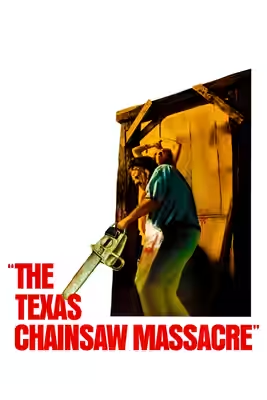
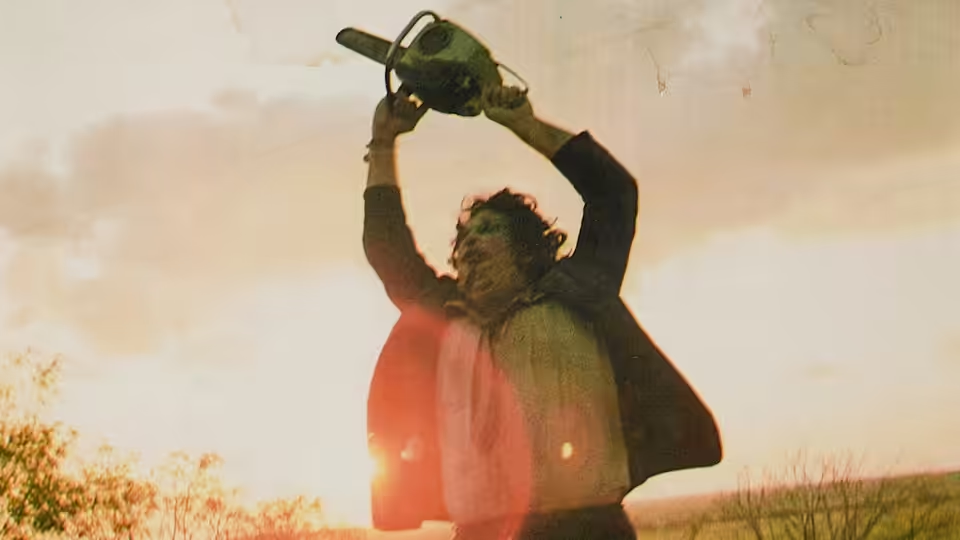
Man raising a chainsaw high overhead in a field at sunset
Film review

The Texas Chain Saw Massacre

1974 · Directed by Tobe Hooper · 1h 23m · MPA R

In a sentenceEighty-three minutes, and we would still like an interval to check the locks

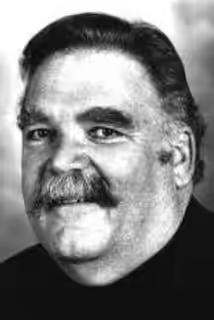
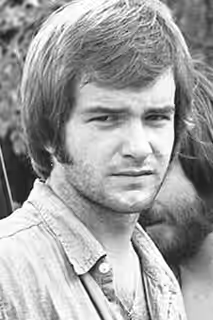
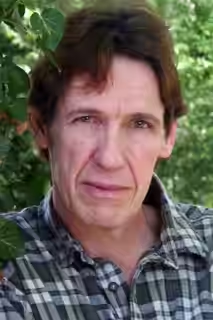
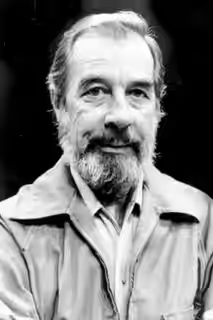
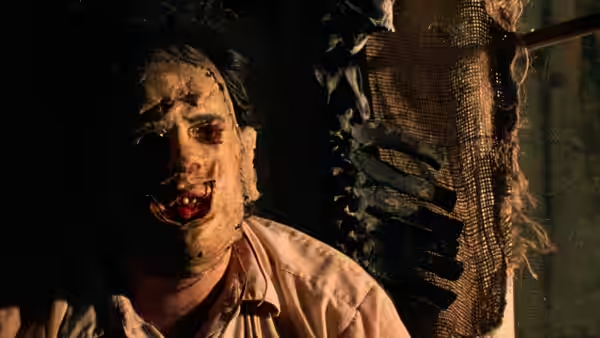
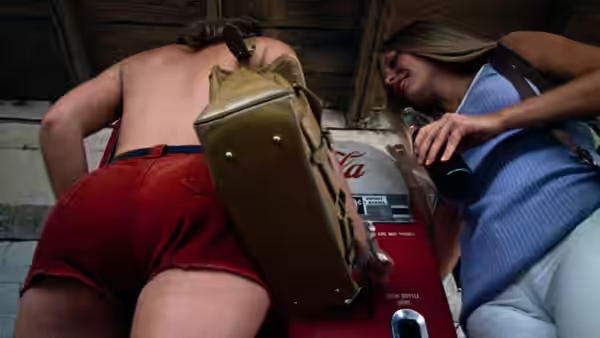
Sally (Marilyn Burns), Jerry (Allen Danziger) and Franklin (Paul A. Partain) face the threat of human violence in surroundings marked by decay. Kirk (William Vail) and Pam (Teri McMinn) share the story with them; its other figures include the Hitchhiker (Edwin Neal), the Old Man (Jim Siedow) and Leatherface (Gunnar Hansen). Survival becomes the immediate concern. The danger comes from people, with ordinary surroundings offering little reassurance. Much of what threatens the characters remains outside a clear view, as sounds and glimpses make injury feel increasingly close and human company offers no reliable protection.

Plays from YouTube when you press play; nothing loads from them until then.

Fi1m review

Tobe Hooper makes human violence feel appallingly close through precise framing, sparse music and suggestion. We recommend this ferociously effective horror film, with a warning: the relentless scares leave little room for its characters to become more than victims.

Tobe Hooper’s The Texas Chain Saw Massacre is frightening enough to justify its reputation, though its narrow interest in what people can suffer is a real limitation. It wants to make violence feel possible, close and difficult to escape. At 83 minutes, it does this with a concentration that many longer horror films struggle to sustain. There is little reassurance in its rough, observational appearance, and little opportunity to stand back and enjoy the mechanics.

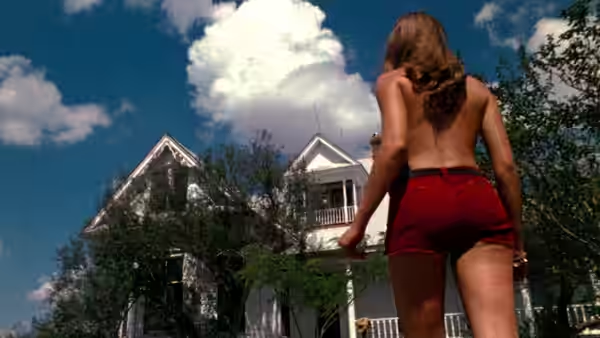
Daniel Pearl’s cinematography deserves more credit than the word raw usually allows. The tracking shots are controlled, the compositions carefully judged; the grimy appearance does not mean anyone has simply pointed a camera and hoped. The thin colour makes the surroundings uninviting, while the precision of the framing keeps us looking for danger within them. The production design reinforces that discomfort through decay, making the spaces unpleasant to contemplate even before we consider what might happen there. None of this requires an attractive image to announce itself as good photography.

Editors J. Larry Carroll and Sallye Richardson help make suggestion feel almost physically intolerable. The cutting gives the imagination enough information to supply violence that the image does not need to spell out. We were horrified by what we imagined in those gaps. The timing matters: there is little chance to examine a shock calmly before anticipation starts working on us again. It is skilful editing that makes us reluctant to keep looking.

Wayne Bell and Tobe Hooper’s sparse music contributes to the unease without giving us much comfort or release. The soundtrack has a force that the amount of visible violence alone cannot explain. Sound makes the threat feel close, and the minimal score avoids putting a reassuring musical frame around it. A more insistent accompaniment might have made the frightening material easier to recognise as a performance. Here, the sound and the rough-looking images belong together, and the effect is oppressive.

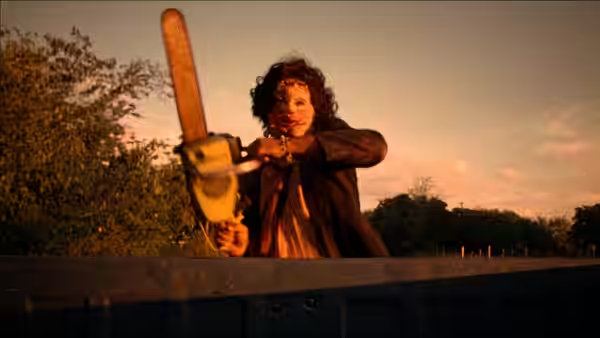
Marilyn Burns makes Sally’s fear convincing, while Gunnar Hansen gives Leatherface a disturbing presence. Their work keeps the film from becoming merely a demonstration of what a camera and a cutting room can do to an audience. But the screenplay by Kim Henkel and Tobe Hooper gives us limited reasons to care about the characters beyond their immediate danger. That matters when the pressure continues without much variation in what we are asked to feel. We believe the distress; we would welcome more opportunities to know the people experiencing it.

The gallows humour helps, although it offers no dependable relief. Human behaviour becomes grotesquely absurd, and a laugh can feel like an inappropriate response even as it escapes. Horror sometimes weakens itself by treating every threatening figure with solemn reverence, and this film avoids that mistake. Its ugliness includes behaviour that is ridiculous as well as frightening. The humour makes the company more uncomfortable, which is hardly a kindness, but it prevents the tone from settling into a single heavy note.

We recommend it strongly to anyone who wants horror to be difficult to sit through. The thin characterisation is a genuine drawback, and technical control does not oblige anyone to enjoy sustained distress. Choose an evening when being frightened is the point. This is a poor choice for winding down.

Critical consensus AI synthesised

81
Positive
11
Mixed
0
Negative
1

Most critics find The Texas Chain Saw Massacre an intensely effective horror film, with eleven of the twelve reviews positive. Praise centres on Tobe Hooper’s documentary-style realism and the use of sound, editing and framing to sustain dread. Several reviews stress how much violence is suggested rather than shown, crediting the grimy surroundings and oppressive atmosphere with making anticipation as distressing as the attacks themselves.

The differences concern what that terror achieves, and whether its relentlessness is enough. Some critics read the film as a response to industrial decline and American social anxiety; others admire it chiefly as a precisely staged exercise in fright, with occasional gallows humour. The lone negative review, at RogerEbert.com, acknowledges the technical skill and effective performances but finds little purpose beyond disgust and fear. That dissent leaves a broad positive consensus with a sharp disagreement over whether accomplished horror needs any further justification.

Slant Magazine
24 May 2003 · ★★★★/4 · Eric Henderson
100

The critic praises the film's anarchic gallows humor and its evocation of Vietnam-era social dread through a cannibal family narrative. He singles out the juxtaposition of horror and comedy, along with the suggestive power of its grimy, verité style over explicit gore.

Read the full review →
Empire
1 January 2000 · William Thomas
95*

The most purely horrifying horror movie ever made. Hooper's sick, inventive film remains as disturbing, suspenseful and shattering as ever, with horror scenes staged with unforgettable force using the soundtrack and unsettling details.

Read the full review →
Radio Times
5 out of 5 stars · Alan Jones
90*

The critic describes it as a seminal classic whose shock value has not dimmed. They single out Hooper’s masterful use of documentary-style realism combined with the horror of anticipation and suggestion.

Read the full review →
The New Yorker
13 August 2024 · Jackson Arn
85*

Fifty years on, the film reads like sociology about how assembly lines, technology, and unemployment derange the working class and leave them hungry, with killing and family loyalty intertwined. It praises the film's tautness, visual beauty in decay, and haunting quality over mere scares.

Read the full review →
The Telegraph
11 October 2024 · Robbie Collin
85*

The piece presents the film as a shoestring slasher and masterful critique of post-industrial capitalism that transformed horror cinema, establishing the final girl trope while drawing on real-world influences like Ed Gein. It praises the editing, documentary-like quality, and inimitable impact that still resonates 50 years later.

Read the full review →
The Guardian
18 November 1976 · Derek Malcolm
80*

The critic finds the film a formidable piece of directorial artifice and a minor tour de force, a horror comic brought to the screen with frenetic energy. It effectively plants most of the violence in the audience's minds and delivers sweat-inducing sequences that lead the imagination without pretending to be anything more than a scare.

Read the full review →

Straight answers AI written, from our review

Is The Texas Chain Saw Massacre worth watching?
The Texas Chain Saw Massacre is worth watching for anyone who wants horror to be difficult to sit through, and we scored it 87. Tobe Hooper makes violence feel close and hard to escape in 83 concentrated minutes, though the screenplay gives us few reasons to care about the characters beyond their immediate danger. Pick an evening when being frightened is the point.
How long is The Texas Chain Saw Massacre, and what is it rated?
The Texas Chain Saw Massacre runs 1h 23m and is rated R by the MPA in the US. It is a horror film.
Where can I watch The Texas Chain Saw Massacre in the US?
The Texas Chain Saw Massacre is streaming on Peacock, AMC+, Netflix, Tubi and The Roku Channel in the US. Availability is checked daily; the links above go straight to each service.
How violent or frightening is The Texas Chain Saw Massacre, and is it suitable for children?
The Texas Chain Saw Massacre is an 18 certificate in the UK and unsuitable for children. Much of the violence is suggested rather than shown, but the editing and sparse sound make what we imagine in the gaps horrifying, and the pressure rarely lets up. The squeamish and anyone hoping to wind down should look elsewhere.
How does The Texas Chain Saw Massacre compare to Psycho?
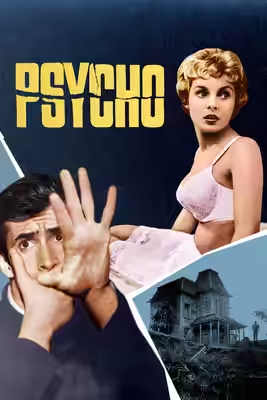
The Texas Chain Saw Massacre and Psycho both make suggestion and carefully placed cuts feel physically threatening, but Hooper's film is the rougher and more oppressive of the two. Hitchcock's gives us fuller characters and quieter, more unsettling encounters; Hooper's offers relentless distress with thin characterisation. Choose Psycho for craft you can admire, this for horror you have to endure.
What should I watch after The Texas Chain Saw Massacre?
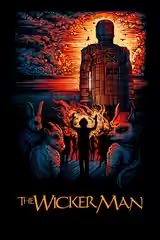
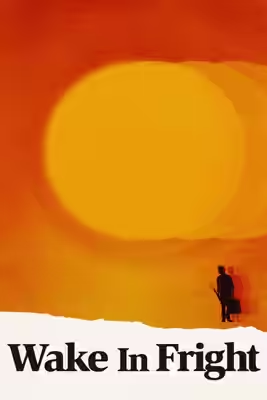
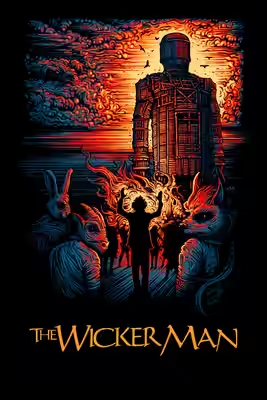
After The Texas Chain Saw Massacre, try Psycho (1960, Fi1m 90): Another exercise in making suggestion and carefully placed cuts feel physically threatening. Then Wake in Fright (1971, Fi1m 86): Heat, hospitality and human cruelty turn ordinary company into something hard to endure; and The Wicker Man (1973, Fi1m 90): For more rural unease, with communal cheerfulness making an outsider increasingly uncomfortable.

Cast

If you liked this, try…

  1. Psycho (1960, Fi1m 90)Another exercise in making suggestion and carefully placed cuts feel physically threatening.

  2. Wake in Fright (1971, Fi1m 86)Heat, hospitality and human cruelty turn ordinary company into something hard to endure.

  3. The Wicker Man (1973, Fi1m 90)For more rural unease, with communal cheerfulness making an outsider increasingly uncomfortable.

  4. The Vanishing (1988, Fi1m 88)A quieter study of human horror, with patience that becomes difficult to bear.

  5. Cure (1997, Fi1m 85)Controlled framing and unexplained violence make ordinary places feel unsafe for days.

Free account

Know what to watch tonight

Two lists that know where things are streaming, collections you can share, your own score beside ours, and Discover that remembers what you have seen.

  • Want to see, sorted by what is streaming now
  • Seen, with your score out of ten
  • No adverts, ever