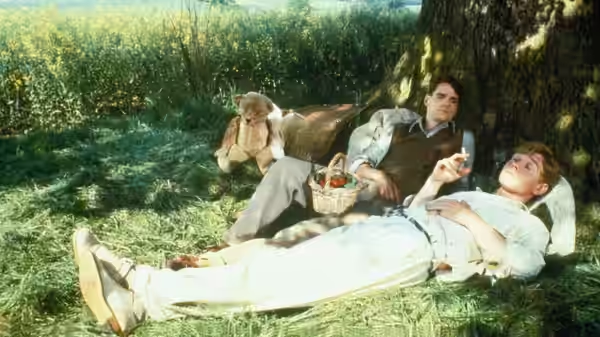
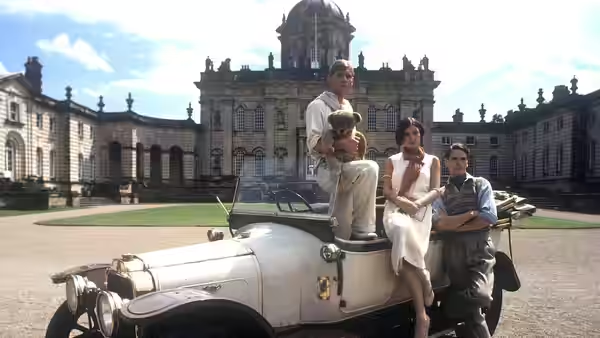
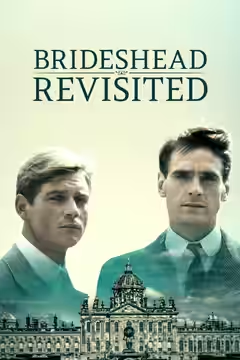
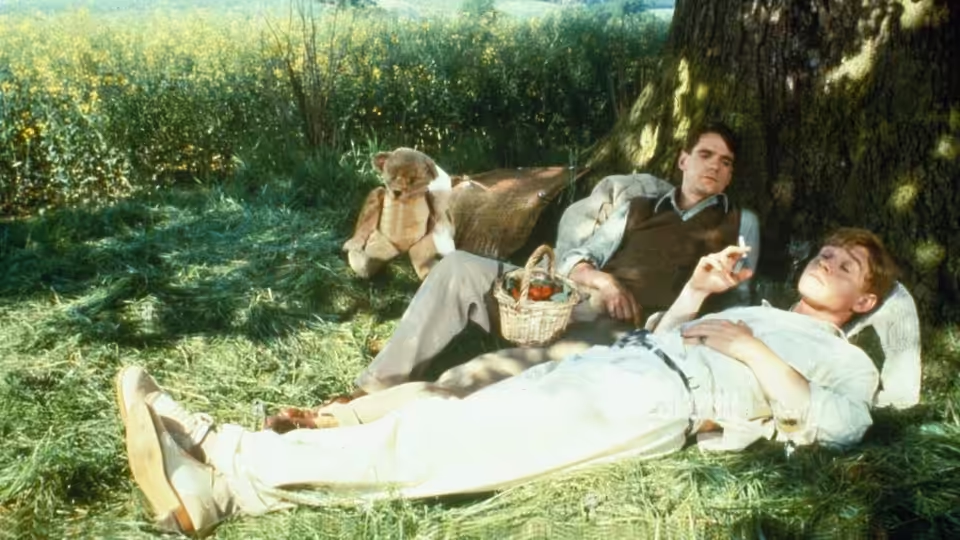
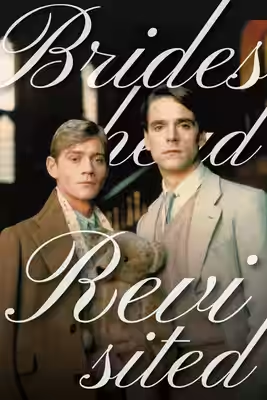
Charles Ryder (Jeremy Irons) sitting beside a companion on the grass with a picnic basket and teddy bear
Series review

Brideshead Revisited

1981 · Created by Derek Granger · Series · 1h 00m

In a sentenceEleven episodes is a fair allowance for people this reluctant to say what they mean

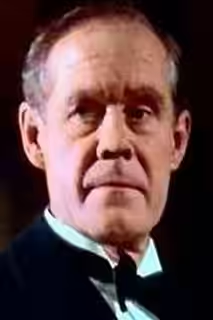
Brideshead Revisited follows Charles Ryder, played by Jeremy Irons, in a drama adapted from Evelyn Waugh’s novel. Diana Quick plays Lady Julia Flyte, with John Gielgud as Edward ‘Ned’ Ryder and Nickolas Grace as Anthony Blanche. The cast also includes John Le Mesurier as Father Mowbray, Roger Milner as Wilcox and Richard Hope as Lieutenant Hooper. Told across eleven television episodes, the adaptation is directed by Michael Lindsay-Hogg and Charles Sturridge, with writing by John Mortimer and music by Geoffrey Burgon.

Plays from YouTube when you press play; nothing loads from them until then.

Fi1m review

Jeremy Irons makes Charles Ryder’s reserve quietly moving in this patient adaptation of Evelyn Waugh. It sometimes lingers when it should move on, but the acting and the attention to small cruelties reward the commitment.

Brideshead Revisited is absorbing television, though its stately pace sometimes becomes a trial. This eleven-part adaptation of Evelyn Waugh’s novel gives its actors time to make reserve, embarrassment and self-command worth watching. Directors Michael Lindsay-Hogg and Charles Sturridge trust us to notice small changes in a performance without having every one underlined. That trust is largely repaid, even when we would happily trade a little elegance for a quicker scene.

Jeremy Irons gives the drama its strongest reason to take things slowly. The care with which he speaks as Charles Ryder can seem forbidding at first; then we begin to hear how much effort that calm requires. We were moved by the strain in his measured delivery. It makes Charles’s composure seem difficult to maintain, and gives his restraint something urgent. Irons can hold our attention without making a conspicuous bid for it, though the production occasionally asks that ability to carry too much.

Diana Quick gives Lady Julia Flyte a firmness that keeps the performance from becoming merely decorative. Her impatience is welcome when the surrounding drama threatens to become too careful with itself. John Gielgud, as Edward ‘Ned’ Ryder, brings a drier, more immediate pleasure: his precision makes discourtesy funny without asking for our approval. Nickolas Grace’s Anthony Blanche supplies a useful change of emphasis in an ensemble whose self-control can occasionally become exhausting.

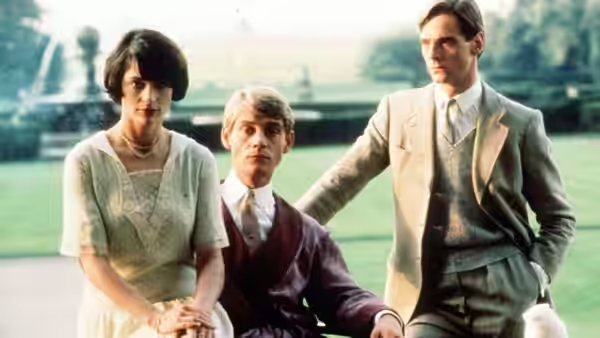
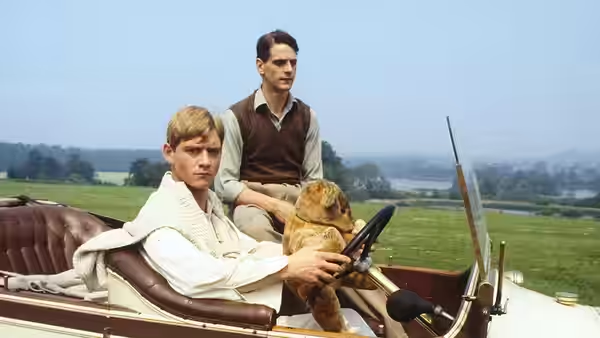
Ray Goode’s cinematography keeps us looking at faces even when their surroundings compete for attention. We sometimes wanted less time to admire the setting, but the images seldom make the people seem incidental. Peter Phillips’s production design makes the rooms feel inhabited, however much care has gone into their appearance. Jane Robinson’s costumes help us read differences in assurance: some people seem comfortable being looked at, others self-conscious about it. Those distinctions give the actors something useful to work with.

Geoffrey Burgon’s music supplies much of the tenderness, sometimes more than a scene needs. It is affecting, but we occasionally wished it would let an awkward exchange stay awkward without offering consolation. Editor Anthony Ham allows the performers room to finish a thought, including the thoughts they do not speak. That patience helps the acting, though some passages could lose time without losing meaning.

John Mortimer’s writing asks for close attention, and the actors generally justify it. The weakness comes when the production seems too satisfied with the dignity of a scene to ask whether it still needs to continue. We felt our attention slipping during some of those prolonged exchanges, despite the quality of the playing. Literary adaptations are particularly vulnerable to this: respect for the writing can discourage the useful business of cutting, and these directors do not always resist the temptation to linger.

The performances are good enough to make that reservation worth accepting. We recommend it particularly to anyone who enjoys watching actors make an apparently civil exchange uncomfortable, and who has patience for drama that leaves feelings unspoken. Allow it some quiet; this is not a programme to keep company with a second screen.

Critical consensus AI synthesised

62
Positive
3
Mixed
1
Negative
1
The AV Club
5 August 2002 · Tasha Robinson
85*

The 1981 miniseries is a unified, masterfully acted whole despite its troubled production. The superb cast, beautiful production design, outstanding dialogue and characterization, and universal themes of love, duty, faith, and family relationships stand out.

Read the full review →
The New York Times
31 January 1982
70*

The production ranks among the most memorable television of the decade for its exquisite adaptation and superb casting. Direction (begun by Michael Lindsay-Hogg) is intelligent and imaginative, though the series is not an unqualified success.

Read the full review →
The Guardian
30 August 2012
55*

The critic finds the 1981 series insufferable in its deferential class system and quest-for-grace storyline yet admires its nostalgic evocation of a lost world and certain performances. The adaptation is praised for cherishable scenes like those with John Gielgud but critiqued for airlessness and its influence on later cultural nostalgia.

Read the full review →
The Independent
22 February 1998 · Suzi Feay
25*

The 1981 series is described as having not worn well, with a crucifyingly slow pace and narcoleptic performances that make the nostalgia for privilege and self-harm unappealing. The director is faulted for indulging prettiness over substance, rendering the project dated in hindsight.

Read the full review →
Paste
15 July 2024 · Tim Basham
80*

The critic calls the 1981 BBC miniseries a beautifully engrossing soap opera. They single out its portrayal of early 20th-century British aristocracy, Catholic guilt, and dysfunctional upper-class family dynamics.

Read the full review →

Straight answers AI written, from our review

Is Brideshead Revisited worth watching?
Brideshead Revisited is worth watching for anyone with patience for drama that leaves feelings unspoken, and we scored it 83. Jeremy Irons makes Charles Ryder's reserve quietly moving across eleven episodes, and the ensemble rewards close attention. It sometimes lingers when it should move on, so it is not a programme for a second screen.
How long is Brideshead Revisited, and what is it rated?
Brideshead Revisited has episodes of about 1h 00m. It is a drama series.
Where can I watch Brideshead Revisited in the US?
Brideshead Revisited is streaming on Tubi, The Roku Channel and Apple TV in the US. Availability is checked daily; the links above go straight to each service.
How violent or frightening is Brideshead Revisited, and is it suitable for children?
Brideshead Revisited is not violent or frightening; it is a UK 15 for adult themes rather than anything graphic. The drama turns on embarrassment, small cruelties and things left unsaid, so it is unsuitable for young children mainly because it would bore them. Older teenagers with patience for slow, talkative drama will manage it.
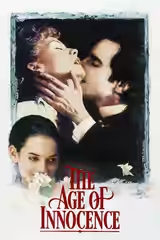
How does Brideshead Revisited compare to The Age of Innocence?
Brideshead Revisited and The Age of Innocence both watch people find elaborate ways not to say what they feel, but the series has eleven hours to do it and the film has one evening. The series gives its actors more room and occasionally too much; Scorsese's film is the tighter of the two, though it explains its manners more than it needs to.
Is Brideshead Revisited based on a true story or a book?
Brideshead Revisited is based on Evelyn Waugh's novel, not on a true story. John Mortimer's adaptation treats the writing with respect, sometimes to the point of lingering over scenes that could end sooner. You do not need to have read the book to follow it, but readers will recognise how patiently it has been handled.
What should I watch after Brideshead Revisited?
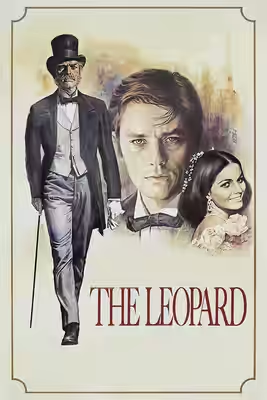
After Brideshead Revisited, try The Leopard (1963, Fi1m 88): Aristocratic life observed with affection, scrutiny and an eye for approaching change. Then The Age of Innocence (1993, Fi1m 86): For more people finding elaborate ways to avoid saying what they feel.

Cast

If you liked this, try…

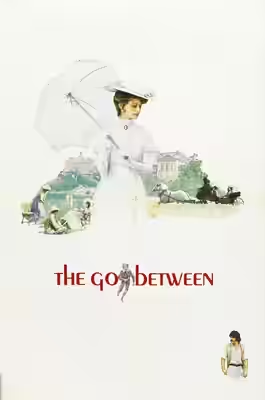
  1. The Go-Between (1971) · not reviewed yetAnother patient account of class, longing and the damage adults leave behind.

  2. The Leopard (1963, Fi1m 88)Aristocratic life observed with affection, scrutiny and an eye for approaching change.

  3. The Makioka Sisters (1983) · not reviewed yetFamily obligation and social appearances receive patient attention, with room for humour.

  4. The Age of Innocence (1993, Fi1m 86)For more people finding elaborate ways to avoid saying what they feel.

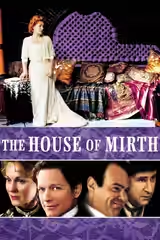
  5. The House of Mirth (2000) · not reviewed yetSocial confidence proves precarious in a literary adaptation alert to everyday cruelty.

Free account

Know what to watch tonight

Two lists that know where things are streaming, collections you can share, your own score beside ours, and Discover that remembers what you have seen.

  • Want to see, sorted by what is streaming now
  • Seen, with your score out of ten
  • No adverts, ever