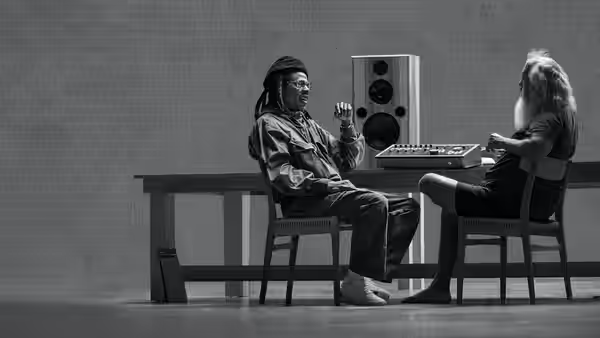
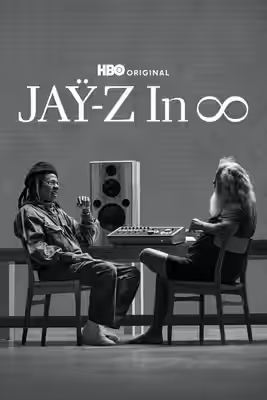
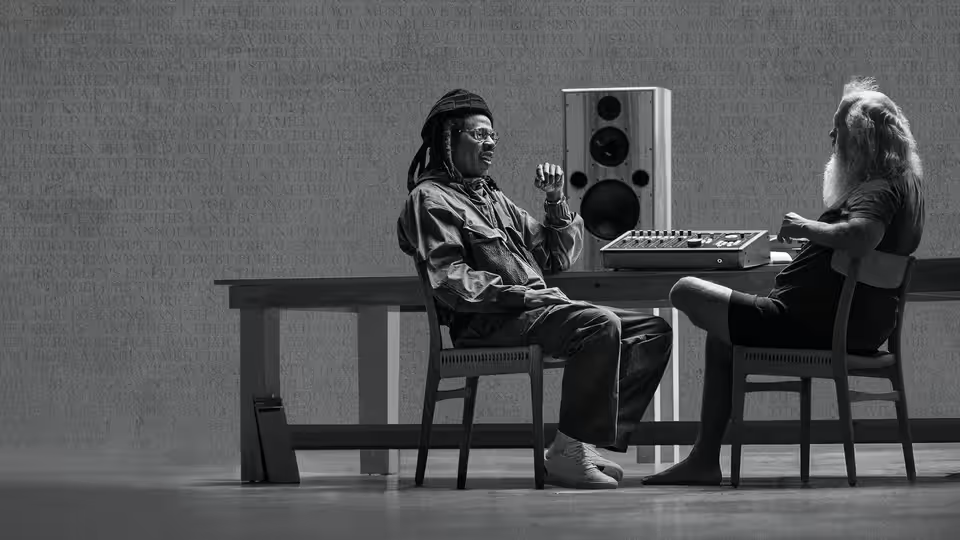
JAŸ-Z gesturing while seated across from Rick Rubin at a mixing console
Series review

JAŸ-Z in 8

2026 · Series

In a sentenceEight episodes of two friends agreeing with each other, one of them in verse

Rick Rubin, the producer who made “99 Problems” with him, sits down opposite JAŸ-Z (himself) for eight episodes and asks him to explain his own words. There are only two people on screen for most of it: the rapper, born in Brooklyn and recording since Reasonable Doubt in 1996, and the director. The first episode sets the terms. Rubin reads or plays a line, JAŸ-Z takes it apart, and the talk follows wherever the line leads: how a rhyme was built, what he was doing that year, who he was answering. There is no narrator and no panel of talking heads. The catalogue is the map, and the two men walk it record by record, with the lyrics on screen as they go.

Plays from YouTube when you press play; nothing loads from them until then.

Fi1m review

Rick Rubin sits JAŸ-Z down and takes the lyrics apart line by line, and when the series is on the words it is absorbing. Across eight episodes, the friendship that gets him talking is also what stops anyone asking him a hard question.

Rick Rubin has made a series about JAŸ-Z that consists, for the most part, of Rick Rubin and JAŸ-Z talking. Rubin directs, and he sits in the frame as the other half of the conversation, which is a choice with a history: he produced “99 Problems” for The Black Album in 2003. The idea is that a producer who respects the words can get a lyricist to explain them, and for long stretches the idea works. The idea is also stretched across eight episodes, and it does not survive the distance.

The good parts are the words. Rubin plays or reads a line, and JAŸ-Z, who has spent thirty years declining to explain himself, explains it: where the internal rhyme sits, which syllable he leaned on, what the boast was hiding. We were happier than we expected to be watching this, and we can say exactly why. It is the pleasure of watching a man who is good at something show his working, and JAŸ-Z is very good at it and has rarely been asked in this much detail. When he catches a line he had forgotten writing and laughs at his younger self, the series is doing something only it could do.

Bradford Young shoots it close and patient. The camera stays on faces, mostly one at a time, and the light is warm and low so that the space seems smaller than it is. Young does not cut away to archive every time the talk slows, which is the right decision; the series is at its best when nothing is on screen but a man thinking. The lyrics appear as text while he speaks, plainly set, and that is the one graphic device it needs.

The trouble is the man asking the questions. Rubin listens well and nods better, and he is plainly a fan, and a fan is the wrong interviewer for a subject this practised. Nobody on screen asks about the money, the business, the disputes with old partners, or the years when the records were worse than the ones being discussed. When JAŸ-Z steers a story towards its flattering end, Rubin lets him arrive. What we get is a portrait the subject would sign, and he probably has.

Then there is the length. Eight episodes is a great many hours of two people talking, and the series has not decided what each hour is for. Points made in the second episode return in the fifth, worded slightly differently. A tangent about the industry goes on until it is a chapter. By the sixth episode we were counting how many were left, which is not what a series about a man this interesting should reduce us to, and we resented it a little on his behalf.

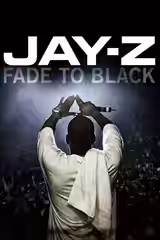
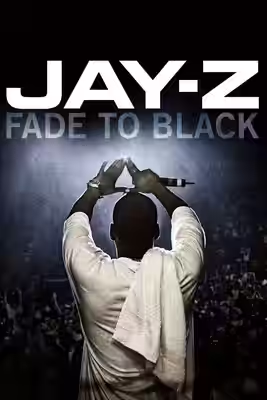
It sits in a familiar place among music documentaries made with the subject’s blessing. Fade to Black (2004) filmed him on stage and in the studio and let the performance do the arguing. This lets him do the arguing himself, at length, to a friend, and the result is fuller on craft and thinner on everything else. Leila Mattimore and David Rohde produce, and one wishes somebody in the chain had asked whether four episodes would have kept the best of it.

If you know the records, watch it, and watch it an episode at a time rather than in a run; the repetition matters less when a week sits between the chapters, and the lyric readings are worth the price of the padding. If you do not know the records, this will not persuade you to, because it never once considers that you might need persuading. It is a long conversation between two men who already agree, and the pleasure of it, which is real, is the pleasure of being allowed to sit in the corner.
Critical consensus AI synthesised

52
Positive
0
Mixed
3
Negative
1
Variety
18 September 2026 · Steven J. Horowitz
65*

It offers an illuminating technical deep-dive into Jay-Z's lyrics and career but often feels superfluous and too exhaustive. The interpersonal format yields revelatory details, though closeness between subject and director limits deeper probing.

Read the full review →
The Hollywood Reporter
17 September 2026 · Daniel Fienberg
60*

The critic finds it essential viewing for passionate Jay-Z fans but frustrating for general appreciators due to its excesses, redundancies, lack of focus, and over-sanitization. Great moments and intimate conversations are offset by irritating choices and a rambling structure.

Read the full review →
Vulture
22 September 2026 · Craig Jenkins
60*

Jenkins finds the series riveting but frustrating, calling it a must-see that too carefully protects Jay-Z’s legacy. He praises how the song selections draw out family history and trauma, while faulting the interview for sidestepping controversies and missteps.

Read the full review →
The Guardian
19 September 2026 · Shaad D'Souza
25*

The critic finds the series frustratingly unstructured and says it would work better as a podcast. They praise Jay-Z’s openness but fault the lyric explanations as filler and the conversations for lacking connective structure.

Read the full review →

Straight answers AI written, from our review

Is JAŸ-Z in 8 worth watching?
JAŸ-Z in 8 is worth watching if you already know the records, and we scored it 58. The best of it is JAŸ-Z taking his own lyrics apart line by line for Rick Rubin, which is absorbing; the worst is eight episodes of a friend never asking a hard question. Watch one episode a week rather than in a run.
Where can I watch JAŸ-Z in 8 in the US?
JAŸ-Z in 8 is streaming on Hulu in the US. Availability is checked daily; the links above go straight to each service.

Cast

If you liked this, try…

  1. Fade to Black (2004) · not reviewed yetThe same man, on stage at his supposed farewell, letting the crowd make the case.

  2. Shangri-La (2019) · not reviewed yetRubin on the other side of the camera, and a better subject than interviewer.

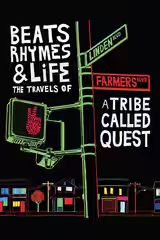
  3. Beats, Rhymes & Life: The Travels of A Tribe Called Quest (2011) · not reviewed yetA rap documentary that asks the awkward questions and lets the answers hurt.

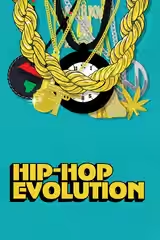
  4. Hip-Hop Evolution (2016) · not reviewed yetThe wider story, told by the people who were there, without a friend in the chair.

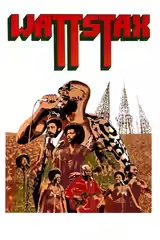
  5. Wattstax (1973) · not reviewed yetMusic, community and politics in one concert film, with no need for explanation.

Free account

Know what to watch tonight

Two lists that know where things are streaming, collections you can share, your own score beside ours, and Discover that remembers what you have seen.

  • Want to see, sorted by what is streaming now
  • Seen, with your score out of ten
  • No adverts, ever