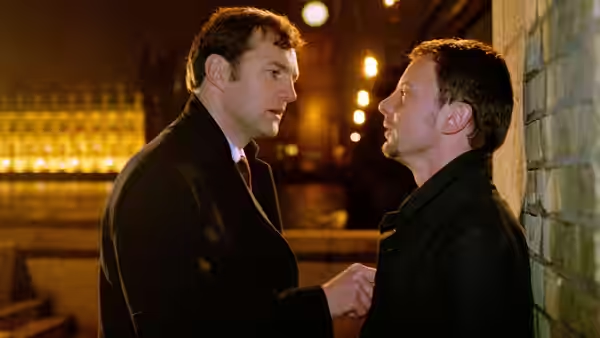
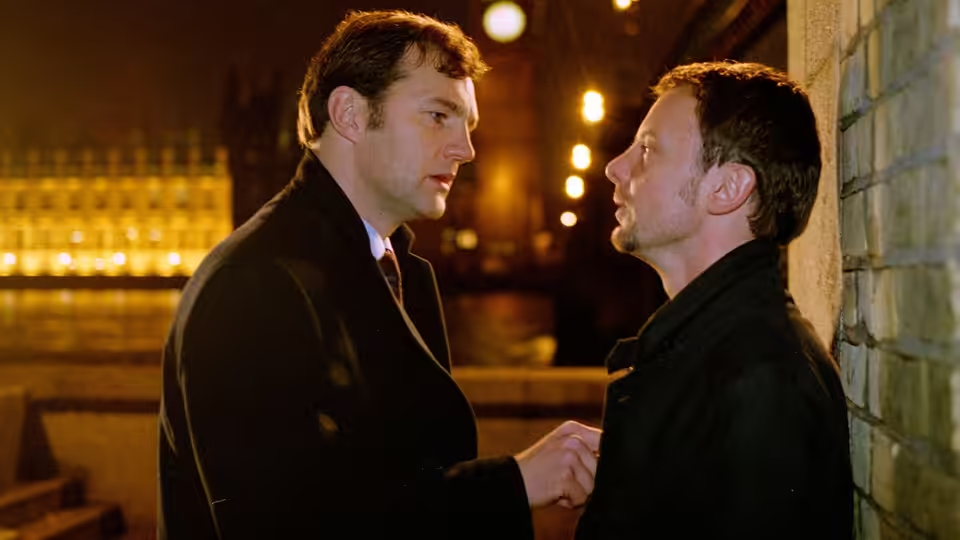
Two men in dark coats face each other closely at night by a brick wall
Series review

State of Play

2003 · Created by Paul Abbott · Series · MPA TV-14

In a sentenceA newsroom so watchable that we forgave it for making us concentrate

A newsroom investigation leads into a political conspiracy, as the people following the story try to make sense of an increasingly complicated set of connections. John Simm plays Cal McAffrey, David Morrissey is Stephen Collins and Kelly Macdonald is Della Smith. Bill Nighy plays Cameron Foster, with Polly Walker as Anne Collins and James McAvoy as Dan Foster. Written by Paul Abbott and directed by David Yates, the six-part series places the work of reporting at the centre of a mystery involving politics and crime.

Plays from YouTube when you press play; nothing loads from them until then.

Fi1m review

Paul Abbott’s six-part conspiracy thriller makes its newsroom convincing and its complicated story worth following. The ensemble is a particular pleasure, though the density sometimes leaves us keeping track when we would rather stay with a character.

Paul Abbott’s State of Play is a sharply written political thriller that earns the attention its complicated story demands. Across six episodes, director David Yates gives the investigation room to develop without treating explanation as a regrettable interruption. We recommend it, with a warning that casual viewing will cost some of the pleasure. Following the story requires concentration, and Abbott usually makes that effort satisfying. It is also unusually good company for a drama with so much information to get through.

The newsroom gives the conspiracy a convincing place to begin. Abbott makes the work of pursuing a story interesting, and Donal Woods’s production design helps us believe that these people belong in the same workplace. We grew unexpectedly fond of this newsroom. The ensemble makes the shared business of reporting feel sufficiently credible that we care about the people doing it, even when there is plenty else to keep track of.

John Simm gives Cal McAffrey an urgency that helps us stay with the accumulating detail. David Morrissey’s Stephen Collins is harder to read, and the performance rewards the attention Yates allows it. Kelly Macdonald brings a welcome directness to Della Smith, while Bill Nighy, as Cameron Foster, supplies much of the dry pleasure. Nighy can make a line sound impatient without making the person delivering it tiresome, a useful skill when there is this much to discuss.

Yates is especially good at letting complicated material become clear without stopping the drama dead. Chris Seager’s cinematography keeps the ensemble scenes readable, so the people carrying the information retain our attention. Nicholas Hooper’s music supports the suspense without overwhelming the conversations, which are where much of the pleasure lies. The pacing gives the cast room to make those exchanges matter; a revelation has more force when we have been allowed to follow the reasoning that leads to it.

There is a cost to all this plotting. At times we are more conscious of keeping the connections straight than of what the characters are feeling, and the density can make a conversation feel like another task to complete. We occasionally want Abbott to let a conversation continue without adding something else to remember. These are brief frustrations, but an ensemble this good makes us notice when the story hurries it along.

The conspiracy thriller often asks us to accept confusion as evidence that something important is happening. Here we can follow the reasoning, which makes it harder to excuse ourselves from paying attention. That may be a barrier if tonight calls for a crime programme that can carry on in the background. A missed conversation is liable to matter here. Save this one for evenings when everyone on the sofa is prepared to listen.

Critical consensus AI synthesised

3 of 6
Positive
3
Mixed
0
Negative
0
The AV Club
7 December 2011 · Kevin McFarland
90*

The critic calls the 2003 BBC miniseries a masterpiece of serialized conspiracy drama and required viewing for fans of well-written, well-acted political thrillers. They single out its meticulously complicated yet easy-to-follow plot, strong ensemble cast (including early roles for James McAvoy and others), and expert direction by David Yates that lets the story breathe over six episodes.

Read the full review →
The Guardian
19 May 2003 · Gareth McLean
90*

The critic calls the series a brilliant and ballsy thriller with a gripping story, ace acting, and an outstanding script by Paul Abbott. It is praised for its integrity, believable newsroom world, and compelling conspiracy plot that keeps viewers hooked.

Read the full review →
The Times
19 May 2003
70*

The review discusses the first episode of Paul Abbott’s six-part BBC thriller State of Play, noting its political setting and strengths in storytelling despite some clichéd elements. It highlights the central friendship between characters and the show's potential as entertaining drama.

Read the full review →

Straight answers AI written, from our review

Is State of Play worth watching?
State of Play is worth watching for anyone prepared to concentrate on a six-part conspiracy thriller, and we scored it 88. Paul Abbott's newsroom is convincing, the ensemble led by John Simm, David Morrissey and Bill Nighy is a particular pleasure, and the complicated story rewards close attention. It is not a programme to run in the background; a missed conversation is liable to matter.
How long is State of Play, and what is it rated?
State of Play is rated TV-14 by the MPA in the US. It is a mystery and drama series.
Where can I watch State of Play in the US?
State of Play is not on any streaming or rental service in the US at the moment. It is available in 4 other countries; change your country at the top of the page to see where. Availability is checked daily.
How violent or frightening is State of Play, and is it suitable for children?
State of Play carries a UK PG certificate and a US TV-14 rating, so it contains little that should trouble the squeamish. It is a drama of newsrooms, politics and conversation rather than one of on-screen violence, and the demands it makes are on attention rather than nerves. Younger children are more likely to be bored than frightened; teenagers who enjoy a dense mystery will do well with it.
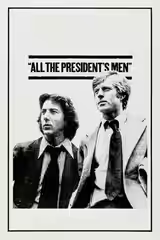
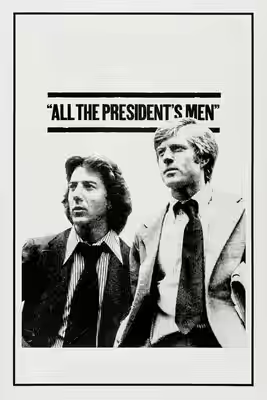
How does State of Play compare to All the President's Men?
State of Play and All the President's Men both make the patient work of reporting into suspense, and we recommend them side by side. Alan J. Pakula's film is the tighter of the two and the one we would hand to almost anyone, while Abbott's six episodes give the ensemble more room and ask more of the viewer in keeping the connections straight. Choose the film for a single evening and the series for a week of concentration.
What should I watch after State of Play?
After State of Play, try All the President's Men (1976, Fi1m 90): Patient reporting, difficult sources and the suspense of getting the facts right. Then Z (1969, Fi1m 84): A political investigation whose accumulating detail makes the danger feel steadily closer; and Spotlight (2015, Fi1m 85): For the painstaking newsroom work, and the uneasy responsibilities that come with it.

Cast

If you liked this, try…

  1. All the President's Men (1976, Fi1m 90)Patient reporting, difficult sources and the suspense of getting the facts right.

  2. Z (1969, Fi1m 84)A political investigation whose accumulating detail makes the danger feel steadily closer.

  3. Edge of Darkness (1985) · not reviewed yetAnother British conspiracy drama that gives its human damage room to register.

  4. Spotlight (2015, Fi1m 85)For the painstaking newsroom work, and the uneasy responsibilities that come with it.

  5. The Hour (2011) · not reviewed yetNewsroom loyalties and political pressure, with more room for personal entanglements.

Free account

Know what to watch tonight

Two lists that know where things are streaming, collections you can share, your own score beside ours, and Discover that remembers what you have seen.

  • Want to see, sorted by what is streaming now
  • Seen, with your score out of ten
  • No adverts, ever