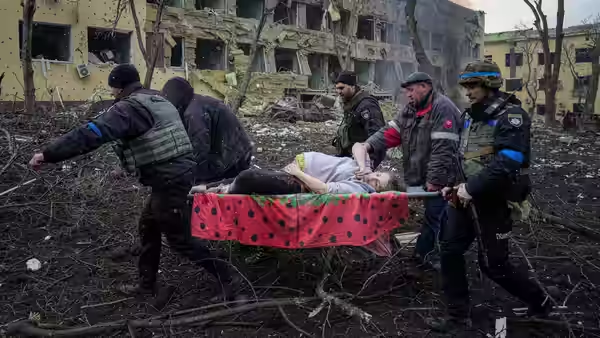
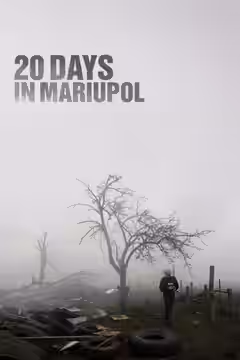
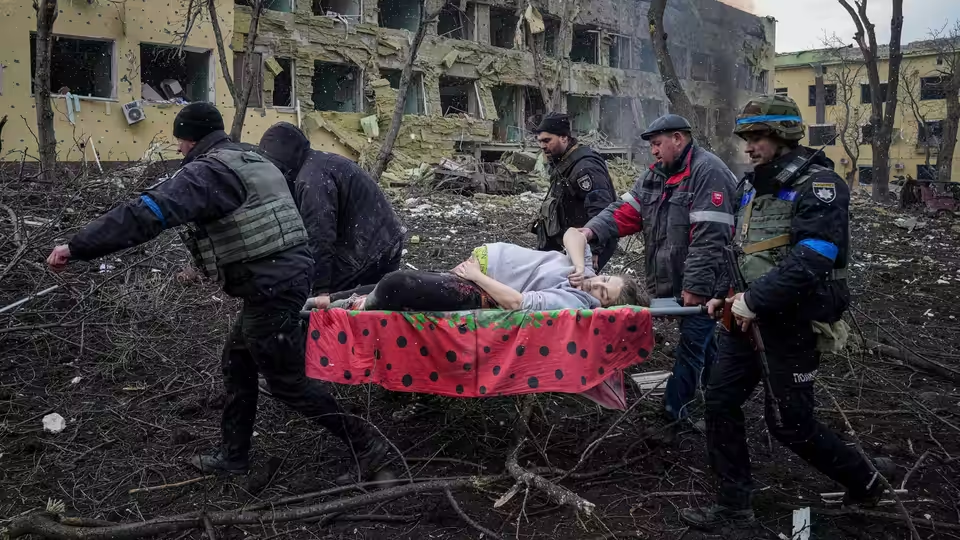
Rescue workers carrying an injured person on a stretcher through rubble near a damaged building
Film review

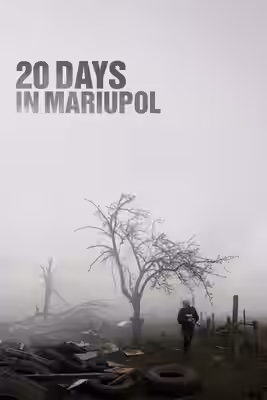
20 Days in Mariupol

2023 · Directed by Mstyslav Chernov · 1h 34m · MPA NR

In a sentenceThe civilians begging to be filmed are harder to forget than the wreckage

Director Mstyslav Chernov appears as himself, narrating and conducting interviews in this war documentary. Evgeniy Maloletka also appears as himself and supplies the cinematography. The people on screen include Liudmyla Amelkina, Zhanna Homa and Oleksandr Ivanov, each appearing under their own name rather than playing a fictional character. Irina Kalinina, Volodymyr Nikulin and Anastasiya Yerashova also appear as themselves. Chernov writes and directs the film, with Michelle Mizner editing the documentary footage and Jordan Dykstra composing the music that accompanies it.

Plays from YouTube when you press play; nothing loads from them until then.

Fi1m review

We strongly recommend Mstyslav Chernov’s documentary about the siege of Mariupol, with a firm warning about its distressing images. The civilian testimony commands attention, although the sombre narration sometimes presses harder than it needs to.

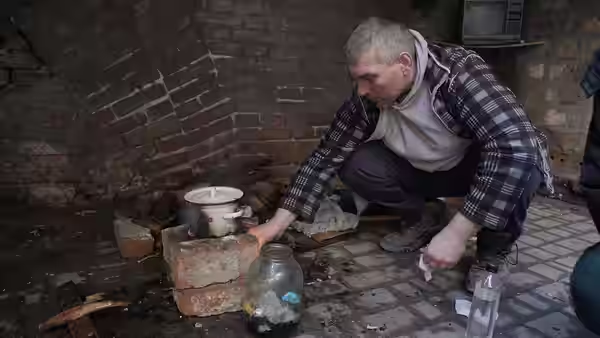
20 Days in Mariupol is an exceptional piece of reporting, and a film we recommend with a firm warning about the distress it causes. Director Mstyslav Chernov records civilians under siege at the beginning of Russia’s invasion, staying close to people whose immediate task is to survive. He also narrates, giving the account an identifiable person behind the camera. The purpose is plain enough: to show what happens to civilians when their city is attacked.

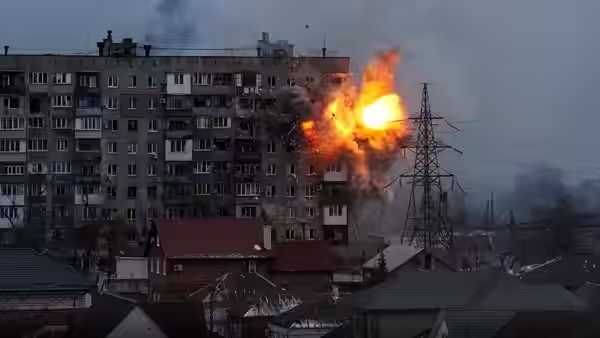
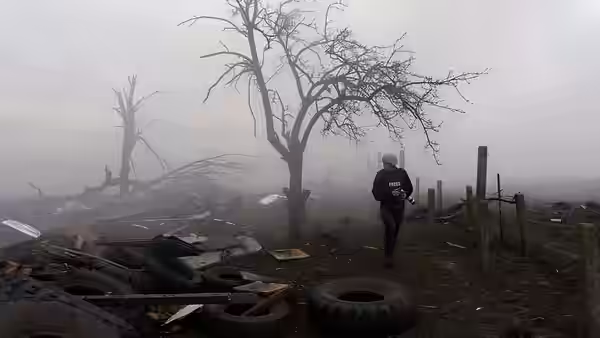
Evgeniy Maloletka’s cinematography has the instability of a camera being used under threat. Damaged buildings and distressed civilians are recorded from the ground, close enough that we have to work to understand what we are seeing. The shaking can be exhausting. It also makes the confusion felt without preventing us from recognising individual suffering. The footage’s roughness helps us understand the conditions in which it was made, and there is little temptation to admire a composition while overlooking its subject.

We were horrified by the footage of injured children and their parents’ distress. Chernov keeps the human consequences of the bombardment before us long enough that we cannot absorb them as another piece of news and move on. The parents command our attention as completely as the wounds. These passages are difficult to sit through, and the difficulty is inseparable from what they show.

Michelle Mizner’s editing has the difficult job of condensing the reportage into 94 minutes without making the siege look orderly. The accumulation of injuries, wrecked buildings and people needing help remains comprehensible. Mizner gives the human encounters room to register, so the damaged buildings do not become the film’s only measure of destruction. We can follow the account without being offered a tidy explanation for each person’s experience. That clarity matters when so much of what is being recorded is confusion.

Chernov’s sombre narration is less convincing when it seems to underline an emotional response the footage has already produced. His presence is useful: a named witness helps us understand whose account we are hearing. But some of the emphasis feels unnecessary beside the directness of the civilians’ distress. Jordan Dykstra’s music adds another prompt to feel the gravity of what we are seeing, and we rarely need it. These are limited objections, though the plainest passages make us wish the film trusted its recorded voices a little more.

The residents who ask the journalists to record what is happening complicate the question of when a camera should be put down. Their requests give the journalists a job they want done, even when watching feels intrusive. The account of Russian disinformation also explains why those pictures matter beyond the immediate experience of seeing them. As a war documentary, it makes a persuasive case for eyewitness reporting by showing who needs it. Chernov keeps our attention on those civilians and resists making his own courage the main subject.

The film offers little relief, and its 18 certificate should be taken seriously. This is not something to put on while deciding how much attention to give it. Anyone who finds footage of injured children intolerable should heed that warning without apology. For those who decide to watch, we would suggest leaving some quiet afterwards.

Critical consensus AI synthesised

95
Positive
6
Mixed
0
Negative
0

The reviews are uniformly positive about 20 Days in Mariupol, with praise centred on the immediacy of its eyewitness footage and its record of civilian suffering. Critics repeatedly single out the journalists’ work inside hospitals and amid the city’s destruction, finding the images deeply upsetting but necessary to confront. The narration also draws praise for guiding viewers through the collapse of ordinary life, while the reporting is valued for documenting events that Russian disinformation seeks to deny.

The differences concern emphasis rather than substantial objections, and there is no negative dissent in the supplied reviews. Time Out notes the lack of hope found in comparable documentaries, though it praises Chernov’s refusal to put himself at the centre. Paste questions the usefulness of conventional judgements about film quality here, concentrating instead on the footage’s immediacy and the obligation to bear witness.

Financial Times
5 October 2023 · ★★★★★ · Danny Leigh
100

The review describes the film as a scalding documentary recording the siege from inside the city, showing the destruction of buildings, bodies and truth. It opens with the eerie observation that wars start with silence and notes the city's reduction to ruin.

Read the full review →
The Times
5 October 2023 · ★★★★★ · Kevin Maher
100

This personalised account of life inside Mariupol at the start of the invasion is called documentary film-making at its most impactful and devastating. It captures extremely upsetting footage of bomb-blasted children and the soul-piercing grief of parents.

Read the full review →
Los Angeles Times
21 July 2023 · Robert Abele
90*

The review describes the film as agonizing, essential, brutal, necessary and heart-pounding, an unflinching account of civilians trapped in the city's fall. The critic singles out the visceral on-the-ground dispatches from the AP team as deserving attention.

Read the full review →
Radio Times
5 out of 5 stars · Calum Baker

The critic describes it as a harrowing and vital documentary capturing the assault in unflinching detail, praising the voiceover narration, real-time portrayal of social collapse, and its immersive first-hand reportage.

Read the full review →
Sight and Sound
6 October 2023

The critic praises the film's harrowing on-the-ground reportage of the Mariupol siege, highlighting Chernov's ethical dilemmas and the importance of firsthand documentation amid the fog of war. It singles out the vivid capture of confusion and human stories for praise.

Read the full review →
The Guardian
4 October 2023 · Peter Bradshaw

The critic finds genuine horror in this eyewitness documentary of the Russian attack on Mariupol, with moments so intense they prompt head-in-hands reactions. Chernov's footage captures the uncut nightmare of civilian suffering and Russian atrocities in unflinching detail.

Read the full review →

Straight answers AI written, from our review

Is 20 Days in Mariupol worth watching?
20 Days in Mariupol is worth watching for anyone prepared for a distressing record of civilians under siege, and we scored it 92. Mstyslav Chernov's reporting keeps injured children and their parents before us for longer than the news would allow. The sombre narration and Jordan Dykstra's music sometimes press harder than the footage needs, but this is a limited objection.
How long is 20 Days in Mariupol, and what is it rated?
20 Days in Mariupol runs 1h 34m and is rated NR by the MPA in the US. It is a documentary and war film.
Where can I watch 20 Days in Mariupol in the US?
20 Days in Mariupol is streaming on Amazon Prime Video in the US, and it is also available to rent from Amazon Prime Video from $1.99. Availability is checked daily; the links above go straight to each service.
How violent or frightening is 20 Days in Mariupol, and is it suitable for children?
20 Days in Mariupol is an 18 certificate in the UK, and the rating should be taken seriously: it contains real footage of injured children, distressed parents and wrecked buildings, with almost no relief. It is not suitable for children, and anyone who finds footage of wounded children intolerable should stay away. For adults who do watch, we would suggest leaving some quiet afterwards.

How does 20 Days in Mariupol compare to For Sama?
20 Days in Mariupol is a journalist's account of the siege of Mariupol, while For Sama is Waad al-Kateab's record of the siege of Aleppo addressed to her infant daughter, so the earlier film is the more personal of the two. Both are hard to sit through and both we recommend. Choose Chernov's film for eyewitness reporting, and al-Kateab's for a single family's endurance.
What should I watch after 20 Days in Mariupol?
After 20 Days in Mariupol, try For Sama (2019, Fi1m 88): A family’s life under siege gives another close account of civilian endurance. Then Collective (2019, Fi1m 88): Journalists follow a public disaster into institutional failures that compound the suffering; and The Look of Silence (2014, Fi1m 87): Patient encounters test what witnesses can establish when perpetrators refuse responsibility.

Cast

Awards

Academy Awards, 2024

Won
Best Documentary Feature Film

BAFTA Film Awards, 2024

Nominated
Best Film Not in the English Language
Won
Best Documentary

International Submission to the Academy Awards, 2024

Nominated
International Submission to the Academy Awards

Sundance Film Festival Grand Jury Prize for Best Documentary, 2023

Nominated
Sundance Film Festival Grand Jury Prize for Best Documentary

Sundance World Cinema Audience Award: Documentary, 2023

Won
Sundance World Cinema Audience Award: Documentary

If you liked this, try…

  1. For Sama (2019, Fi1m 88)A family’s life under siege gives another close account of civilian endurance.

  2. Collective (2019, Fi1m 88)Journalists follow a public disaster into institutional failures that compound the suffering.

  3. The Look of Silence (2014, Fi1m 87)Patient encounters test what witnesses can establish when perpetrators refuse responsibility.

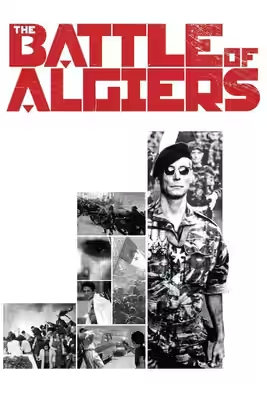
  4. The Battle of Algiers (1966, Fi1m 93)A staged account of urban conflict that keeps civilians within the frame.

  5. Night and Fog (1956, Fi1m 91)A short documentary that asks how images of atrocity should be seen.

Free account

Know what to watch tonight

Two lists that know where things are streaming, collections you can share, your own score beside ours, and Discover that remembers what you have seen.

  • Want to see, sorted by what is streaming now
  • Seen, with your score out of ten
  • No adverts, ever