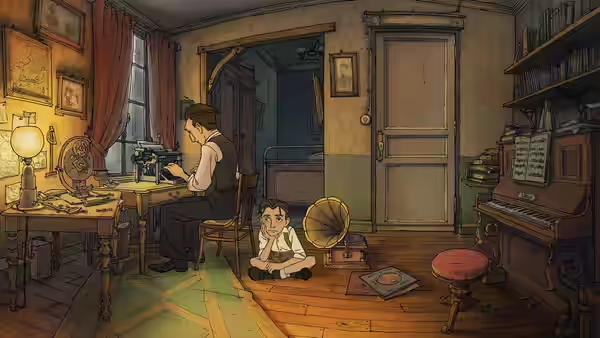
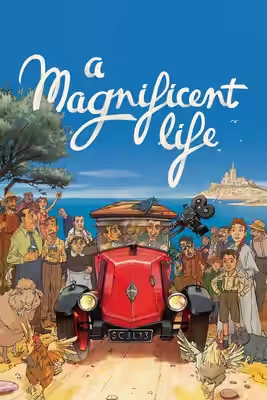
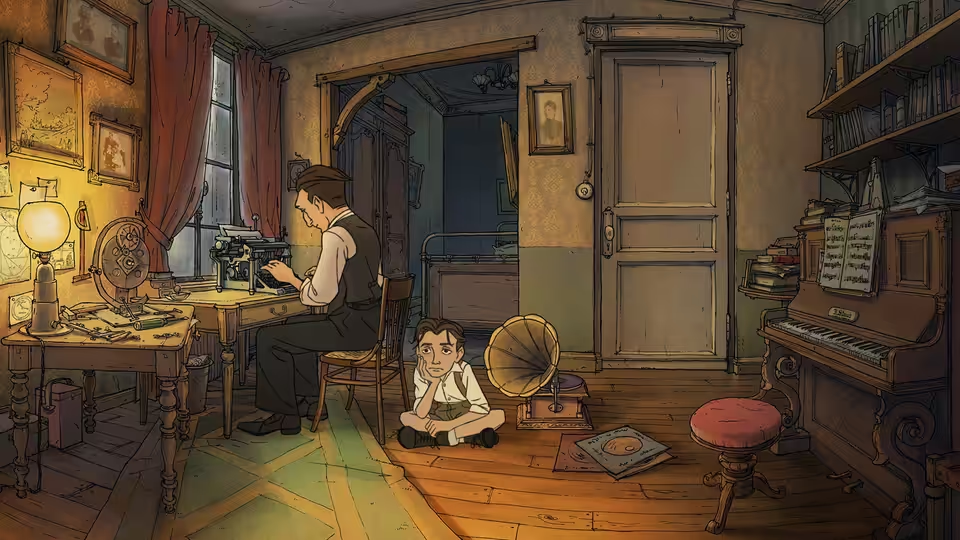
man typing at a desk while boy sits on floor with gramophone
Film review

A Magnificent Life

2025 · Directed by Sylvain Chomet · 1h 31m · MPA PG-13

In a sentenceA life’s worth of anecdotes, exquisitely drawn and told at the pace of a man reading them off a plaque

Marcel Pagnol (Laurent Lafitte), playwright, novelist and film-maker, is asked late in life to write the story of his childhood and cannot get a sentence down. Into his study walks a boy in short trousers: himself, aged about ten (Noa Staes), sent to make him remember. Together they go back to the hills of Provence and to his mother, Augustine (Géraldine Pailhas), and then forward through the schoolroom where he first teaches, the Paris theatres where his plays make his name, and the studios in Marseille where he shoots films with Raimu (Thierry Garcia), Fernandel (Vincent Fernandel) and Orane Demazis (Anaïs Petit). His wives Simone (Sophie Maréchal) and Jacqueline (Olivia Gotanègre) arrive in turn. The boy wants the story told straight; the man keeps changing the subject.

Plays from YouTube when you press play; nothing loads from them until then.

Fi1m review

Sylvain Chomet’s first film in fifteen years is drawn with all his old skill and tells Marcel Pagnol’s life as a run of fond anecdotes with nothing much joining them. Lovely to look at, and the man himself never quite comes into focus.

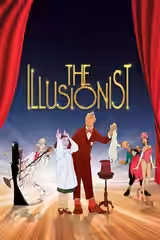
Sylvain Chomet has not made a feature since The Illusionist in 2010, and he has come back with a film about a man who made a great many. A Magnificent Life, released in France as Marcel et Monsieur Pagnol, is a hand-drawn biography of the playwright and film-maker Marcel Pagnol, told in 91 minutes with a great deal of affection and not quite enough shape. It is a pleasure to look at for every one of those minutes. Whether it is worth your evening depends on how much you already care about the man.

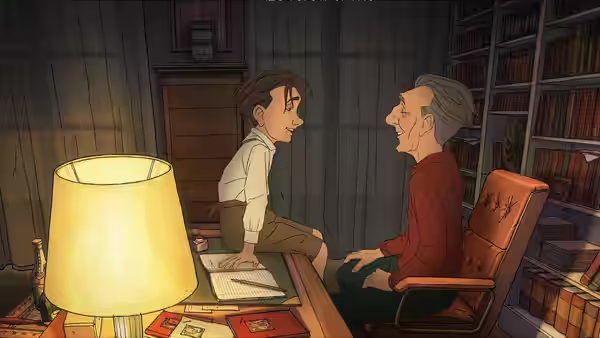
The framing is a ghost story of sorts. The grown Pagnol (Laurent Lafitte, warm and slightly harried) is asked for his childhood memoirs, cannot write them, and is visited by the boy he was (Noa Staes), who badgers him into remembering. It is a neat idea and Chomet trusts it for about twenty minutes. After that the boy becomes a way of skipping: to the schoolroom, to Paris, to the Marseille studios, to the next wife, with the man and the child commenting from the edge of the frame like tour guides who have done the route too often.

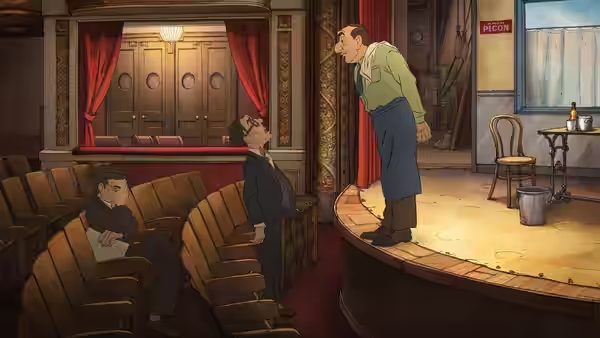
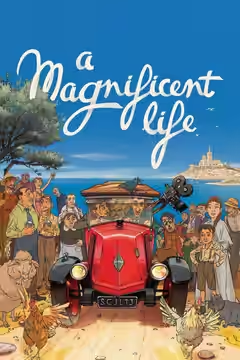
Chomet still draws people as nobody else does, all nose and jaw and elbow, and Raimu (Thierry Garcia) in particular arrives as a great slab of a man whose face does three things a second. Elric Lefeuvre lights Provence in the yellow of dry grass and Paris in the grey of wet pavement, and the film is happier, and better, whenever it is in the yellow. Stefano Bollani’s score is brisk and jaunty and is often the only thing in a scene with any forward motion.

The scenes with his mother got to us. Chomet draws Augustine (Géraldine Pailhas) thin and tired and always looking at her son, Pailhas gives her a voice that is patient about everything except his safety, and there is a stretch in the hills where nothing happens except a family walking home in the heat and we found ourselves, without warning, close to tears. We had not expected that from a film that had been, until then, a slideshow. It is the one place where Chomet stops telling us that Pagnol loved something and lets us see why.

The rest is a list. Pagnol teaches; Pagnol goes to Paris; Pagnol writes a hit; Pagnol meets Raimu; Pagnol builds a studio; Pagnol marries Simone (Sophie Maréchal) and, later, Jacqueline (Olivia Gotanègre); Orane Demazis (Anaïs Petit) comes and goes with little said about what she was to him. Each of these gets a scene, some get two, none gets a conflict. Chomet’s screenplay knows what happened and has no view on it, so the film cannot tell the difference between the thing that mattered and the thing that came next. Three editors are credited, Samuel Denou, Mario Houles and Julie Salon, and the joins show: the film hops between decades and leaves us to work out how many years have passed and why we should mind.

The Triplets of Belleville had almost no dialogue and you could not mistake one of its scenes for another. This one has dialogue everywhere and its scenes blur. Chomet has always been better at rooms than at stories, and a biography is the one form that will not let a director get away with that; someone has to decide what the life meant. Here the deciding has been left to Pagnol himself, who died in 1974 and is in no position to help.

If you know the plays or the films, or grew up on the childhood books, this is a fond and pretty evening in good company, and the drawing alone will hold you. If you do not, you will learn what happened to Marcel Pagnol and not why anyone cared. It runs 91 minutes and carries a 12A, and the children that certificate admits will be looking at their shoes within ten.

Critical consensus AI synthesised

57
Positive
4
Mixed
4
Negative
3

Most critics agree on one thing: Sylvain Chomet’s hand-drawn animation is the reason to see this portrait of Marcel Pagnol. Nearly every review, favourable or not, singles out the craft, the expressive faces and the period detail, and several mention the score as a further pleasure. Those who like it most call it warm, affectionate and mellow, a fond account of a writer’s life and his standing in French culture.

The reservations cluster around the storytelling. Critics find the framing device that brings young and adult Pagnol together either charming or muddling, and a good number call the script a by-the-numbers run through the biography, short on conflict and on any real sense of how Pagnol worked. Several warn that newcomers will feel left outside. The spread is wide: Variety finds the film dramatically inert, while Polygon and Eye for Film count its softness as a virtue. The consensus sits in the middle, admiring the pictures and wishing the film around them had more drive.

Time Out
19 May 2025 · ★★★★ · Phil de Semlyen
80

The critic praises Chomet’s handmade animation and humanism in this warm-hearted biopic of Marcel Pagnol. The film is commended for its affectionate portrayal of the writer’s life, legacy, and cultural significance despite a conventional framing device.

Read the full review →
Screen Daily
18 May 2025 · festival review
60*

The review describes the film as a fond but sugar-glazed and dewy-eyed heritage portrait of Pagnol that may appeal most to older viewers and Francophiles. It notes the soft-hearted tone, visual conservatism, and occasional cuteness alongside the cultural specifics.

Read the full review →
The Hollywood Reporter
20 May 2025 · festival review · Frank Scheck
60*

The critic praises the film's gorgeous hand-drawn animation and visual imagination as ample reward but finds the storytelling rudimentary, clumsily scripted, and narratively overstuffed, losing momentum while covering too many biographical details.

Read the full review →
Slant Magazine
20 November 2025 · Justin Clark
45*

The critic calls it a lyrical, dreamlike love letter with warm and intimate details but criticizes its frustrating tangents, scant sense of Pagnol's creative process, and Wikipedia-like approach that may leave unfamiliar viewers feeling like outsiders.

Read the full review →
IndieWire
20 May 2025 · festival review · Ritesh Mehta
40*

The critic views the tribute as flying by without making an impact, noting that despite Chomet's return to animation the film fails to leave a strong impression.

Read the full review →
RogerEbert.com
27 March 2026 · Matt Zoller Seitz
40*

The critic finds the film visually beautiful in its hand-drawn animation but narratively fragmented and confusing due to a weak framing device involving young and adult Pagnol. It praises Chomet's expressive style in isolated moments but concludes the biopic feels like less than the sum of its parts.

Read the full review →

Straight answers AI written, from our review

Is A Magnificent Life worth watching?
A Magnificent Life is worth watching if you already care about Marcel Pagnol or love Sylvain Chomet's drawing, and we scored it 61. It is a run of fond, beautifully drawn anecdotes with nothing much joining them, so newcomers will learn what happened to Pagnol and not why anyone minded. One stretch, a family walking home through the Provence hills, is worth the evening on its own.
How long is A Magnificent Life, and what is it rated?
A Magnificent Life runs 1h 31m and is rated PG-13 by the MPA in the US. It is an animation and history film.
Where can I watch A Magnificent Life in the US?
A Magnificent Life is available to rent from Amazon Prime Video and Apple TV from $5.99. Availability is checked daily; the links above go straight to each service.
How violent or frightening is A Magnificent Life, and is it suitable for children?
A Magnificent Life carries a 12A and contains nothing our review found violent or frightening; it is a gentle, hand-drawn biography of a playwright. The certificate points to some adult matter, chiefly the marriages and the theatre world, rather than anything alarming. The real difficulty for children is boredom: it is 91 minutes of grown-ups remembering, and we expect the young to be looking at their shoes within ten.
How does A Magnificent Life compare to The Illusionist?
A Magnificent Life is the talkier and less shapely of Sylvain Chomet's two films about performers, and The Illusionist is the better made. The earlier film is near-silent and unrelievedly sad, and you could not mistake one of its scenes for another; this one is warmer and chattier and its scenes blur. Choose The Illusionist for Chomet at his purest, and this one if you want easier company and already love Pagnol.
Is A Magnificent Life based on a true story or a book?
A Magnificent Life is based on the real life of Marcel Pagnol, the French playwright, novelist and film-maker, and draws on his own writing about his childhood. Chomet treats the facts fondly and without much of a view, so the film records what happened rather than arguing over it. You need not know the books beforehand, but those who do will get far more from it.
What should I watch after A Magnificent Life?
After A Magnificent Life, try The Illusionist (2010, Fi1m 78): Chomet’s earlier, quieter film about a performer whose time is passing; almost no words and no need for them. Then The Baker's Wife (1938, Fi1m 78): Pagnol directing Raimu; the best case for why this film exists; and Loving Vincent (2017, Fi1m 65): Another painted life of an artist, told by the people who knew him.

Cast

Awards

Annecy Cristal for a Feature Film, 2025

Nominated
Annecy Cristal for a Feature Film

If you liked this, try…

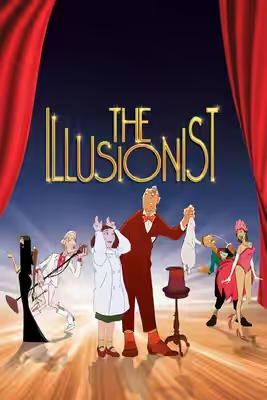
  1. The Illusionist (2010, Fi1m 78)Chomet’s earlier, quieter film about a performer whose time is passing; almost no words and no need for them.

  2. My Father's Glory (1990) · not reviewed yetPagnol’s own childhood memoir on film, the Provençal hills in full sun.

  3. The Baker's Wife (1938, Fi1m 78)Pagnol directing Raimu; the best case for why this film exists.

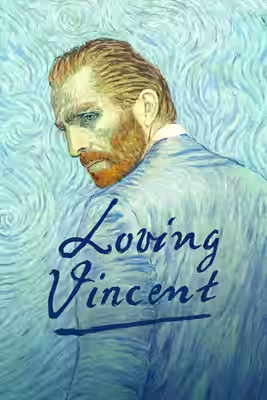
  4. Loving Vincent (2017, Fi1m 65)Another painted life of an artist, told by the people who knew him.

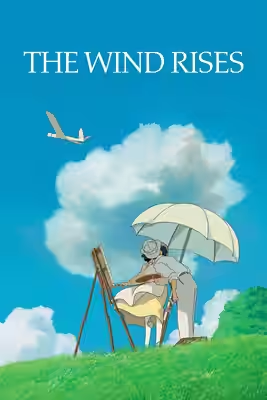
  5. The Wind Rises (2013, Fi1m 77)Miyazaki’s animated biography of a maker, with the shape this one lacks.

Free account

Know what to watch tonight

Two lists that know where things are streaming, collections you can share, your own score beside ours, and Discover that remembers what you have seen.

  • Want to see, sorted by what is streaming now
  • Seen, with your score out of ten
  • No adverts, ever