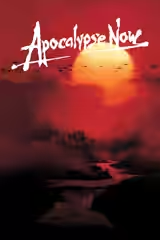
The reviews are close to unanimous: twenty-one read, one negative, none mixed. The praise gathers around Vittorio Storaro’s photography and the sound design, which most critics credit with making the river journey something felt rather than followed. The helicopter assault on the village is the sequence named again and again, as proof of Coppola’s command of rhythm and space. Sheen, Brando and Duvall are singled out, though this is treated as the director’s film first.
The reservations cluster at the end. Several critics, particularly those writing in 1979, find the final half-hour around Kurtz loses conviction after two hours of black comedy and horror; The Guardian, reviewing from the festival, goes furthest and calls the second half overtaken by literary pretension. A few note the narrow, American view of Vietnam. Critics also disagree about which cut to watch: the theatrical version is preferred for its tension, though Redux and the Final Cut each have defenders for the sound.
L
Little White Lies
22 May 2011 · 5/5/5 · Matt Bochenski
100
The critic hails Apocalypse Now as a gilt-edged masterpiece and one of the defining films of 1970s Hollywood, touched by genius in its portrayal of war's horror and madness. He singles out Coppola's absolute mastery of the frame and the precise layering of images in unforgettable dramatic moments like the Air Cavalry assault.
Read the full review →T
The Times
9 August 2019 · ★★★★★ · Ed Potton
100
Coppola’s latest cut of his Vietnam opus remains a masterpiece with improved visuals and sound that capture the hallucinatory horror, even if some added scenes feel inessential.
Read the full review →T
Time Out
24 May 2011 · ★★★★★ · Tom Huddleston
100
The critic lauds the lean original cut reissue as slick and streamlined, highlighting its pure sensation of light, noise and moral ambiguity in depicting war's horror and thrill.
Read the full review →R
RogerEbert.com
28 November 1999 · Roger Ebert
95*
The critic calls the film one of the greatest of the century and a masterpiece for its river journey into darkness and unforgettable sequences like the helicopter attack on a village. He singles out the haunting ending, Brando's performance as Kurtz, and how the film reveals truths about war and the human soul.
Read the full review →E
Evening Standard
10 April 2012
90*
The piece calls Apocalypse Now one of the best films about war ever made, noting its grand, metaphysical ambition drawn from Conrad and its visceral power despite flaws in the ending and some historical accuracy.
Read the full review →F
Film Comment
· Kent Jones
90*
The piece praises Coppola's command of rhythm and space, highlighting the helicopter attack sequence in Apocalypse Now as unparalleled. It frames the film as part of Coppola's exploration of power, security, and emotional depth.
Read the full review →S
Slant Magazine
27 August 2019 · Jake Cole
90*
The film is lauded as a magnum opus and debated New Hollywood landmark for its psychedelic, impressionistic vision of the Vietnam War and iconic sequences. While its Americentric perspective is critiqued as reductive, the nightmarish hallucination captures the madness of imperialism, with the theatrical cut remaining the definitive version despite flaws.
Read the full review →H
The Hollywood Reporter
13 August 1979 · Arthur Knight
90*
The critic finds the film a major achievement that holds attention throughout its long runtime and praises Coppola's mastery in blending nightmare visuals and hallucinatory sound with real human elements. He singles out the brilliantly staged set pieces, Vittorio Storaro's photography, the ensemble performances (especially Sheen, Brando, and Duvall), and the deeper exploration of war's dehumanizing madness and evil in men's hearts.
Read the full review →T
The Telegraph
26 May 2011 · *****
90*
A welcome re-release of Coppola’s Vietnam War masterpiece that should be seen on the big screen for its epic sweep and visual grandeur. Prefers the original cut over Redux for preserving narrative tension.
Read the full review →T
Total Film
23 November 2001
90*
The review praises the Redux cut for strengthening the original masterpiece with well-integrated new scenes and superior sound, calling it one of the most powerful cinematic experiences.
Read the full review →L
Los Angeles Times
17 October 2010 · Dennis Lim
85*
The critic calls it an imperfect classic and cult film for the ages whose force has grown over time. It excels as a sensory experience through its sound design and cinematography that evokes the confusion and madness of war, though the ending remains problematic and the Redux cut has mixed results.
Read the full review →N
The New York Times
3 August 2001 · A.O. Scott
85*
The critic deems the Redux re-release a great movie whose power has only grown, praising the restoration of footage and the film's visionary ambition despite its limited perspective on Vietnam and occasional incoherence. He highlights the added sequences and the art's enduring sublimity over its making-of legend.
Read the full review →E
Empire
1 January 2000 · Angie Errigo
70*
The critic calls the film flawed but staggering cinema whose unforgettable setpieces and Vittorio Storaro's Oscar-winning cinematography evoke the psychoses of war. She singles out the surreal, nightmarish encounters and the ambiguous ending that crystallizes the reality of the Vietnam War.
Read the full review →I
The Independent
26 November 2001
70*
The Redux version restores strangeness and power to the original, expanding its political dimension and symphonic structure while giving Brando’s Kurtz more humanity, though some added material feels awkward.
Read the full review →N
The New Yorker
27 August 1979 · Veronica Geng
70*
The critic finds the first two hours amazingly successful as black comedy and horror with brilliant set pieces, crediting Coppola's direction and Michael Herr's narration for capturing the war's surreal intensity without easy interpretation. She faults the final half-hour for overreaching into grand ideas and losing conviction around Kurtz.
Read the full review →V
Variety
12 May 1979 · Dale Pollock
70*
The film is a brilliant but bizarre validation that 'war is hell,' with strong action-adventure elements for most of its runtime that give way to surreal symbolism in the ending. It reaffirms Coppola as a top filmmaker through realistic, extreme war imagery and strong performances but may struggle commercially due to its literary roots in Conrad's 'Heart of Darkness' and political content.
Read the full review →G
The Guardian
21 May 1979 · festival review
40*
The critic finds the first half flashy and visually striking but criticizes the second half for being overtaken by literary pretensions and for Coppola's indecision about the ending. The film is seen as overly pretty and not living up to the hype around its long production and high cost.
Read the full review →D
Den of Geek
26 May 2011 · Michael Leader
90*
The critic celebrates the film's troubled production and its emergence as a surreal, atmospheric masterpiece despite chaos and excess. The sound design, cinematography, and feverish nightmare quality are singled out as key strengths.
Read the full review →/
/Film
20 August 2019 · Jason Gorber
90*
The critic calls the Final Cut a challenging and riveting reminder that the film remains a masterpiece in any form, praising its unparalleled scope, ambition, and immersive depiction of war's moral rot and psychological horror as captured in Vittorio Storaro's photography and the restored sound design.
Read the full review →W
The Wrap
29 April 2019 · festival review · Steve Pond
85*
The critic finds the Final Cut the most satisfying of the three versions of the film. He highlights its visceral and surreal journey into madness as a hallucinatory landmark that remains unparalleled in its depiction of the Vietnam War.
Read the full review →R
The Ringer
14 August 2020 · Brian Phillips
80*
The critic reappraises the film after decades, finding it more powerful and immersive than initially remembered despite its length and volume. He singles out its visual spectacle, sound design, and the journey into psychological darkness for particular impact.
Read the full review →Ordered by the weight we give each publication, then by score. Scores are normalised to 100; * means inferred from an unrated review. Summaries are ours, not quotations; follow the links for the reviews themselves. How we rate