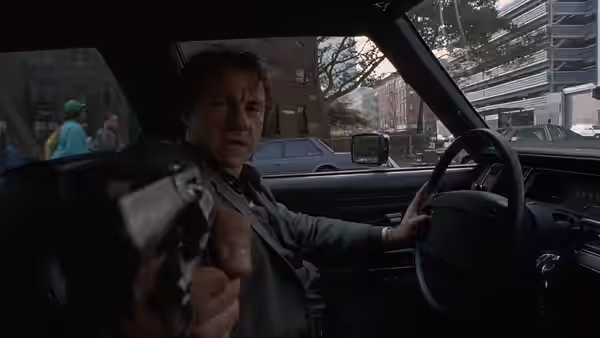
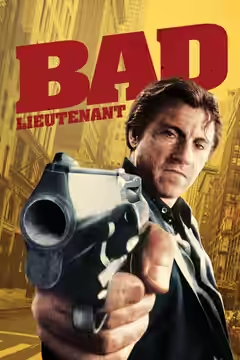
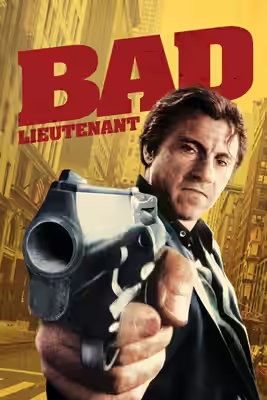
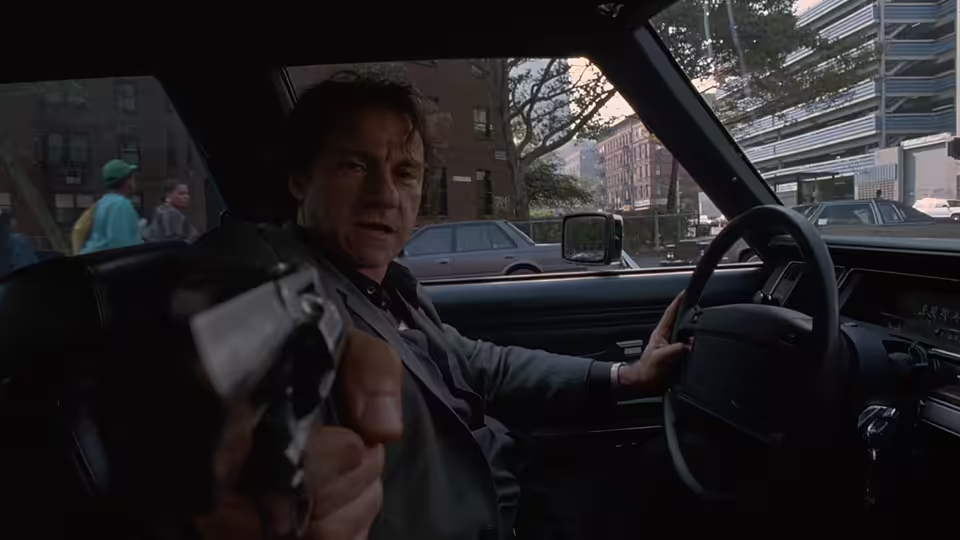
LT (Harvey Keitel) pointing a gun forward from the driver's seat
Film review

Bad Lieutenant

1992 · Directed by Abel Ferrara · 1h 36m · MPA NC-17

In a sentenceHarvey Keitel makes us care what happens to a policeman we would not let through the front door

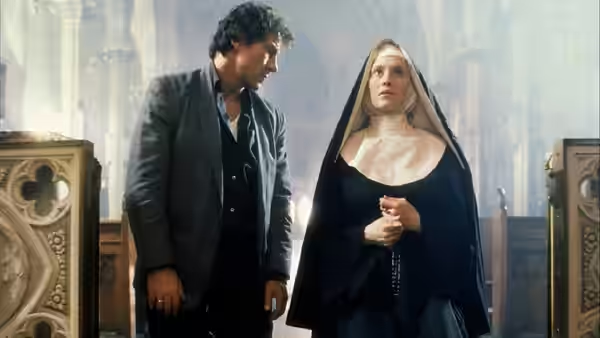
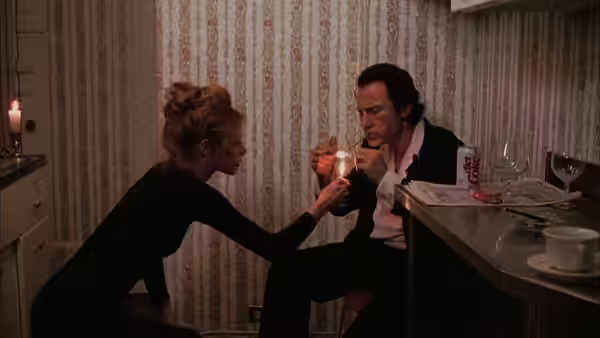
Harvey Keitel plays a New York police lieutenant whose life is consumed by gambling, drug use and corruption. He is also a husband and father, with Peggy Gormley as his wife and Stella Keitel as his daughter. An investigation into the rape of a nun, played by Frankie Thorn, puts questions of faith and guilt before a man accustomed to abusing his authority. Abel Ferrara directs this crime drama, co-written with Zoë Lund, which follows the lieutenant through addiction and criminal behaviour.

Fi1m review

Harvey Keitel makes Abel Ferrara’s punishing crime drama worth enduring. Its religious insistence can be overbearing, but the performance makes a corrupt policeman’s distress matter without making his behaviour any less repellent.

Abel Ferrara’s Bad Lieutenant is worth watching for Harvey Keitel, provided an evening spent with a vicious, addicted policeman sounds bearable. Ferrara keeps close enough to this man to make the usual crime-drama comforts unavailable. There is an investigation, into the rape of a nun, but we are given little reason to regard the investigator as anyone’s protection. The film wants to know what guilt can mean to somebody who has become so practised at doing harm.

Keitel plays LT without the small courtesies that often make a screen brute acceptable company. He offers no knowing charm and gives us no invitation to enjoy the man’s capacity to disgust. We felt sorry for him, and were dismayed to find we did. His exposed anguish produces that concern without making the corruption any easier to stomach. There is something embarrassing about watching an actor surrender this much dignity, but the performance makes the lieutenant’s self-destruction difficult to watch with any detachment.

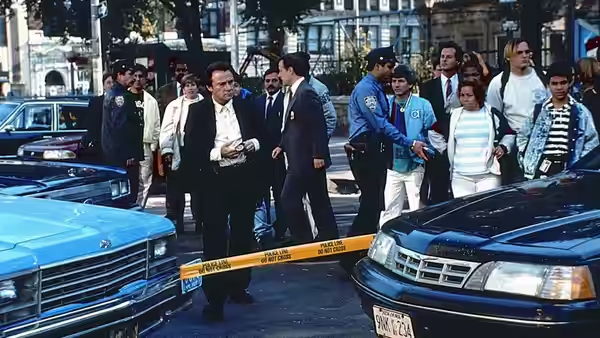
Ken Kelsch’s cinematography gives New York a grubby immediacy that makes the lieutenant’s behaviour feel close at hand. The city offers no picturesque relief from him. Charles M. Lagola’s production design contributes to the same discomfort, with surroundings that feel lived in and short on care. Together, they keep the film rooted in ordinary squalor. We believe in the place even when we struggle with Ferrara’s hopes for the man living in it.

Anthony Redman’s editing gives the film a loose, wearing rhythm, repeatedly returning us to the lieutenant’s self-destruction. That repetition makes addiction feel like wasted time, though at 96 minutes the film can still feel longer than it needs to. Joe Delia’s music adds to the pressure; it is effective, though Keitel hardly needs help making the man’s suffering felt. There are stretches where another dose of degradation tells us little that the performance has not already made clear, and the film’s concentration begins to feel restrictive.

The larger reservation lies with the screenplay by Ferrara and Zoë Lund, and its insistence on salvation. Ferrara keeps pressing the possibility that this man might be redeemed, until his anguish starts to seem sufficient reason to set aside the harm he does. Keitel has already made his distress matter, and the religious emphasis can turn a painful performance into an overworked plea. We do not need to be prodded quite so firmly. Still, the film takes guilt more seriously than crime dramas that give a corrupt policeman a sympathetic explanation and leave it at that.

This is an 18-certificate film whose sexual violence and degradation are not incidental details. It asks for close attention at moments when retreat would be more comfortable, and Keitel earns that attention. Choose it when a punishing character study is what the evening calls for; anyone hoping for competent police work and a little reassurance should make other arrangements.

Critical consensus AI synthesised

73
Positive
10
Mixed
2
Negative
1
Slant Magazine
5 August 2009 · Jeremiah Kipp
90*

The critic calls it one of the most important films of the 1990s for its raw, neorealist depiction of a corrupt, depraved cop's descent and fleeting shot at grace. Ferrara and Keitel are praised for turning the story into a personal, frightening psychic diary about sin, Catholicism, and redemption.

Read the full review →
The AV Club
20 November 2022 · Matthew Allan
90*

The piece frames the film as a 30th-anniversary classic in which Ferrara, Lund, and Keitel channel their own struggles with addiction into a raw, empathetic portrait of a vice-ridden cop confronting faith and forgiveness. It highlights the film's authentic textures, improvised feel, and enduring power as a life-affirming allegory of sin and redemption.

Read the full review →
Empire
1 January 2002 · Ian Nathan
80*

The film is a powerful if overbearing study of a soul swallowed by depravity, with Ferrara out-sleazing his own oeuvre. Keitel delivers an almost unbearably sincere performance as the cussedly vile cop in what may be the director's finest hour.

Read the full review →
Radio Times
★★★★ · Alan Jones
80

Abel Ferrara delivers another exceptionally strong film with this controversial story of a corrupt cop seeking redemption through investigating a nun's rape. It stands out for its extreme explicitness and violence, intended to shock audiences, anchored by Harvey Keitel's bravest performance.

Read the full review →
Time Out
16 January 2012 · TCh
75*

The film is a raw slice of low life centered on a depraved, addicted cop whose investigation of a nun's rape leads to an unexpected path toward redemption. It stands out for Harvey Keitel's extraordinarily honest, soul-baring performance that allows the director to push the boundaries of degradation and grace.

Read the full review →
Los Angeles Times
30 December 1992 · Peter Rainer
70*

Ferrara delivers a grungy, Scorsese-like descent into a corrupt cop's hellish world of addiction and vice, with the nun's rape case prompting a twisted path to redemption. Keitel's intense performance anchors the compelling but over-the-top religious freak show.

Read the full review →

Straight answers AI written, from our review

Is Bad Lieutenant worth watching?
Bad Lieutenant is worth watching for Harvey Keitel's performance, and we scored it 80. Abel Ferrara's crime drama follows a vicious, addicted New York policeman without offering the usual comforts of the genre, and its religious insistence can be overbearing. Choose it for a punishing character study; anyone hoping for competent police work and a little reassurance should look elsewhere.
How long is Bad Lieutenant, and what is it rated?
Bad Lieutenant runs 1h 36m and is rated NC-17 by the MPA in the US. It is a crime and drama film.
Where can I watch Bad Lieutenant in the US?
Bad Lieutenant is streaming on The Criterion Channel, Tubi and Amazon Prime Video in the US, and it is also available to rent from Amazon Prime Video from $3.99. It leaves Tubi on 1 October. Availability is checked daily; the links above go straight to each service.
How violent or frightening is Bad Lieutenant, and is it suitable for children?
Bad Lieutenant is an 18 certificate in the UK and NC-17 in the US, and it is not suitable for children or younger teenagers. Its sexual violence, drug use and degradation are not incidental; the plot turns on the rape of a nun, and the film keeps close to the lieutenant's self-destruction throughout. The squeamish should give it a wide berth.
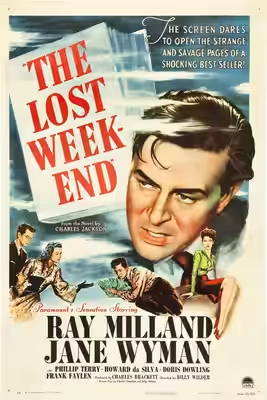
How does Bad Lieutenant compare to The Lost Weekend?
Bad Lieutenant and The Lost Weekend are both New York stories of addiction that refuse to make desperation look romantic, but Ferrara's film is far harsher and more explicit than Billy Wilder's. The earlier film is the more disciplined and the easier to sit through; Ferrara's is the more punishing, and Keitel's exposed performance is its chief reason to exist. Viewers who want honesty about addiction without an 18 certificate should start with Wilder.
What should I watch after Bad Lieutenant?
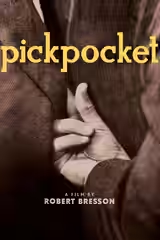
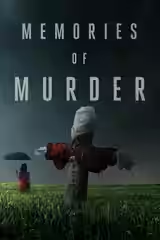
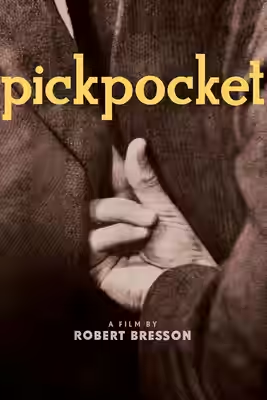
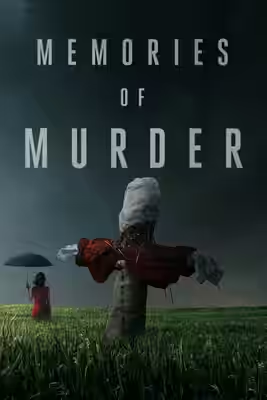
After Bad Lieutenant, try The Lost Weekend (1945, Fi1m 82): A different account of addiction, equally unwilling to make desperation look romantic. Then Pickpocket (1959, Fi1m 84): For another thief whose criminal habits become entangled with questions of grace; and Memories of Murder (2003, Fi1m 91): A murder investigation where police incompetence and cruelty steadily undermine the search.

Cast

If you liked this, try…

  1. The Lost Weekend (1945, Fi1m 82)A different account of addiction, equally unwilling to make desperation look romantic.

  2. Pickpocket (1959, Fi1m 84)For another thief whose criminal habits become entangled with questions of grace.

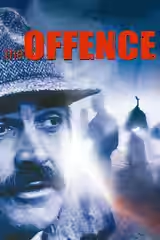
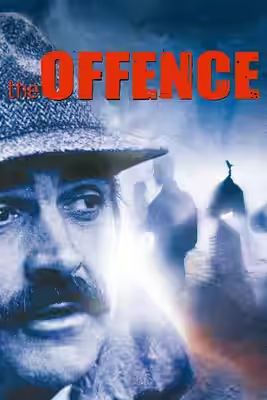
  3. The Offence (1973) · not reviewed yetSean Connery plays another policeman whose distress offers little reassurance to anyone.

  4. The Addiction (1995) · not reviewed yetFerrara approaches guilt through vampirism, keeping the religious questions and the discomfort.

  5. Memories of Murder (2003, Fi1m 91)A murder investigation where police incompetence and cruelty steadily undermine the search.

Free account

Know what to watch tonight

Two lists that know where things are streaming, collections you can share, your own score beside ours, and Discover that remembers what you have seen.

  • Want to see, sorted by what is streaming now
  • Seen, with your score out of ten
  • No adverts, ever