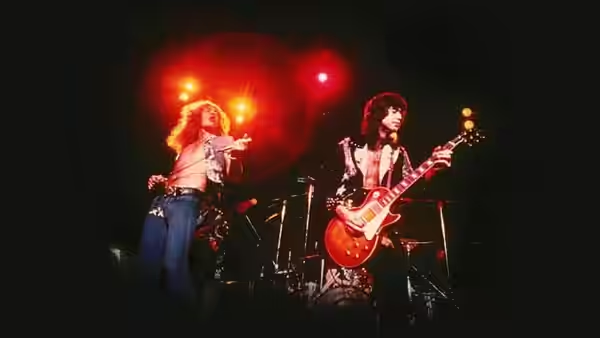
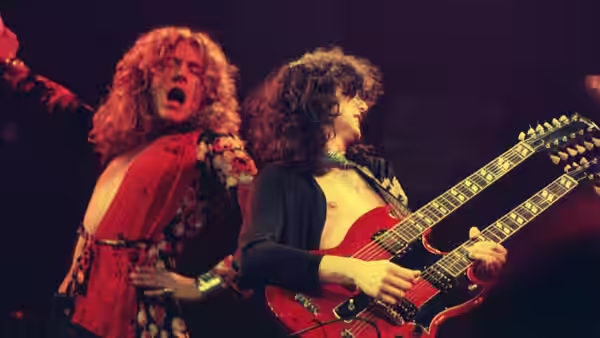
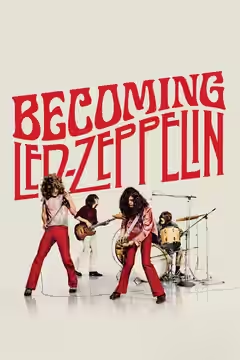
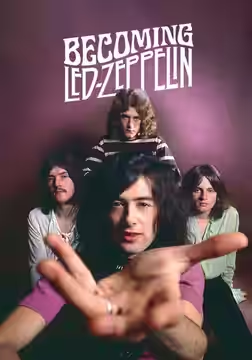
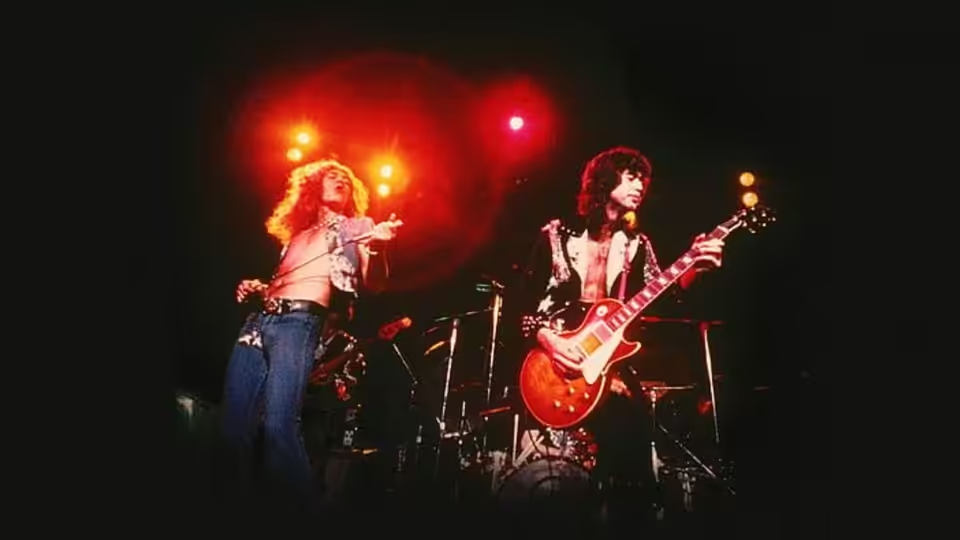
Robert Plant gesturing while Jimmy Page plays red guitar on stage
Film review

Becoming Led Zeppelin

2025 · Directed by Bernard MacMahon · 2h 02m · MPA PG-13

In a sentenceThree courteous pensioners remember being the loudest band on earth; the bad behaviour has been left in the van

London and the English Midlands, the 1960s. Jimmy Page has spent years playing guitar in recording studios and the last of them in the Yardbirds; as that band comes apart, he decides to build a new one from scratch. John Paul Jones is arranging strings and playing bass on other people’s hits and is tired of it. Robert Plant is singing in bands nobody has heard of, and John Bonham, from the same part of the country, is drumming with a reputation for being too loud to hire. The four meet in a London rehearsal room in 1968, with the manager Peter Grant behind them, and the film follows their first rehearsals, their first shows in Britain and Denmark, and the making of their first album. Page, Jones and Plant tell it to camera; Bonham speaks through a recorded interview.

Plays from YouTube when you press play; nothing loads from them until then.

Fi1m review

The three surviving members tell the story of their first two years, and the concert footage, left to run whole, is the reason to go. It is an authorised account and it behaves like one: nothing said here would trouble a lawyer.

Bernard MacMahon’s film, written with his producer Allison McGourty, is the first account of Led Zeppelin made with the band’s blessing, and it knows exactly how much of the story it wants to tell. It starts with four boys and their record collections and stops at the end of 1969, with two albums out and America won. Nothing after that is mentioned. What we get instead is 122 minutes of three old men remembering how it felt to be young and loud, and a great deal of footage of them being exactly that. The footage is the reason to go.

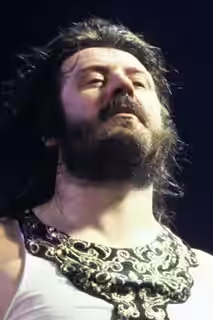
Jimmy Page, John Paul Jones and Robert Plant are interviewed separately, and Vern Moen shoots them close and plainly lit, with nothing behind them to pull the eye from the faces. Page talks about sound the way a joiner talks about wood: which room, which amplifier, why the drums were put where they were. Jones is dry, and a little amused at having been the session man who arranged other people’s hits. Plant is the storyteller, happy to laugh at the boy he was. John Bonham, who died in 1980, is present through an interview recorded decades ago and not heard in public until now, and the film lets the other three sit and listen to it. It moved us more than we expected. Nobody says anything clever; they listen to a friend’s voice, and Plant’s face does the rest.

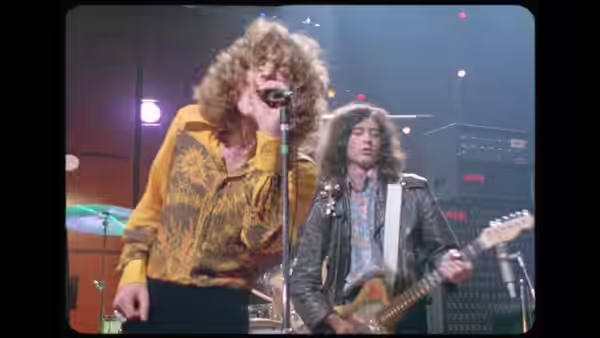
The music is handled with more respect than most rock documentaries can afford. Dan Gitlin cuts the performances so that they run whole, or near enough, rather than as a montage under somebody’s reminiscence. A show at the Gladsaxe Teen Club in Denmark in 1969, the band playing to a room of teenagers who do not yet know what to do with it, is left to run until the song ends, and we sat forward for the whole of it. ‘Train Kept A-Rollin’ gets the same treatment. The sound is loud and clean, and in a cinema it is the closest most of us will get to the thing itself.

MacMahon has a weakness for illustrating everything. The first stretch, four childhoods told in turn, is padded with newsreel and period footage that stands in for whatever is being talked about, and it is a long time before the four men are in the same room. When they get there, in London in 1968, the film picks up and stays up.

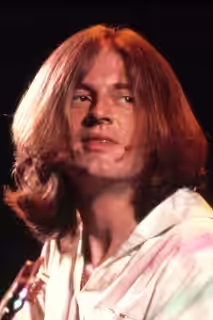
What it will not do is let anyone else speak. There are no journalists, no engineers, no rival musicians, and there is nobody to say a word against Peter Grant, the manager, who appears in archive and is remembered only with gratitude. Jeff Beck turns up in old footage as Page’s friend and contemporary and that is the nearest thing to an outside voice. The band’s reputation for wreckage, on and off stage, is never raised, and the decision to stop in 1969 leaves out the ten years most people would ask about. We did not feel cheated, exactly; we felt managed.

Length is the other cost of leaving the songs whole. We admired the decision and, by the ninth or tenth full performance, we were still checking how much of the two hours was left. A film about a band this loud should not make us feel we have sat politely through a slideshow, and for stretches of the last half hour it does.

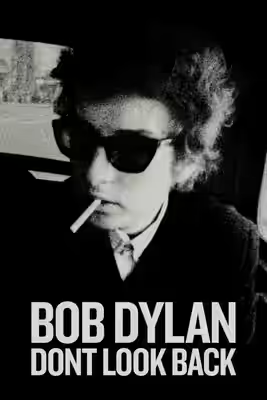
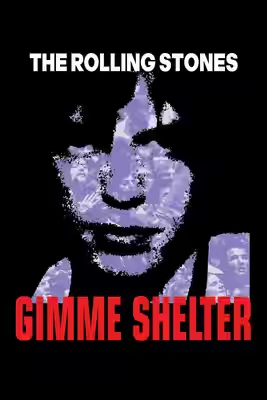
Don’t Look Back (1967) and Gimme Shelter (1970) had cameras present while things were going wrong. This one arrives more than fifty years later, with the survivors choosing what to remember. It is still a good evening for anyone who owns the records, and a fair one for anyone who does not, provided they see it somewhere with proper speakers. Do not expect to learn anything the band did not want you to know.

Critical consensus AI synthesised

69
Positive
10
Mixed
1
Negative
2

Most critics come away pleased. The reviews agree that Bernard MacMahon’s authorised documentary puts the music first, and that this is its strength: the early concert footage, often left to run in full, is singled out repeatedly, as is the sound at IMAX scale. The new interviews with Page, Plant and Jones are found warm and vivid, and a recovered audio interview with John Bonham is widely described as the film’s anchor.

The reservations cluster in one place. Nearly every review, including the warm ones, notes that the film stops around 1969 and leaves out the tension, excess and later history, and several find it too tidy as a result. The spread is wide. The Los Angeles Times calls it timid and misses other voices, and The Playlist, reviewing an earlier festival cut, finds it leaden and aimed only at superfans. The Times sits in the middle, impressed by the sound and frustrated by the omissions.

RogerEbert.com
7 February 2025 · Glenn Kenny
90*

Praises this authorized documentary for focusing on the music, influences, and formation of the band rather than gossip. Highlights the vivid personalities of Page, Plant, and Jones in interviews, strong archival footage including Bonham material, and the sheer power of the music presented.

Read the full review →
Variety
7 February 2025 · Jem Aswad
90*

Describes the film as an exhilarating, hard-rocking portrait of the band’s first 18 months that channels their explosive energy with stunning footage and interviews. Notes it is rose-colored due to being authorized, omitting darker aspects like violence or discord, but still a must-see for fans.

Read the full review →
Evening Standard
5 February 2025 · Dylan Jones
80*

The critic praises the revelatory documentary for its archive material and insights into the band's early days and success in America, highlighting Jimmy Page's role and the focus on music over myths. They note it deserves a sequel but mention it might be slightly too long with too much concert footage.

Read the full review →
Radio Times
★★★★ · James Mottram
80

The film provides a pleasing, detailed account of Led Zeppelin's early years through insightful interviews with surviving members and strong archive material. Director Bernard MacMahon tracks their rise effectively but offers little drama or obstacles, with a narrow focus that will still please hardcore fans via its concert footage.

Read the full review →
Vulture
14 February 2025
75*

The critic describes the authorized documentary as a thoroughly researched but sanitized look at the band’s early years that deliberately avoids scandals, excess, and later history. They single out the excellent IMAX sound and live performance footage for praise while noting it leaves out key production and cultural context details.

Read the full review →
Financial Times
12 February 2025 · ★★★★☆
70*

The critic notes the rockumentary sidesteps scandal and the band's later excesses to focus on the musicianship and rise to success in an official biography. It honours the band's early masterly performances and sound while acknowledging the deliberate omissions.

Read the full review →

Straight answers AI written, from our review

Is Becoming Led Zeppelin worth watching?
Becoming Led Zeppelin is worth watching for anyone who owns the records, and a fair evening for anyone who does not, and we scored it 70. The concert footage is left to run whole and is the reason to go. It is an authorised account, stops at the end of 1969, and tells you nothing the band did not want you to know.
How long is Becoming Led Zeppelin, and what is it rated?
Becoming Led Zeppelin runs 2h 02m and is rated PG-13 by the MPA in the US. It is a documentary and music film.
Where can I watch Becoming Led Zeppelin in the US?
Becoming Led Zeppelin is streaming on Netflix in the US, and it is also available to rent from Amazon Prime Video and Apple TV from $3.99. Availability is checked daily; the links above go straight to each service.
How violent or frightening is Becoming Led Zeppelin, and is it suitable for children?
Becoming Led Zeppelin is neither violent nor frightening; it is a 12A documentary made of interviews and concert footage. There is nothing in it to trouble a child, though the length and the volume may test younger ones, and the band's reputation for bad behaviour is never raised. Teenagers who like the music will be fine.
How does Becoming Led Zeppelin compare to Gimme Shelter?
Becoming Led Zeppelin is the band remembering fondly, more than fifty years on; Gimme Shelter had cameras present while things went wrong. The Stones film is the more honest and the more frightening of the two, and the better film. Choose Becoming Led Zeppelin for the music, played whole and loud, and Gimme Shelter for what a decade ending actually looked like.
What should I watch after Becoming Led Zeppelin?
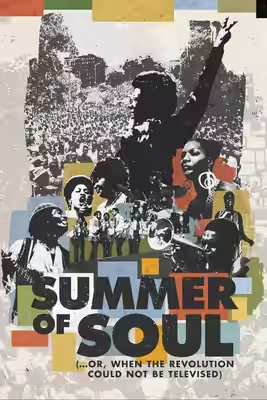
After Becoming Led Zeppelin, try Gimme Shelter (1970, Fi1m 78): The Stones’ worst night, filmed as it happened rather than remembered fondly. Then Buena Vista Social Club (1999, Fi1m 76): Old musicians remembering their youth, and the music doing most of the talking; and Summer of Soul (2021, Fi1m 87): Lost 1969 concert footage rescued and allowed to run; the same year, a different city.

Cast

If you liked this, try…

  1. Don't Look Back (1967) · not reviewed yetDylan in England with a camera present while he was still being difficult.

  2. Gimme Shelter (1970, Fi1m 78)The Stones’ worst night, filmed as it happened rather than remembered fondly.

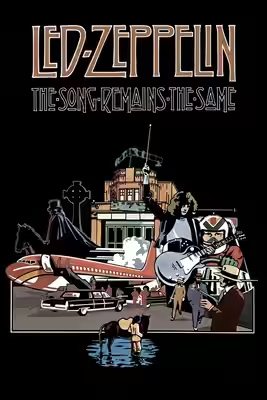
  3. The Song Remains the Same (1976) · not reviewed yetZeppelin at full volume in 1973, indulgent and unsupervised; the sequel this film declines to be.

  4. Buena Vista Social Club (1999, Fi1m 76)Old musicians remembering their youth, and the music doing most of the talking.

  5. Summer of Soul (2021, Fi1m 87)Lost 1969 concert footage rescued and allowed to run; the same year, a different city.

Free account

Know what to watch tonight

Two lists that know where things are streaming, collections you can share, your own score beside ours, and Discover that remembers what you have seen.

  • Want to see, sorted by what is streaming now
  • Seen, with your score out of ten
  • No adverts, ever