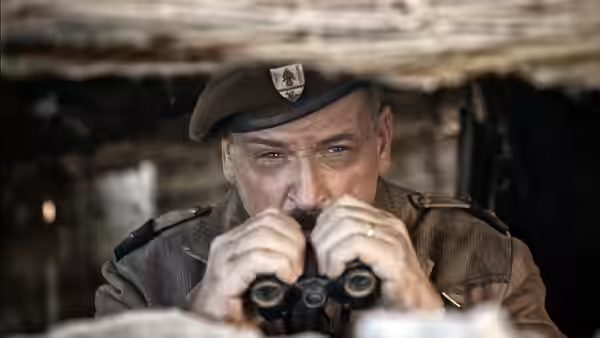
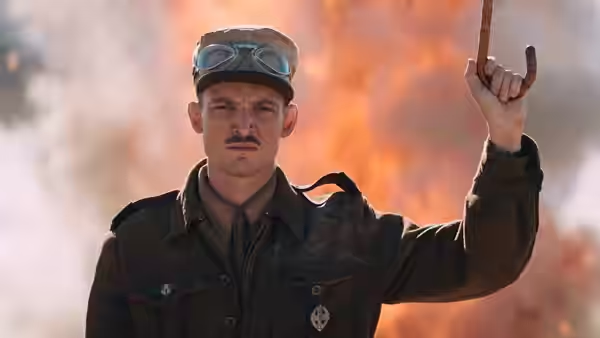
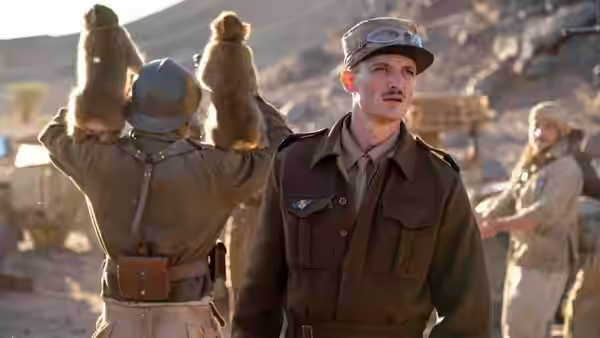
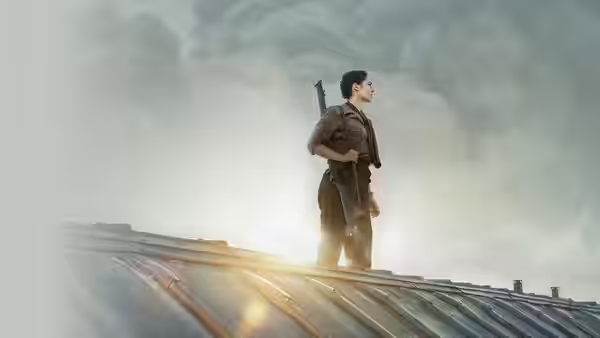
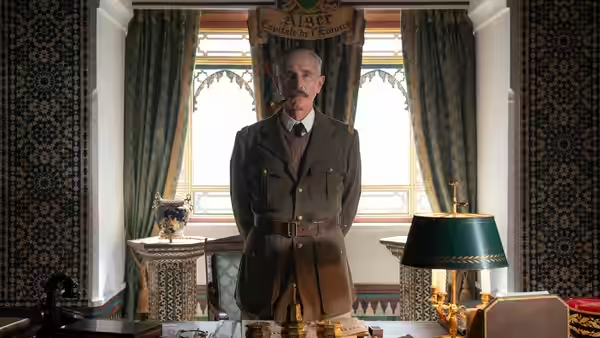
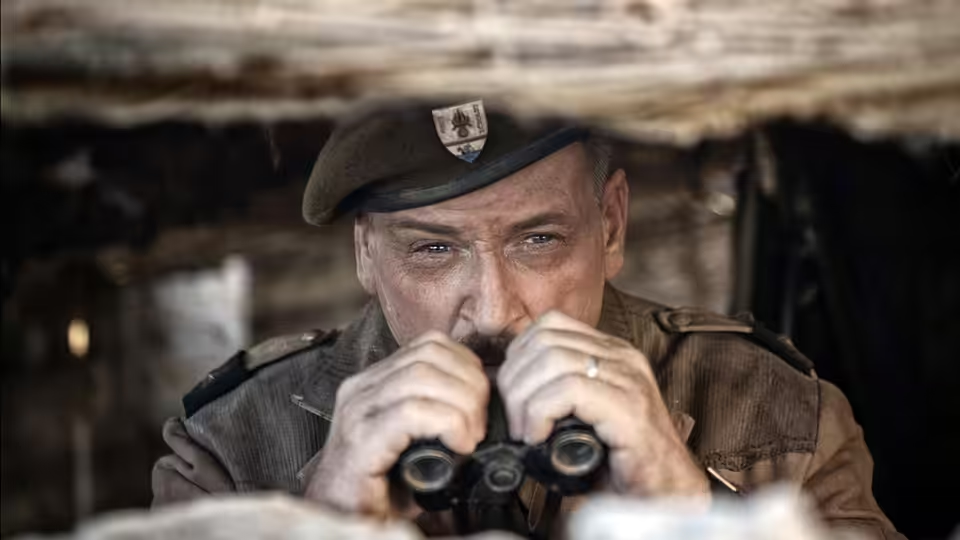
A general looks through binoculars from beneath a wooden shelter
Film review

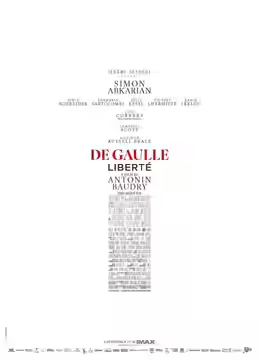
De Gaulle: Liberté

2026 · Directed by Antonin Baudry · 2h 39m

In a sentenceA general who never once doubts himself, and a film that agrees with him for two and a half hours

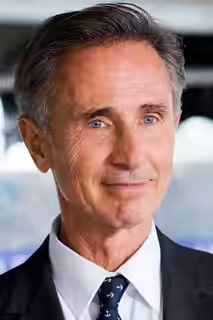
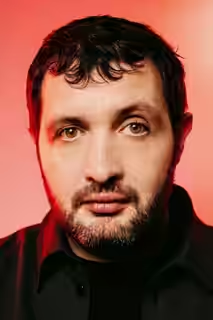
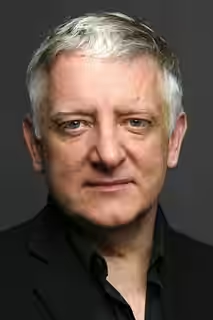
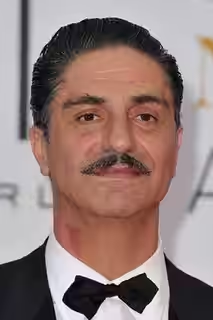
London, mid-war. Charles de Gaulle (Simon Abkarian) leads a Free France that consists of a few offices, a radio microphone and an army scattered across the desert, and he behaves as if he already governs the country. Winston Churchill (Simon Russell Beale) pays the bills and regrets it hourly; Anthony Eden (Tom Mison) and the liaison officer Spears (Anthony Calf) try to keep the two men in the same room. The Americans would rather deal with Henri Giraud (Thierry Lhermitte), a senior general with better manners and fewer ideas. In North Africa, Général Leclerc (Niels Schneider) drives a column of Free French troops across the sand, with the English driver Susan Travers (Noémie Schmidt) at the wheel. Inside occupied France, Livia (Anamaria Vartolomei) and Blazej (Karim Leklou) run the risks that make the speeches in London mean anything.

Plays from YouTube when you press play; nothing loads from them until then.

Fi1m review

The second half of Antonin Baudry’s two-film account of de Gaulle is brisk, handsome and easy to be carried along by, with Simon Abkarian and Simon Russell Beale bickering their way to Paris. It is also a national anthem played at full volume for 159 minutes.

Antonin Baudry has split the war years of Charles de Gaulle across two films, and this is the second, the one where the general stops being a nuisance in exile and becomes the man France is waiting for. The pitch is simple. De Gaulle (Simon Abkarian) has almost nothing: no territory, no money, an ally who cannot stand him and an American rival the Americans prefer. He wins anyway, because he refuses to consider any other outcome. Baudry and his co-writer Bérénice Vila have made a film that shares that refusal entirely, and it is both the pleasure and the problem.

It is a pleasure first. Baudry moves. The script hops from London to the North African desert to occupied France and back with the confidence of a serial, and Rehman Nizar Ali’s cutting keeps every strand short enough that we never lose the thread of another. Pierre Cottereau shoots the desert in hard white light and the London offices in the brown of old varnish, so that you always know where you are before anyone speaks. Benoît Barouh has dressed those offices with the clutter of an organisation run on borrowed furniture, and it is a nice touch that de Gaulle’s headquarters looks poorer than everyone else’s.

Abkarian is the reason it holds. He plays de Gaulle as a man who has decided that vanity and patriotism are the same thing and sees no reason to apologise for either. He is funny, in a dry, appalled way, and he is never once likeable, which is braver than it sounds in a film this fond of its subject. Simon Russell Beale’s Churchill is his match: a man who knows he is being used, knows he is right to allow it, and hates every minute. Their scenes together, with Tom Mison’s Eden and Anthony Calf’s Spears wincing at the edges, are the best writing in the film, and we could have watched another hour of them.

The other strands are livelier than they are deep. Niels Schneider gives Général Leclerc a lean, sunburnt impatience that suits the desert sequences, and Noémie Schmidt’s Susan Travers, driving him across it, is a character we wanted more of than the script had time for. Anamaria Vartolomei, as the resistance courier Livia, does the most with the least: a woman who has learned to be forgettable, watching a room. Karim Leklou’s Blazej is the film’s conscience about who did what under occupation, and Baudry writes him with a sharper, more modern tongue than anyone else. Thierry Lhermitte’s Giraud is played, fairly or not, as a decent dim man being outmanoeuvred, and Lhermitte plays it without a hint of complaint.

Then there is the volume. Théo Cascio’s score does not so much accompany the film as escort it, brass under the speeches, strings under the flags, and by the second hour we had stopped noticing when it was on because it never was not. The Times is right that the patriotism is unembarrassed. What it costs is doubt. Nobody in this film wonders whether de Gaulle is worth it; the Americans are wrong, the Vichy men are wrong, Churchill is wrong until he is not. A story about a man who bet on himself would be stronger if the film ever let us think the bet could fail.

We were stirred anyway, and we should say when. It was a broadcast scene, a single microphone in a small room and a voice going out to people we have just watched hide from soldiers, and Cottereau simply holds on the faces listening. No score, for once. That is the film working, and it works because it is quiet. The battle sequences that follow are well staged and easy to read, but they moved us less than that room did.

The second half heads where history heads, through D-Day to Paris, and we will not describe how Baudry stages the arrival. We will say that at 159 minutes the film starts to feel its length about twenty minutes before it ends, and that the flag-waving, which we forgave for two hours, becomes hard to forgive in the third.

If you saw the first film, you will want this one, and it is the better of the two at moving. If you did not, it explains itself well enough. Take it as a war serial with excellent character actors and a national anthem for a score, and you will have a good evening. Take it as history and you will spend the drive home arguing.
Critical consensus AI synthesised

3 of 6
Positive
3
Mixed
0
Negative
0
Time Out
15 September 2026 · ★★★★ · Sophie Monks Kaufman
80

This is the fun, rollicking second half of Antonin Baudry’s two-film French historical epic about de Gaulle and the Free French. The critic praises the action spectacles, international settings, and standout performances by Niels Schneider and Anamaria Vartolomei while noting its modern, arch take on history and collaborators.

Read the full review →
The Guardian
17 September 2026
75*

The second half of the two-part biopic is a rousingly watchable blockbuster that follows De Gaulle's ascent to political dominance through D-Day and the liberation of France. It singles out Simon Abkarian's shrewd, haughty performance for praise, along with the ongoing bromance with Churchill and the film's classic war-movie energy.

Read the full review →
The Times
17 September 2026
70*

The second part of Antonin Baudry’s epic turns French patriotism up to 11 in a breast-beating but sweeping account of the Résistance hero. It is hard not to be swept up in the fervour despite the overt flag-waving.

Read the full review →

Straight answers AI written, from our review

Is De Gaulle: Liberté worth watching?
De Gaulle: Liberté is worth watching for anyone who enjoys a brisk wartime serial full of good character actors, and we scored it 72. Simon Abkarian's unlikeable, funny de Gaulle and Simon Russell Beale's exasperated Churchill carry it. Be warned that it runs 159 minutes, nobody in it doubts the general for a second, and Théo Cascio's score never stops playing the anthem.
How long is De Gaulle: Liberté, and what is it rated?
De Gaulle: Liberté runs 2h 39m. It is a history and drama film.
Where can I watch De Gaulle: Liberté in the US?
De Gaulle: Liberté is not on any streaming or rental service in the US at the moment. It is available in 1 other country; change your country at the top of the page to see where. Availability is checked daily.
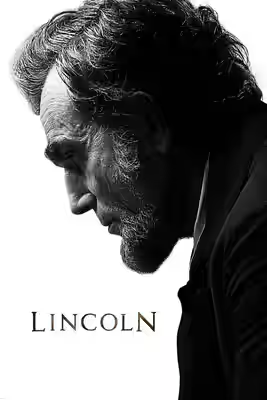
How does De Gaulle: Liberté compare to Lincoln?
De Gaulle: Liberté is the livelier of the two films and Lincoln the more searching. Both follow a stubborn man who wins by refusing to imagine losing, but Spielberg takes the bargaining seriously and lets the outcome feel uncertain, while Baudry's film never entertains the thought that de Gaulle might fail. Choose Lincoln for political detail, De Gaulle for pace and the Abkarian and Russell Beale scenes.
What should I watch after De Gaulle: Liberté?
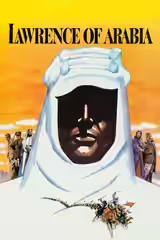
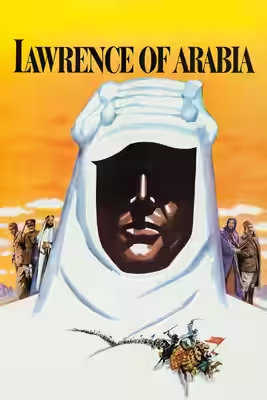
After De Gaulle: Liberté, try Lincoln (2012, Fi1m 82): Another great man who wins by being more stubborn than everyone around him. Then Lawrence of Arabia (1962, Fi1m 90): Desert, vanity, and a hero the film admires without quite trusting.

Cast

If you liked this, try…

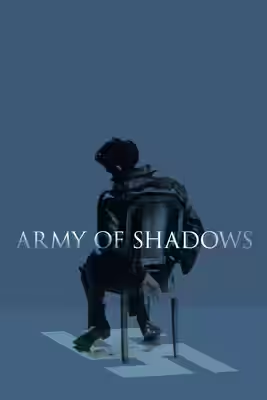
  1. Army of Shadows (1969) · not reviewed yetMelville’s Resistance film has all the doubt this one lacks.

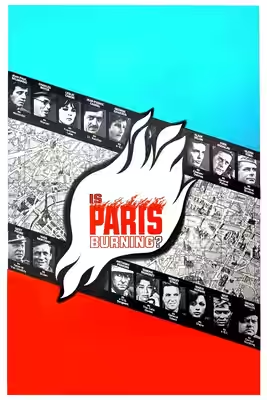
  2. Is Paris Burning? (1966) · not reviewed yetThe liberation as an all-star procession, sprawling and oddly moving.

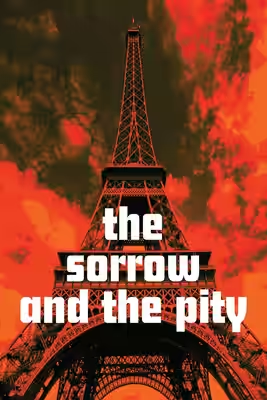
  3. The Sorrow and the Pity (1969) · not reviewed yetFour hours of documentary on what the French actually did under occupation.

  4. Lincoln (2012, Fi1m 82)Another great man who wins by being more stubborn than everyone around him.

  5. Lawrence of Arabia (1962, Fi1m 90)Desert, vanity, and a hero the film admires without quite trusting.

Free account

Know what to watch tonight

Two lists that know where things are streaming, collections you can share, your own score beside ours, and Discover that remembers what you have seen.

  • Want to see, sorted by what is streaming now
  • Seen, with your score out of ten
  • No adverts, ever