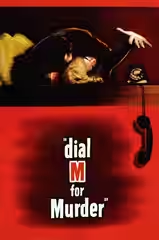
With only 5 reviews in so far, most critics find Hitchcock’s thriller suspenseful despite its theatrical confines. Praise centres on the tightly worked plot, his handling of intimate exchanges and Ray Milland’s performance as the calculating husband. The 3D staging attracts attention, though the reviews differ on how consistently it works. Grace Kelly draws praise from several critics, but the Evening Standard finds her miscast and sees the inventive camerawork as the chief attraction. The reservations concern stage-bound presentation and uneven set pieces rather than a failure to generate tension.
T
The Telegraph
24 July 2013 · Tim Robey
90*
Alfred Hitchcock's 1954 thriller is a precision-engineered delight, with or without the 3D. It is a taut diversion and an exercise in tidy professionalism from first to last, with every camera angle having a precise purpose.
Read the full review →F
Film Comment
· Michael Kerbel
85*
The critic highlights the film's engaging plot and Hitchcock's inventive use of 3-D to enhance drama and audience involvement, making it one of the best 3-D films.
Read the full review →R
Radio Times
★★★★ · David Parkinson
80
Hitchcock took on the adaptation of Frederick Knott's play mainly to fulfil a contract and showed little enthusiasm for it. Despite some flat 3D set pieces, there are deft directorial touches and strong performances from Ray Milland and Grace Kelly.
Read the full review →S
Slant Magazine
17 June 2011 · Rob Humanick
80*
The critic finds Dial M for Murder one of Hitchcock’s most purely enjoyable films despite its stage-bound origins. The direction of performers and the intimate exchanges between characters are singled out for praise.
Read the full review →A
The AV Club
9 October 2012 · Sam Adams
80*
The critic praises Hitchcock's innovative use of 3-D in a confined setting to explore space and depth, noting it as a thoughtful chamber piece rather than a gimmick spectacle, despite some hokey elements.
Read the full review →T
Time Out
23 July 2013 · ★★★★ · Guy Lodge
80
The 3D restoration highlights inventive spatial interplay in this chatty murder mystery despite its theatrical roots. The airtight plot generates strong suspense even while withholding little from the audience.
Read the full review →E
Empire
31 March 2006 · David Parkinson
70*
The film is one of Hitchcock's most bleakly amusing despite his own reservations about it. It reveals much about his approach to filmmaking through its technical challenges and use of 3D and colour.
Read the full review →L
Los Angeles Times
28 January 1999 · Steve Emmons
70*
The piece presents the 1954 Hitchcock film as an efficient, studio-commissioned thriller shot mostly on one set in 36 days. It singles out the 3D murder scene with Grace Kelly reaching for scissors as a standout, visually revolting moment that Hitchcock used to strong effect.
Read the full review →N
The New Yorker
29 May 1954 · John McCarten
70*
The film is a smooth confection changed little from the stage play. Ray Milland is convincingly pathological, Grace Kelly makes a sympathetic figure, and the piece becomes grimly diverting once the murder wheels are set in motion.
Read the full review →N
The New York Times
29 May 1954 · Bosley Crowther
70*
Hitchcock turns Frederick Knott's one-set play into a sleek thriller of coils twining with evil. Ray Milland is excitingly effectual as the machinating husband, Grace Kelly does a nice job as the wife, and the film is vividly pictorial.
Read the full review →E
Evening Standard
26 July 2013
50*
The innovative 3D camera-work is now the thriller's main selling point in this re-release. Ray Milland is great as the cold husband but Grace Kelly is miscast as the wife.
Read the full review →Hitchcock's sole foray into 3D gains nothing from the technology, but there are some classic, thrilling touches. The setup is ingenious and the kill scene genuinely thrilling, with superbly played gems in the plotting scenes, but it becomes anti-climactic with tedious business involving latchkeys afterward.
Read the full review →The melodramatics have been transferred virtually intact but are not as impressive on film, remaining more of a filmed play than a motion picture. Performances and Hitchcock's suspense tricks gloss over basic weaknesses but not enough to rate it a cinch winner.
Read the full review →C
Collider
5 November 2012 · Patrick Cooper
80*
The critic views the film as a sharp, contained thriller with strong performances, especially from Ray Milland and Grace Kelly, that holds up despite Hitchcock's own later dismissal of it as a lesser work. The review singles out the clever plotting and the way a single living room setting is made cinematic.
Read the full review →E
Eye for Film
25 July 2013 · Jennie Kermode
80*
Hitchcock excels by tightening a stage play into a confined-space thriller, using close details of action and expression to heighten subtexts and the characters' sense of being trapped. The result is a clever, socially aware film that builds tension through relationships and power dynamics, making it an absolute must for fans despite not being among his most famous works.
Read the full review →P
The Playlist
31 October 2012 · [B] · The Playlist Staff
70*
The critic finds the film an enjoyable watch centered on the meticulous plotting and execution of the murder scheme, with strong praise for Ray Milland’s suave, chilling performance as the scheming husband. They single out the expressive use of color in Grace Kelly’s costumes and Hitchcock’s tight direction for keeping the single-set story engaging despite its stage origins.
Read the full review →Ordered by the weight we give each publication, then by score. Scores are normalised to 100; * means inferred from an unrated review. Summaries are ours, not quotations; follow the links for the reviews themselves. How we rate