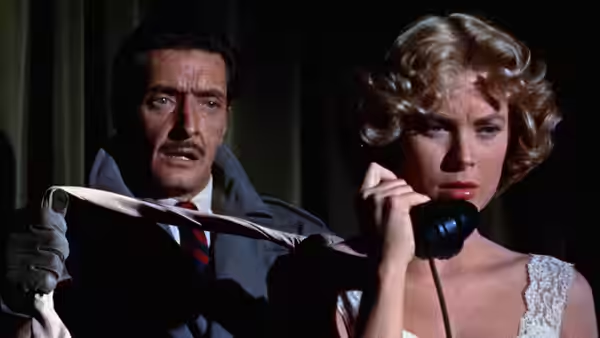
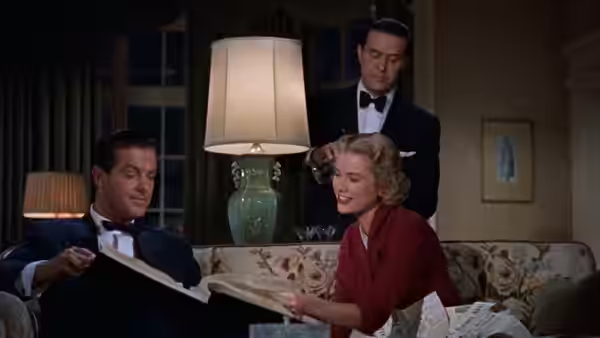
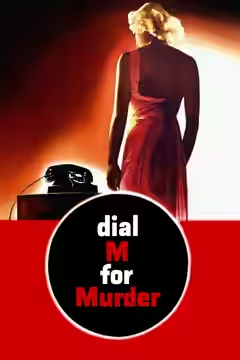
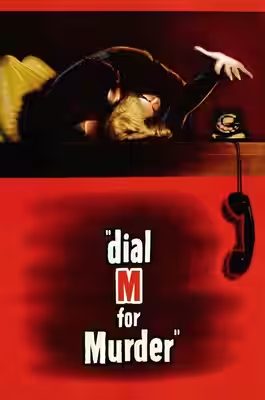
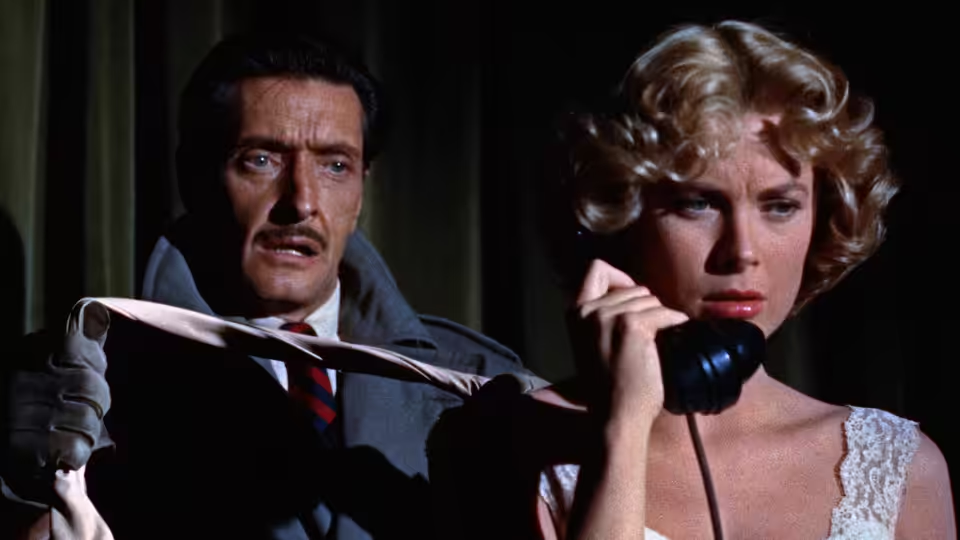
Tony Wendice (Ray Milland) stands behind Margot Wendice (Grace Kelly) holding a tie as she speaks on the phone
Film review

Dial M for Murder

1954 · Directed by Alfred Hitchcock · 1h 45m · MPA PG

In a sentenceRay Milland discusses murder with the calm of a man booking a table

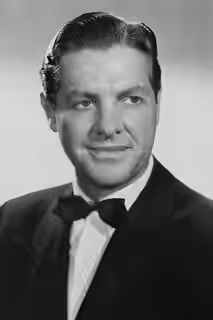
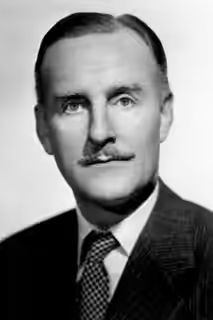
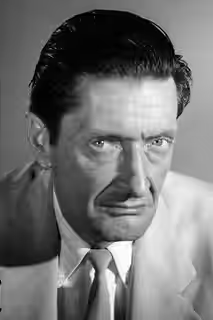
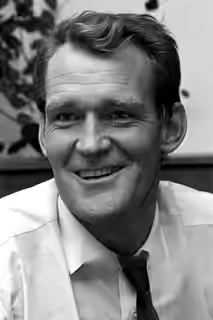
Tony Wendice (Ray Milland) is a husband plotting murder, with his wife Margot (Grace Kelly) at the centre of his calculations. The people around them include Mark Halliday (Robert Cummings), Charles Swann (Anthony Dawson) and Chief Inspector Hubbard (John Williams). Within a confined domestic setting, Tony tries to control events and the people involved, while the audience is allowed to understand much of his thinking. Conversations carry the preparations forward, and what each person knows becomes a source of danger. Alfred Hitchcock directs from Frederick Knott’s screenplay, adapted from Knott’s stage play.

Plays from YouTube when you press play; nothing loads from them until then.

Fi1m review

Alfred Hitchcock’s confined murder thriller is precise, nasty and thoroughly enjoyable, with Ray Milland making a persuasive schemer. Some stiff stretches of explanation survive, but the actors make the long conversations worth listening to.

Dial M for Murder asks us to spend a good deal of time listening to a man who believes he can arrange other people’s lives to suit himself. Alfred Hitchcock makes this an excellent confined-space thriller, though its appetite for explanation occasionally tests our patience. Frederick Knott’s screenplay retains the conversational business of his stage play, and the director sees little reason to send everyone outdoors. The interest is in who controls each exchange and how comfortably the others let him.

Ray Milland’s Tony Wendice gives those conversations their unpleasant attraction. As the scheming husband, he is convincing without asking us to enjoy a grand display of wickedness. We felt uneasy watching how little strain Milland allows into the intimate exchanges. The calculation is there, but it does not interrupt the social ease, and that is what makes him frightening. Hitchcock gives us enough knowledge of Tony’s thinking for us to watch the people around him with growing concern.

Grace Kelly, as Tony’s wife Margot, gives us someone to worry about while we are busy following his calculations. Her performance is sympathetic, and its restraint works within the film’s formal manner. Not every exchange sounds spontaneous; there are passages when the actors seem obliged to make sure we have understood the arrangement before they can continue. Kelly is more persuasive when the attention rests on her response to another person than when the scene has information to deliver.

Robert Burks’s cinematography makes the restricted space worth looking at. The use of 3D encourages us to notice the distances between people, rather than treating the setting as a neutral place to record dialogue. Close details of action and expression help us follow pressures that the spoken exchanges do not always acknowledge. The staging can still feel flat in places, but confinement mostly suits a story in which people are trying to manage one another.

Rudi Fehr’s editing keeps the extended explanations legible, although their length occasionally works against the suspense. There are stretches when we have grasped the point and are still waiting for the conversation to finish. Dimitri Tiomkin’s music supports the unease, but contributes less to our enjoyment than the timing between the actors. We would happily lose some of the explanation to spend longer watching them assess one another; Hitchcock’s direction of these encounters is assured enough to make the extra clarification feel unnecessary.

As a murder thriller, this is unusually willing to let us understand the schemer instead of making ignorance do all the work. That choice gives the conversations tension even when there is no immediate surprise to spring, and makes the occasional labour of following the plot worthwhile. The theatrical origins remain visible, but Hitchcock’s handling of faces and space gives the film plenty to justify the change of medium. Watch it for Milland, provided an evening of attentive listening sounds like a pleasure rather than homework.
Critical consensus AI synthesised

71
Positive
13
Mixed
2
Negative
1

With only 5 reviews in so far, most critics find Hitchcock’s thriller suspenseful despite its theatrical confines. Praise centres on the tightly worked plot, his handling of intimate exchanges and Ray Milland’s performance as the calculating husband. The 3D staging attracts attention, though the reviews differ on how consistently it works. Grace Kelly draws praise from several critics, but the Evening Standard finds her miscast and sees the inventive camerawork as the chief attraction. The reservations concern stage-bound presentation and uneven set pieces rather than a failure to generate tension.

The Telegraph
24 July 2013 · Tim Robey
90*

Alfred Hitchcock's 1954 thriller is a precision-engineered delight, with or without the 3D. It is a taut diversion and an exercise in tidy professionalism from first to last, with every camera angle having a precise purpose.

Read the full review →
Film Comment
· Michael Kerbel
85*

The critic highlights the film's engaging plot and Hitchcock's inventive use of 3-D to enhance drama and audience involvement, making it one of the best 3-D films.

Read the full review →
Radio Times
★★★★ · David Parkinson
80

Hitchcock took on the adaptation of Frederick Knott's play mainly to fulfil a contract and showed little enthusiasm for it. Despite some flat 3D set pieces, there are deft directorial touches and strong performances from Ray Milland and Grace Kelly.

Read the full review →
Slant Magazine
17 June 2011 · Rob Humanick
80*

The critic finds Dial M for Murder one of Hitchcock’s most purely enjoyable films despite its stage-bound origins. The direction of performers and the intimate exchanges between characters are singled out for praise.

Read the full review →
The AV Club
9 October 2012 · Sam Adams
80*

The critic praises Hitchcock's innovative use of 3-D in a confined setting to explore space and depth, noting it as a thoughtful chamber piece rather than a gimmick spectacle, despite some hokey elements.

Read the full review →
Time Out
23 July 2013 · ★★★★ · Guy Lodge
80

The 3D restoration highlights inventive spatial interplay in this chatty murder mystery despite its theatrical roots. The airtight plot generates strong suspense even while withholding little from the audience.

Read the full review →

Straight answers AI written, from our review

Is Dial M for Murder worth watching?
Dial M for Murder is worth watching for anyone who enjoys a confined murder thriller built on conversation, and we scored it 80. Ray Milland's calm, unstrained schemer is the reason to see it, with Grace Kelly giving us someone to worry about. Be warned that some stretches of explanation run on after the point has been grasped.
How long is Dial M for Murder, and what is it rated?
Dial M for Murder runs 1h 45m and is rated PG by the MPA in the US. It is a thriller and crime film.
Where can I watch Dial M for Murder in the US?
Dial M for Murder is streaming on Tubi in the US, and it is also available to rent from Amazon Prime Video from $3.99. Availability is checked daily; the links above go straight to each service.
How violent or frightening is Dial M for Murder, and is it suitable for children?
Dial M for Murder is a PG-certificate thriller whose menace comes from talk rather than shown violence, so it suits older children and teenagers who can sit through long conversations. The unease is in how comfortably Ray Milland discusses killing his wife, not in anything graphic. Younger children are more likely to be bored than frightened.
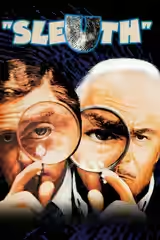
How does Dial M for Murder compare to Sleuth?
Dial M for Murder is the tighter and more controlled of the two, while Sleuth is the funnier and more elaborately staged. Hitchcock lets us understand his schemer early and watch the people around him; Sleuth makes a contest of wills out of two men who enjoy explaining themselves. Choose Hitchcock for precision, Sleuth for showier malice.
What should I watch after Dial M for Murder?
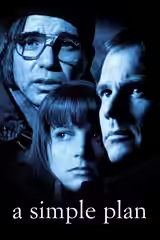
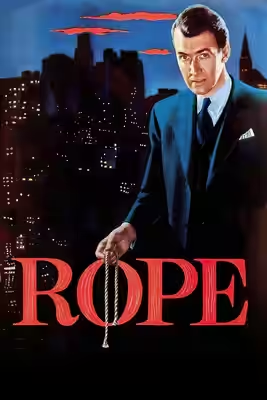
After Dial M for Murder, try Rope (1948, Fi1m 76): Another confined Hitchcock thriller, with social conversation made steadily more uncomfortable. Then Sleuth (1972, Fi1m 82): For more elaborately staged malice between people who enjoy explaining themselves; and A Simple Plan (1998, Fi1m 86): Ordinary people discover how much work a supposedly manageable crime requires.

Cast

If you liked this, try…

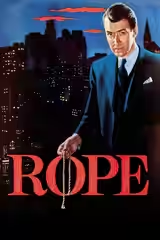
  1. Rope (1948, Fi1m 76)Another confined Hitchcock thriller, with social conversation made steadily more uncomfortable.

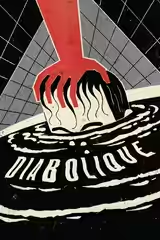
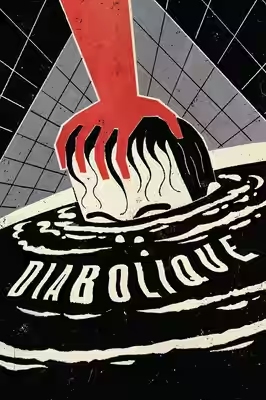
  2. Les Diaboliques (1955) · not reviewed yetA French murder scheme whose careful preparation offers remarkably little reassurance.

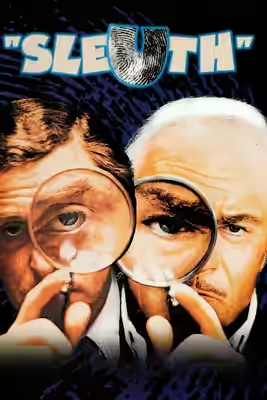
  3. Sleuth (1972, Fi1m 82)For more elaborately staged malice between people who enjoy explaining themselves.

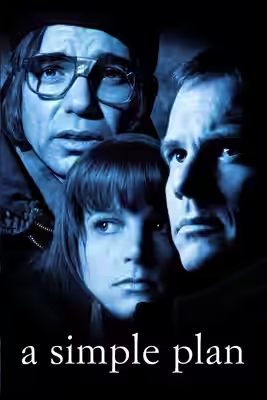
  4. A Simple Plan (1998, Fi1m 86)Ordinary people discover how much work a supposedly manageable crime requires.

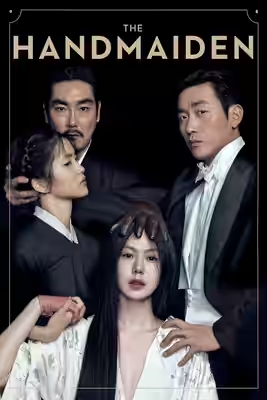
  5. The Handmaiden (2016, Fi1m 85)An intimate Korean thriller where manipulation depends on watching other people closely.

Free account

Know what to watch tonight

Two lists that know where things are streaming, collections you can share, your own score beside ours, and Discover that remembers what you have seen.

  • Want to see, sorted by what is streaming now
  • Seen, with your score out of ten
  • No adverts, ever