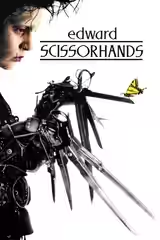
Most critics warm to it, and the praise falls in two places. The first is the look: the pastel suburbia, the hedges and hairstyles, the fun-house production design that many reviews treat as the film’s main achievement. The second is Johnny Depp, praised almost everywhere for carrying the film through his eyes rather than his lines. Later reviews go further, reading it as Burton’s most personal work, a gentle Frankenstein in which the monster is the only sympathetic figure and the neighbours are the ones to fear.
The reservations gather around story rather than style. Roger Ebert finds the hero remote and the ending conventional, The Guardian wants more dramatic weight, and Time Out calls it hollow at the centre. Pauline Kael, in The New Yorker, goes furthest, calling its portrait of the misunderstood artist self-serving. The spread is wide: near-raves at one end, two dismissals at the other, and the sceptics are mostly writing in 1990, while those coming to it later are warmer.
E
Empire
1 January 2000 · Jo Berry
90*
The critic praises Burton's whimsical fairytale about an artificial man with scissors for hands who finds acceptance in suburbia before facing rejection. They single out Johnny Depp's performance as particularly moving.
Read the full review →L
Los Angeles Times
14 December 1990 · Michael Wilmington
90*
Wilmington deems it a soft-hearted modern fairy tale and one of the year's most original fantasy creations, full of tenderness and artistic alienation. He praises its daffy invention, marvelous fun-house look, and the hilarious hedges and hairstyles.
Read the full review →Burton's modern fairytale is told gently and with infinite sympathy for the outsider, featuring a wonderfully realised pastel suburbia and memorable central figure. Depp is sensational, conveying anxiety, melancholy and innocence through his eyes alone, with the vision laced with humour and humanity.
Read the full review →V
Variety
11 December 1990 · Amy Dawes
90*
Dawes praises Burton for turning an unlikely character into the center of a delightful and delicate comic fable through brilliant visual storytelling. She highlights the entrancing, slyly comic vision created by the production design, costumes, and Depp's sensitive performance.
Read the full review →L
Little White Lies
26 September 2016 · David Jenkins
85*
The critic calls Edward Scissorhands Burton's creative peak and last truly great film, a singular suburban fairy tale that balances sentiment and irony while remaining emotionally authentic. They praise its macabre foundations and how it disrupts expectations as both fable and mockery of fables.
Read the full review →R
Radio Times
7.8/10 · Alan Jones
78
This oddball fairy tale is one of the best fantasy films ever made, with haunting power, exquisite charm and dark romance; Depp's sensitive performance and Elfman's score are highlights.
Read the full review →N
The New York Times
7 December 1990 · Janet Maslin
70*
Maslin finds the film a single-minded, campy reinvention of a small tale of misunderstood gentleness and stifled creativity. She praises Burton's awe-inspiring ingenuity in crafting its bold, ebullient suburban fairy-tale world.
Read the full review →R
RogerEbert.com
14 December 1990 · Roger Ebert
55*
The film showcases Tim Burton's inventive visual style and special effects that create unique images, but it falls short in storytelling and character development, with the hero feeling remote and the plot resorting to a conventional Hollywood ending.
Read the full review →G
The Guardian
25 July 1991 · Derek Malcolm
50*
Burton crafts a dark, oblique fairy tale with beautiful stylisation and strong naturalistic performances, especially from Depp as the vulnerable outsider. It refreshes Hollywood norms but lacks sufficient dramatic weight and iron in its soul to fully ignite as drama.
Read the full review →N
The New Yorker
10 December 1990 · Pauline Kael
30*
Kael calls the film plaintive and graphically conceived but ultimately pre-interpreted and self-serving in its portrait of the misunderstood artist. She singles out Dianne Wiest's radiant, daffy performance as the Avon lady Peg for particular delight.
Read the full review →T
Time Out
13 December 2011 · CM
30*
Burton's film offers a skewed, visually striking vision of suburbia with strong design elements, but it remains curiously hollow at its core.
Read the full review →C
Collider
4 January 2022 · William Fischer
90*
The critic calls Edward Scissorhands Burton's most vulnerable and raw exploration of alienation and outsider status, describing it as an honest portrait of adolescence that remains his favorite film. They single out the exposed, passive protagonist and the unfiltered expressionism of the screenplay and design for praise.
Read the full review →/
/Film
3 July 2020 · Alex Arabian
90*
The critic views the film as a complex allegory for societal and economic change in suburban America, highlighting themes of classism, diversity, and prejudice against outsiders. They single out the symbolic use of snow, Edward's unchanging appearance, and the contrasting mansion and neighborhood for praise.
Read the full review →D
Den of Geek
24 September 2009 · Carley Tauchert
80*
The film is a gothic fairytale about outsider status and Burton's personal feelings of isolation. It singles out Johnny Depp's magical, soulful performance as Edward for particular praise.
Read the full review →P
Polygon
7 December 2025 · Jesse Hassenger
80*
The critic highlights the film as Burton's most personal and revealing work, a gentle, self-portrait-like take on Frankenstein where the monster is entirely sympathetic and the suburbanites are the flawed ones. They praise its courage in both fairy-tale and satire modes and the purity of its childlike monster fascination.
Read the full review →E
Eye for Film
23 December 2006 · Scott Macdonald
60*
The critic finds the film visually dazzling with intricate designs and praises Depp's sincere, emotional performance as the innocent outsider. However, the review faults the blunt climax, contrived plot complications, and unsubtle satire that fails to fully support its quixotic visuals.
Read the full review →Ordered by the weight we give each publication, then by score. Scores are normalised to 100; * means inferred from an unrated review. Summaries are ours, not quotations; follow the links for the reviews themselves. How we rate