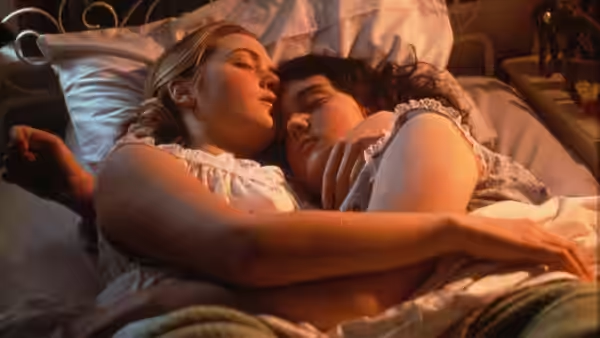
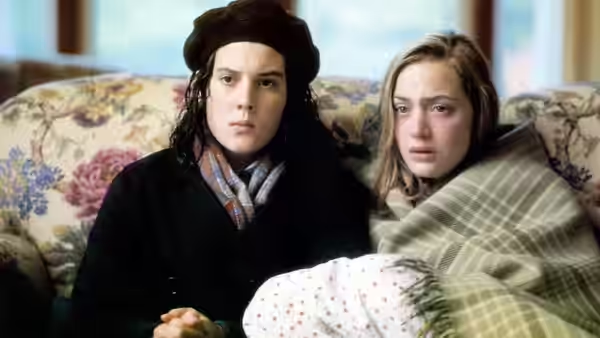
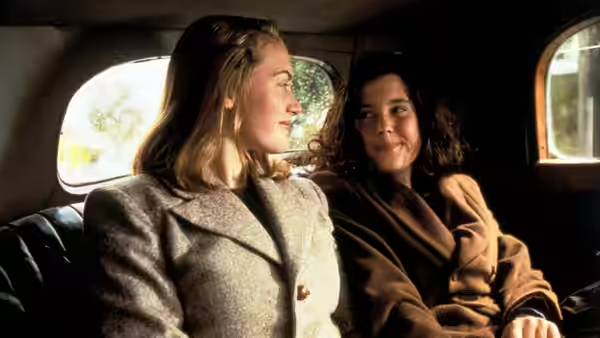
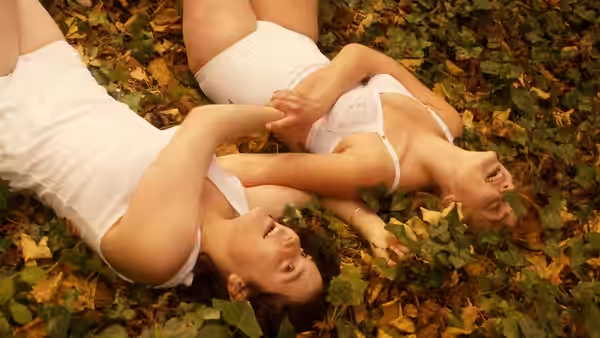
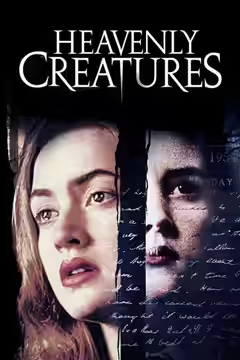
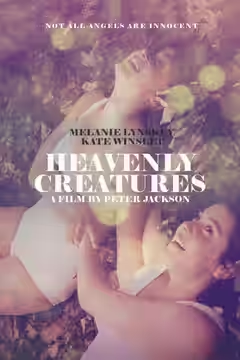
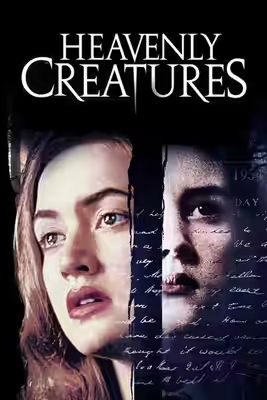
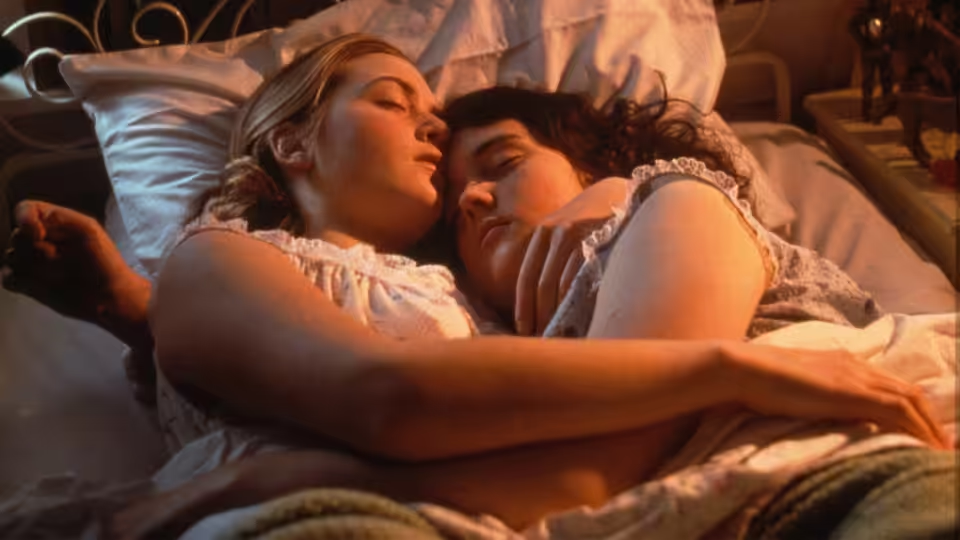
Juliet (Kate Winslet) and Pauline (Melanie Lynskey) embracing in bed
Film review

Heavenly Creatures

1994 · Directed by Peter Jackson · 1h 49m · MPA R

In a sentenceFinding someone who understands you is lovely until neither of you listens to anyone else

Pauline Parker (Melanie Lynskey) and Juliet Hulme (Kate Winslet) are teenagers whose friendship draws them into an increasingly private world. They share fantasies that set them apart from those around them, and grow more absorbed in each other’s company. Peter Jackson directs this drama with fantasy elements, co-written with Fran Walsh and based on a real New Zealand case. Sarah Peirse plays Honorah Parker Rieper, alongside Diana Kent as Hilda Hulme and Clive Merrison as Dr. Henry Hulme. The story follows the girls’ attachment as the world they imagine together becomes more important to them than the one they live in.

Plays from YouTube when you press play; nothing loads from them until then.

Fi1m review

Peter Jackson’s fantasy drama is unsettling and well worth seeing, with Melanie Lynskey and Kate Winslet making teenage friendship feel consuming. The restless camera sometimes overdoes what the performances have already achieved.

Heavenly Creatures is an unsettling, absorbing film about two teenagers whose friendship makes everyone else seem unnecessary. Peter Jackson takes their attachment seriously enough to let us feel its appeal before asking us to fear its intensity. His screenplay with Fran Walsh gives their fantasies considerable room, trusting the relationship to hold our attention through its excursions from reality. It is worth seeing, with a reservation about Jackson’s tendency to keep the camera moving when the actors need no assistance.

Melanie Lynskey’s Pauline Parker and Kate Winslet’s Juliet Hulme make that trust worthwhile. Their attachment feels important to them in ways that do not require the audience to remember its own adolescence fondly. We were moved by their pleasure in sharing an imagined world, and unsettled by how readily we wanted them to be left alone in it. The performances make that response possible: both girls remain people whose companionship we can understand, even as their distance from everyone else becomes troubling.

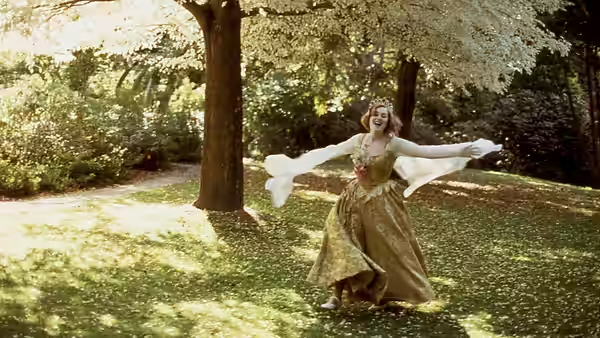
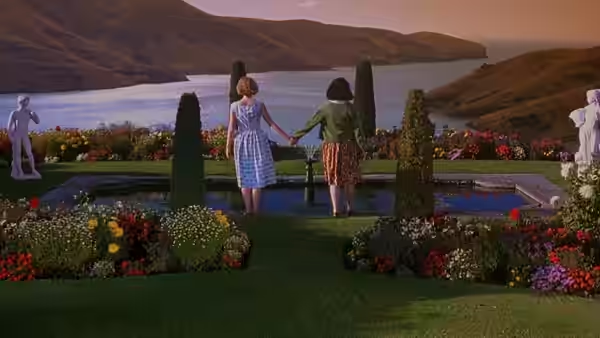
Alun Bollinger’s restless photography gives their excitement a physical force, carrying us along when a stiller approach might let us judge them too easily. Grant Major’s production design makes the fantasy feel substantial enough to be somewhere they would want to stay. Those imagined spaces matter because we need to understand what the girls find there. The film’s willingness to spend time inside their fantasies makes their dependence on each other convincing without requiring lengthy explanations of what it means.

Jamie Selkirk’s editing sustains the dreamlike mood, keeping the fantasy close enough to ordinary experience that the transitions do not release us from the girls’ company. That continuity is important in a film which asks us to spend so much time following their private thinking. Peter Dasent’s score helps make their imagined world inviting and keeps the emotions close to the surface. The music works within Jackson’s excitable approach, though the performances do most of the work of making us care.

Jackson’s weakness is his reluctance to leave that heightened pitch alone. Some camera movements insist on excitement after the performances have already supplied it, and the effect can be wearing. The concentration on the pair also makes it harder for anyone else to register with comparable force. We wanted a little more room to feel the pressure of ordinary life, because without it the flights into fantasy lose some of their urgency.

The consensus is less enthusiastic than we are, and the objection to Jackson’s closeness to the girls deserves an answer. We disagree that sharing their view makes the film too forgiving: their retreat into fantasy becomes alarming precisely because the friendship has been made so appealing. Jackson and Walsh allow us to understand the attachment without making us comfortable about it. A crime drama that kept the girls safely at a distance would give us much less to think about, however much easier it might be to watch.

This is a strong choice for anyone willing to spend an evening with a friendship that becomes increasingly difficult to watch. Expect the fantasy to demand as much attention as the drama, and allow for some directorial overstatement. Choose it when there is time to talk afterwards.
Critical consensus AI synthesised

74
Positive
10
Mixed
1
Negative
1

Most critics admire it. Ten of the twelve reviews are positive, and the praise gathers in the same places: the lead performances of Melanie Lynskey and Kate Winslet, and the fantasy sequences, which most reviewers treat as the heart of the film rather than decoration. The consensus reads it as the moment Peter Jackson turned from splatter comedies into a serious dramatist, and finds he kept his energy in the move.

The disagreement is about point of view. The film stays inside the girls’ heads, and the two dissenters, both American and both from the 1994 release, think that is the problem. The New York Times finds the tension leaks away because we never step outside the pair; The New Yorker goes further and objects to the tenderness shown to the killers. Time Out notes some irritating camera moves and Variety warns the flashy style may divide audiences. The spread is wide; the later British reviews are the warmest.

Empire
20 December 2005 · Olly Richards
90*

The film is taut and clever, fronted by two excellent performances and a strong choice for Jackson's move into mainstream filmmaking. It singles out the sustained dreamlike state that makes the crime plotting feel like part of the girls' fantasy world.

Read the full review →
Los Angeles Times
23 November 1994 · Kenneth Turan
90*

The film is praised as an adventurous, accomplished work burning with cinematic energy that presents the inevitable story without romanticizing or excusing the events.

Read the full review →
The Guardian
26 September 2011
90*

The critic calls Peter Jackson's 1994 film a masterly, formally daring and superbly acted drama about two teenage girls whose obsessive relationship spirals out of control. The fantasy sequences are singled out as a disturbing and sublime coup de cinéma that showcases Jackson's gift for fantasy landscapes born of emotional damage.

Read the full review →
The Telegraph
23 November 2012 · Tim Robey
90*

Heavenly Creatures remains Jackson's best, most serious and most daring movie, a 99-minute time-bomb that ticks toward an inevitable tragic outcome with desperate force. The performances of leads Melanie Lynskey and Kate Winslet are singled out as making one of the most unforgettable portraits of female friendship in cinema.

Read the full review →
The AV Club
26 February 2009 · Scott Tobias
85*

The film marks Jackson's transition from splatstick to prestige drama while retaining his energetic style, focusing tightly on the obsessive friendship and shared fantasy world of the two teenage girls at its center.

Read the full review →
Time Out
17 November 2015 · GA
80*

The critic welcomes Peter Jackson's shift from splatter films to this drama based on a real New Zealand murder case, focusing on the intense friendship between two teenagers rather than the violence itself. The film is distinguished by its immersive depiction of the girls' secretive relationship and is acted with conviction and directed with febrile vibrancy, though some camera movements are noted as irritating.

Read the full review →

Straight answers AI written, from our review

Is Heavenly Creatures worth watching?
Heavenly Creatures is worth watching for anyone prepared to spend an evening inside a teenage friendship that becomes harder to watch as it deepens, and we scored it 84. Melanie Lynskey and Kate Winslet make the attachment convincing before it turns troubling. Allow for Peter Jackson keeping the camera moving when the performances need no help.
How long is Heavenly Creatures, and what is it rated?
Heavenly Creatures runs 1h 49m and is rated R by the MPA in the US. It is a drama and fantasy film.
Where can I watch Heavenly Creatures in the US?
Heavenly Creatures is not on any streaming or rental service in the US at the moment. It is available in 4 other countries; change your country at the top of the page to see where. Availability is checked daily.
How violent or frightening is Heavenly Creatures, and is it suitable for children?
Heavenly Creatures carries an 18 certificate in the UK and is not suitable for children. The film is unsettling rather than gory for most of its length, drawing its disquiet from two girls whose shared fantasy world crowds out everyone else. Older teenagers and adults who can sit with a slow build of dread are its audience.
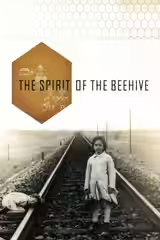
How does Heavenly Creatures compare to The Spirit of the Beehive?
Heavenly Creatures is the louder and more excitable of the two, following two teenagers whose shared fantasy becomes alarming, while The Spirit of the Beehive watches a single child's fascination with Frankenstein at a patient, quiet pace. Erice's film is the calmer and more composed; Jackson's is the more forceful. Choose Erice for stillness and Jackson for intensity.
What should I watch after Heavenly Creatures?
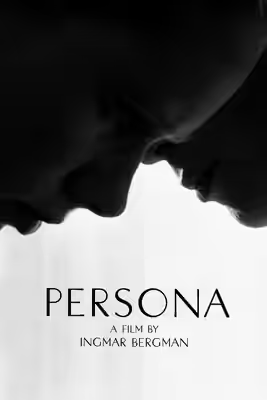
After Heavenly Creatures, try The Spirit of the Beehive (1973, Fi1m 87): For childhood fantasy that changes how an ordinary place feels and looks. Then Picnic at Hanging Rock (1975, Fi1m 88): Schoolgirl closeness, adult unease and a dreamlike atmosphere that resists easy explanation; and Persona (1966, Fi1m 89): A harsher look at intimacy, with two women and fewer comforting distractions.

Cast

Awards

Academy Awards, 1995

Nominated
Best Writing, Original Screenplay

If you liked this, try…

  1. My Summer of Love (2004) · not reviewed yetAnother intense friendship in which shared invention makes ordinary life feel unbearable.

  2. The Spirit of the Beehive (1973, Fi1m 87)For childhood fantasy that changes how an ordinary place feels and looks.

  3. Picnic at Hanging Rock (1975, Fi1m 88)Schoolgirl closeness, adult unease and a dreamlike atmosphere that resists easy explanation.

  4. Persona (1966, Fi1m 89)A harsher look at intimacy, with two women and fewer comforting distractions.

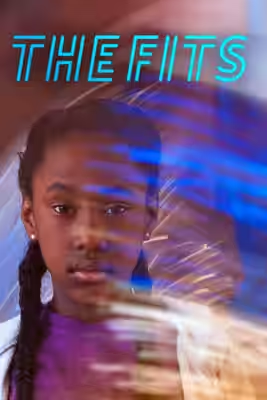
  5. The Fits (2015) · not reviewed yetFor a girl’s longing to belong, made strange through movement and sound.

Free account

Know what to watch tonight

Two lists that know where things are streaming, collections you can share, your own score beside ours, and Discover that remembers what you have seen.

  • Want to see, sorted by what is streaming now
  • Seen, with your score out of ten
  • No adverts, ever