Critics’ reviews

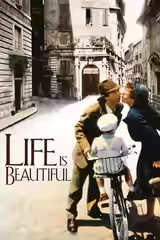
Life Is Beautiful (1997)

11 reviews from 11 publications. Critics’ score 59: 3 positive, 1 mixed, 2 negative.

Back to our review of Life Is Beautiful

59
Positive
3
Mixed
1
Negative
2

The reviews are sharply divided over Life Is Beautiful, with praise clustering around Benigni’s clowning, the early romance and his performance as a father trying to protect his child. Admirers find his energy and tenderness persuasive enough to carry the shift from romantic comedy to Holocaust horror. For these critics, the invented game preserves a child’s innocence without concealing the terror around him, giving the film both humour and emotional force.

The disagreement concerns the treatment of the camps, not simply whether the jokes work. The Guardian finds the sentimentality gravely misjudged, while The New Yorker argues that the film offers reassurance where it should disturb. Variety occupies a more qualified position, praising Benigni’s depth as a father but finding the writing, editing and connection between the two halves weak. The spread is wide: what supporters find moving, detractors regard as a comforting distortion.

Empire
1 January 2000 · Caroline Westbrook
85*

The critic praises Benigni for crafting a remarkable film that finds laughs in a concentration camp setting while maintaining emotional power comparable to Schindler's List. They highlight the inventiveness, energy, and focus on the romance between the leads.

Read the full review →
The AV Club
29 March 2002 · Joshua Klein
85*

The critic praises Benigni's daring blend of humor and Holocaust horror, noting the film's ability to capture the surreal evil through laughter while protecting a child's innocence. The review highlights the powerful, realistic distinction between the invented game and the camps' terror as moving and amazing.

Read the full review →
The Guardian
12 February 1999 · Jonathan Romney
20*

The critic finds Benigni's comedy sincere but horribly misjudged, presenting the Holocaust as a gently touching tragedy with a happy ending. He singles out the aestheticized image of a mound of dead bodies as the most unthinkingly kitsch moment in cinema.

Read the full review →
The New Yorker
15 March 1999 · Anthony Lane
20*

The critic finds the film soothing and anodyne but ultimately one of the most unconvincing and self-congratulatory movies ever made, arguing it functions as a benign form of Holocaust denial that lets audiences feel relieved. It singles out the use of comedy and art to supposedly save lives as unpersuasive.

Read the full review →
Los Angeles Times
23 October 1998 · Kenneth Turan

The critic acknowledges the film's mixed reaction and tough premise but notes that it succeeds better than expected with genuine poignancy, pathos, and sincerity from Benigni's infectious energy and innocence. It singles out the elaborate game conceit in the camp and the balance between sentiment and the human spirit's triumph.

Read the full review →
Sight and Sound
· Colin MacCabe

Benigni's film attempts the impossible by making a comedy out of the Holocaust and affirming society amid its destruction. It excels in the first hour's romance and Benigni's clowning while recognising the enormity of representing the camps.

Read the full review →
The New York Times
23 October 1998 · Janet Maslin

The critic praises Benigni's brazen attempt to find humor and tenderness amid the Holocaust, noting that the film dares to laugh in the face of the unthinkable and works because Benigni is heart-rending without being maudlin. It singles out the impish, rubber-limbed performance and the way the story overcomes its tonal shift midway through.

Read the full review →
Time Out
10 September 2012 · GA

The film starts amusingly with eccentric romance in 1939 Italy but turns misguided and sentimental once it reaches the concentration camp, where the game conceit feels disingenuous and manipulative.

Read the full review →
Variety
4 January 1998 · David Rooney

The critic says Benigni achieves mixed results with this ambitious tragicomedy, which is sluggish, uneven, and lacking rhythm despite enough pathos and humor for success. It singles out the sloppy writing, limp editing, and the two barely reconciled halves of the story, while praising some classic Benigni set pieces and his depth as the desperate father.

Read the full review →
HeyUGuys
2 April 2012 · ★★★★½ · Barry Steele
90

The film succeeds as a genuine classic by shifting from romantic comedy to the horrors of a concentration camp, with Benigni delivering a masterful performance that holds the tonal risk together. The bravery of the father protecting his son through a fabricated game stands out as both affecting and inspiring.

Read the full review →
Eye for Film
19 January 2001 · Angus Wolfe Murray
65*

Benigni’s fable takes humour to the edge by having a father shield his son from camp horrors through a game, earning acclaim for its courage while raising questions of sensitivity. Admiration for the approach is tempered by unease, as images of the camp linger more than the earlier lighter moments.

Read the full review →

Ordered by the weight we give each publication, then by score. Scores are normalised to 100; * means inferred from an unrated review. Summaries are ours, not quotations; follow the links for the reviews themselves. How we rate