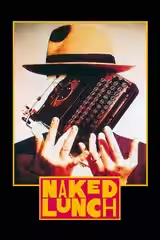
Most critics come down in favour, and for the same reason: Cronenberg has not filmed the novel so much as filmed Burroughs, folding the author’s life and his drug habit into a story about how the book got written. The praise clusters on the meeting of two sensibilities, on the body horror and the dry, mordant comedy, and on the creature effects, the talking typewriters above all. Peter Weller’s held-in performance is singled out more than once.
The spread is wide. Three reviews dislike it, each for a different reason. Empire finds the director’s style and the source material never fuse. The New Yorker admires its coherence but calls it too tidy and unsubversive, a controlled portrait of a wild man. The Los Angeles Times sees a film mainly for those already fond of Cronenberg’s glop and decay. Even the admirers concede the narrative stalls and the strangeness is indulged, and that this is not popcorn entertainment.
L
Little White Lies
15 June 2016 · Tom Graham
90*
The critic praises Cronenberg’s adaptation as a bold, transgressive vision that captures the essence of Burroughs and the Beat generation through its grotesque imagery and nonchalance. They single out the fusion of Cronenberg and Burroughs’ minds, particularly the body-horror elements and dry wit, as key to its longevity.
Read the full review →S
Slant Magazine
15 April 2013 · Rob Humanick
90*
The critic hails Cronenberg’s film as an ecstatic masterpiece and a prodigious tonal achievement that blends reality and hallucination. It singles out the director’s ability to channel Burroughs’s imagery through his own visual style and the film’s dark comedy.
Read the full review →N
The New York Times
27 December 1991 · Janet Maslin
90*
Cronenberg's adaptation represents a remarkable meeting of the minds with Burroughs, treating the novel as a secondary source to focus on the author, his drug experiences, and the creative process, yielding a bracing, brilliant, and audacious screen style.
Read the full review →A
The AV Club
18 November 2003 · Nathan Rabin
85*
The critic calls the film a remarkable, audacious adaptation that remains faithful to Burroughs’s spirit while filtering it through Cronenberg’s sensibility. It praises the haunting meditation on the creative process and Peter Weller’s performance as a tour de force of understatement.
Read the full review →The critic praises Cronenberg's adaptation for fleshing out the plot with details from Burroughs' life and using a complex cinematic metaphor that links the protagonist's drug-induced hallucinations to the act of writing the novel itself.
Read the full review →The piece compares Burroughs's book to Cronenberg's film, noting that the latter uses the novel as a starting point to profile the author's perverse imagination and imposes a linear narrative around Bill Lee's mission. It highlights how Cronenberg retains many Burroughs conceits like the talking asshole while excising much of the pornographic content due to censorship concerns, and connects the film's themes of organic-inorganic unions to the director's broader oeuvre.
Read the full review →The notorious novel has landed in the right hands as Cronenberg stretches himself to deliver a fascinating, demanding, and mordantly funny picture that creates an artificial world on stages and features strong performances.
Read the full review →E
Empire
1 January 2000 · William Thomas
30*
Cronenberg's attempt to adapt Burroughs fails to fuse the director's style with the source material, resulting in a reductive and messy film. It is provocative but never as clever as it thinks it is, ultimately a misfire.
Read the full review →L
Los Angeles Times
27 December 1991 · Peter Rainer
30*
Cronenberg has concocted a hallucinatory jag about Burroughs' tortuous creative process rather than a literal adaptation, jacking up his own obsessions with glop and decay to fever pitch in a film mainly for fans of his mulchy fixations.
Read the full review →N
The New Yorker
3 February 1992 · Terrence Rafferty
30*
The film is an intelligent, affectionate homage and amazingly tight, coherent piece of work that makes sense of Burroughs as a myth of literary inspiration, but it is ultimately too tidy, hermetic, and unsubversive—a control freak's portrait of a wild man.
Read the full review →D
Den of Geek
29 October 2015 · Nick Aldwinckle
90*
The critic praises Cronenberg’s adaptation of the unfilmable novel as a highlight of his career, noting its postmodern take on the creative process and the descent into hallucination. He singles out the cinematography, sleazy jazz score and especially the strange animatronics for praise.
Read the full review →P
The Playlist
20 October 2015 · B · The Playlist Staff
77
Cronenberg's adaptation blends Burroughs' life and novel into a meditation on the creative process. It is grotesque, demented, dark, and mordantly funny, with staggering ambition and remarkable mastery of tone despite its disjointed nature.
Read the full review →E
Eye for Film
22 September 2004 · Angus Wolfe Murray
70*
The critic praises Cronenberg's adaptation for materializing the writer's obsessions through surreal, mutating imagery like talking typewriters and insects, calling the film unique, disturbing, and wicked with a paraorgasmic quality. Peter Weller's internalized performance and the remarkable creature effects stand out, though the film occasionally loses its way in its own imaginings.
Read the full review →C
Collider
17 June 2013 · Rob Vaux
65*
The critic notes that the film is not popcorn entertainment and can feel exasperating due to its narrative stagnation and indulgence in strangeness, but praises its success in conveying Burroughs' paranoid mindset, creative process, and worldview through Cronenberg's adaptation.
Read the full review →Ordered by the weight we give each publication, then by score. Scores are normalised to 100; * means inferred from an unrated review. Summaries are ours, not quotations; follow the links for the reviews themselves. How we rate