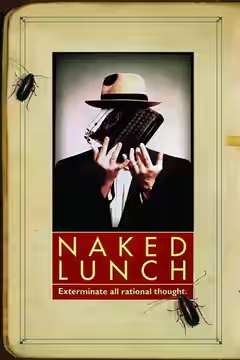
David Cronenberg makes writing feel grubby, funny and faintly dangerous, with Peter Weller giving the hallucinations a human centre. Naked Lunch is worth the discomfort, though its wandering story sometimes outlasts our interest.
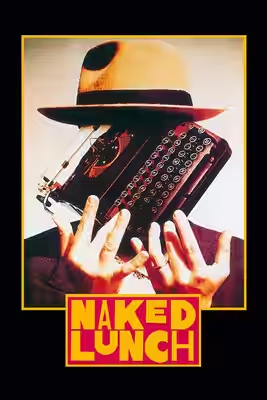
Naked Lunch is a good, queasy comedy about writing, provided we accept that the writing will involve talking typewriters and insects. David Cronenberg, who wrote and directed it from William S. Burroughs’ novel, is also interested in the author’s life and drug experiences. He follows Bill Lee through hallucinations that make the business of putting words on a page look unhealthy in several ways at once. The film is funny and unsettling enough to justify the journey, though we would happily lose a few of its detours.
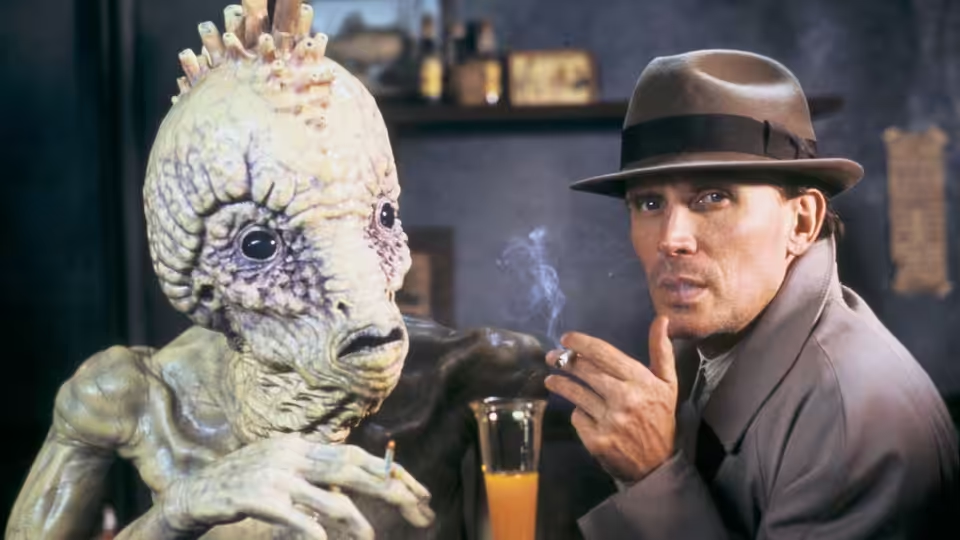
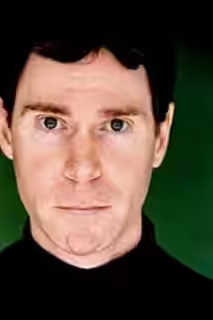
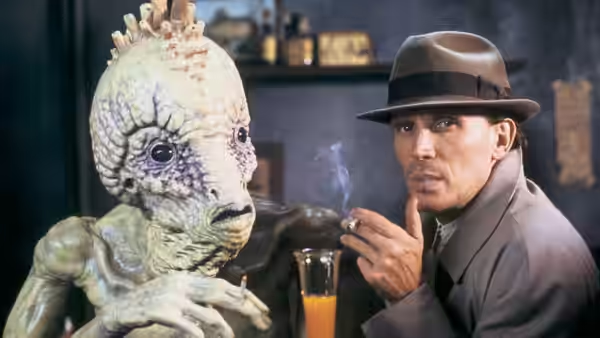
Peter Weller plays Bill as a man keeping a great deal to himself, preventing the whole thing becoming a procession of creature effects. His performance keeps us looking for thought behind the strange encounters, rather than merely waiting for the next one. Bill’s paranoia is persuasive because Weller does not need to explain every part of it for us. There is something recognisable about a writer so absorbed in his own material that everyone else seems to have wandered into it.
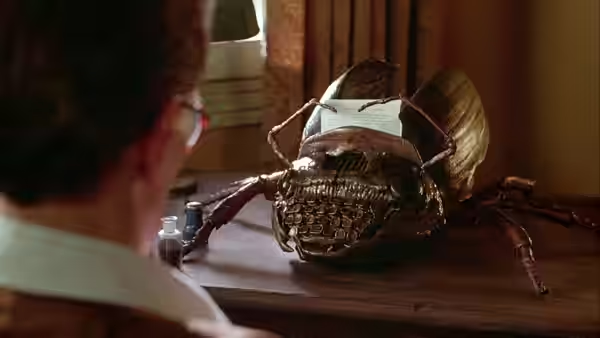
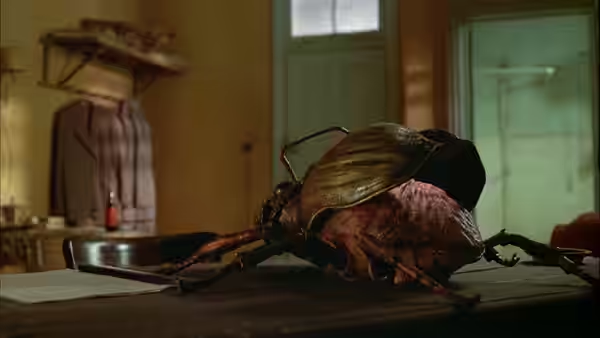
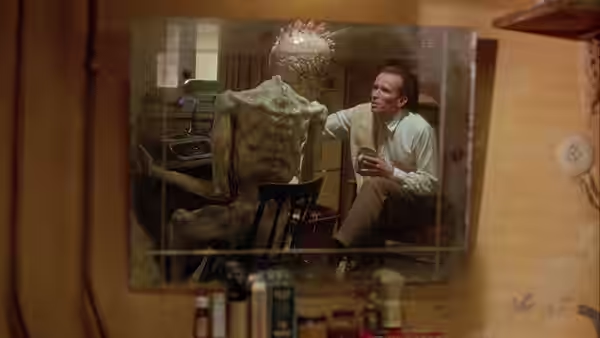
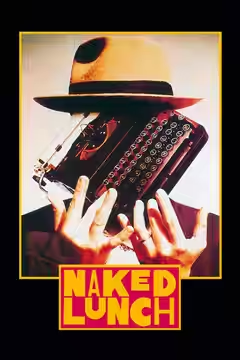
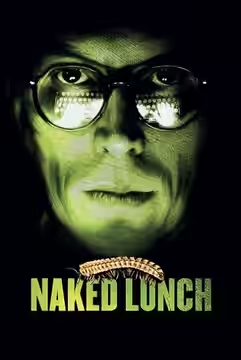
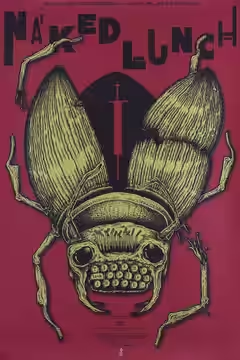
We laughed when the typewriters spoke, and felt queasy about how alive they seemed. The animatronic creatures give the hallucinations a physical presence that makes them harder to dismiss. Making a writer’s equipment seem alive turns an ordinary task into something he can no longer control. Cronenberg lets the comedy coexist with disgust, without asking us to settle on a sensible response. The insect imagery is repellent, but it also makes the labour of writing look ridiculous.
Carol Spier’s production design gives the hallucinations an openly artificial setting. Peter Suschitzky’s cinematography is especially effective at making the sets and the mutating creatures seem part of the same place. We never need to mistake it for an ordinary place to accept that Bill is stuck there. Everything appears to belong to the same troubled imagination, although such careful control leaves little sense that anything might surprise its maker.
Howard Shore and Ornette Coleman’s jazz-inflected music gives the film an uneasy movement that the story sometimes lacks. It keeps us on edge without making the creatures any less absurd. Ronald Sanders’s editing makes the hallucinations surprisingly easy to follow, keeping Bill’s encounters connected despite their strangeness. The trouble comes when the next encounter gives us much the same thing as the last. Clear editing cannot make those passages feel necessary.
The bodily decay is familiar territory for Cronenberg, and his taste for it serves the comedy well. But once we understand how thoroughly writing and hallucination have become entangled, the film struggles to find enough new things to do with them. We share some critics’ frustration with the stretches in which the story stalls, though not the view that the whole adaptation fails. At 115 minutes, there is enough repetition to make us aware of the effort required to stay with Bill.
Still, the film understands something awkward about the urge to write: from outside, sustained concentration can look a good deal like withdrawal from other people. Weller makes that withdrawal felt without asking for sympathy, and the absurd equipment stops the writer’s troubles becoming too solemn. There is plenty here for anyone drawn to unreliable perception and the practical indignities of making things. Come for the creatures, and allow for the passages when the writer becomes rather too interested in his own thoughts.