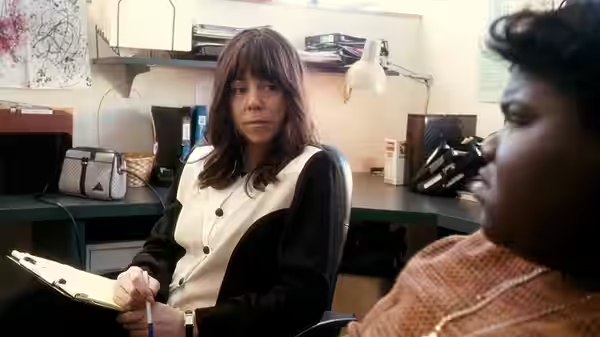
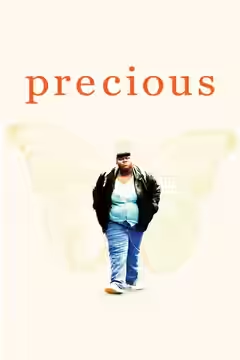
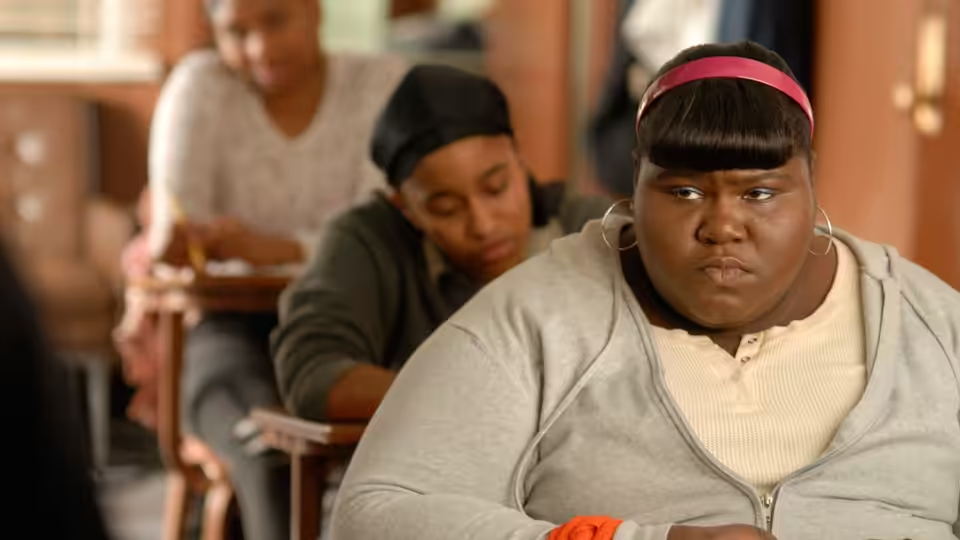
Precious (Gabourey Sidibe) sits in a classroom looking ahead intently
Film review

Precious: Based on the Novel 'Push' by Sapphire

2009 · Directed by Lee Daniels · 1h 50m · MPA R

In a sentenceThe worst mother in Harlem, the kindest teacher in cinema, and a girl who deserves a subtler film than either

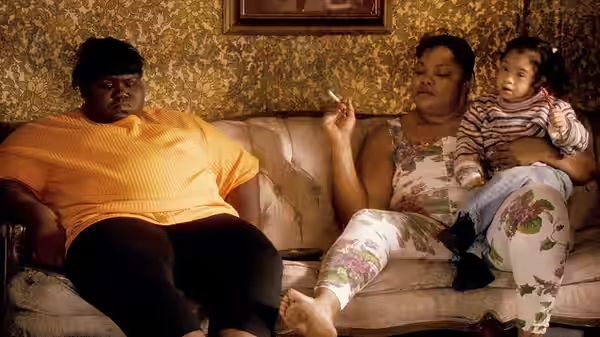
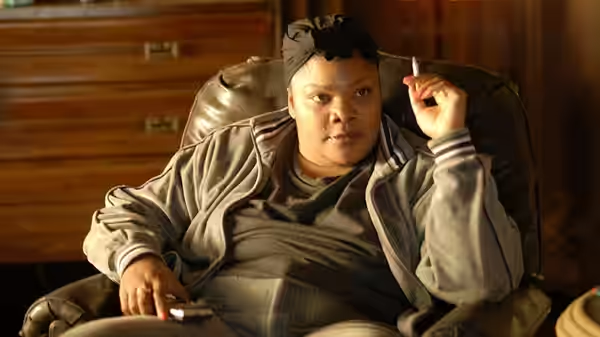
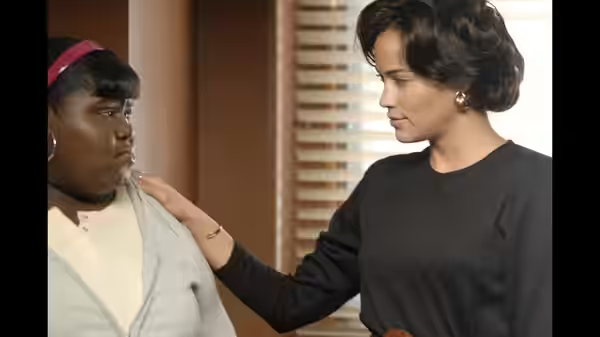
Harlem, 1987. Precious Jones (Gabourey Sidibe) is sixteen, cannot read, and is pregnant with her second child by her father. She lives with her mother, Mary (Mo’Nique), in a cramped flat where the television is always on and Mary is always in the armchair, throwing things and demanding that Precious go and collect the welfare. When the school finds out about the pregnancy, Precious is sent to Each One Teach One, an alternative programme where the teacher, Ms. Rain (Paula Patton), asks her class to write in a journal every day. Between beatings, Precious escapes into daydreams in which she is a star on a red carpet with a light-skinned boyfriend on her arm.

Plays from YouTube when you press play; nothing loads from them until then.

Fi1m review

Lee Daniels’s film about an abused Harlem teenager is carried by two remarkable performances, from Gabourey Sidibe and Mo’Nique, and undermined every twenty minutes by its own fantasy sequences. It is worth watching, and it is not as good as its admirers say.

Lee Daniels’s film is about a sixteen-year-old girl in Harlem in 1987 who is beaten by her mother, raped by her father, pregnant for the second time and unable to read, and it wants to send you home hopeful. It manages that about two-thirds of the time. Two performances carry it, from Gabourey Sidibe in her first film and from Mo’Nique as the mother. The daydreams, the classroom and the famous faces in small parts are where it keeps tripping over its own good intentions. It is worth your evening. It is not the great film its admirers describe.

Sidibe plays Precious with her face nearly shut. She walks the school corridors with her head down and her coat on, and Geoffrey S. Fletcher’s screenplay gives her a voiceover that says everything the face will not. It could have been a cheat, and it is not, because Sidibe lets the two disagree. Early on, after a beating, she looks in a mirror and sees a thin blonde white girl looking back, and the voiceover carries on as if nothing had happened. We were more shaken by that than by anything Mary does with her hands.

Mo’Nique’s Mary spends most of the film in an armchair in front of the television, cigarette going, telling her daughter what she is worth. She hits Precious with whatever is in reach and asks her to fetch food in the same breath. We were horrified, and the reason is that Mo’Nique never plays her as a monster. Mary is bored, lonely and jealous of her own child, and she says so out loud, so that the abuse looks like a habit nobody has ever interrupted. She gets one long scene near the end that we will not describe, except to say that it is the only time the film lets her explain herself, and the explanation is worse than the violence.

Andrew Dunn shoots the flat in dim yellow lamplight with the curtains drawn, so that the school scenes, in grey daylight from tall windows, feel like coming up for air. Roshelle Berliner has furnished the flat with things Mary would never let go of: the armchair, the set, a kitchen last cleaned when somebody was last made to clean it. Marina Draghici keeps Precious in the same dark coat and headscarf for much of the film, so that when she is dressed differently we notice. Mario Grigorov’s score stays out of the flat altogether and leaves the sound of it to the television and to Mary.

The daydreams are the problem. Every so often Joe Klotz cuts, mid-blow, to Precious on a red carpet with flashbulbs going and a handsome boyfriend on her arm. The first time, it works: we understand where she goes while her body is being hurt. By the fourth time it is a pressure valve, and the film reaches for it just when it has earned the pressure. The classroom at Each One Teach One has the same trouble. Rita (Stephanie Andujar), Rhonda (Chyna Layne), Jermaine (Amina Robinson), Joann (Xosha Roquemore) and Consuelo (Angelic Zambrana) each get one trait and one joke, and Ms. Rain is written as a saint. Paula Patton plays her as one, which is the only option she was given.

The famous faces are a mixed bag. Mariah Carey, as the social worker Ms. Weiss, has had the glamour taken off her and plays a woman who asks questions and writes down the answers. She is patient and plain, and we forgot who she was, which is the compliment. Lenny Kravitz as Nurse John is a distraction in a hospital scene that did not need one. Sherri Shepherd, as the receptionist Cornrows, gets the film’s few honest laughs.

Daniels does not do restraint, and there are stretches here that wanted some. Fletcher’s script, from Sapphire’s novel Push, follows the old shape of the inspirational-teacher film more closely in the second half than the first. But Sidibe and Mo’Nique are not doing anything old. They play a mother and daughter who have never once been kind to each other, and we believed every minute of it.

It is a 15 certificate at 110 minutes, and it earns the certificate in the first ten. Watch it for those two, and have something gentler ready for afterwards.

Critical consensus AI synthesised

78
Positive
13
Mixed
3
Negative
1

Most critics are moved by it, and the praise gathers almost entirely around two performances. Gabourey Sidibe, in her first screen role, is credited with acting so unforced that several reviewers say they stop seeing a performance at all, and Mo’Nique’s mother is described repeatedly as monstrous in a way that stays with them. Lee Daniels is credited by many for holding the film’s extremes together, letting the bleakest material sit alongside humour and the fantasy sequences without the whole collapsing into misery.

The reservations cluster around tone and intent. Some find the lurches between nightmare and uplift awkward, and the dream sequences ill-fitting or condescending. The spread is wide: a small group, led by Slant Magazine and The Playlist, calls the film manipulative exploitation dressed for liberal audiences, and The Guardian argues it has been treated with more reverence than it earns. Tellingly, even the harshest dissenters exempt Sidibe and Mo’Nique from their complaints.

RogerEbert.com
4 November 2009 · ★★★★/4 · Roger Ebert
100

The film is a great American story that moves from despair to inspiration through the hope offered by two women in Precious's life. It highlights powerful performances, especially by the debut lead and supporting cast, in depicting a girl's pain and resilience.

Read the full review →
Empire
30 December 2009 · Angie Errigo
90*

The critic finds the film a raw and powerful emotional journey of self-acceptance and hope that is dramatically a triumph despite some technical flaws. They single out the lead performance by Gabourey Sidibe as undetectable acting that fully draws the viewer into her life.

Read the full review →
Los Angeles Times
6 November 2009 · Betsy Sharkey
90*

The film is a raw, unforgettable blend of dark social commentary and entertainment that challenges but ultimately moves viewers through the horrific realities and escapist fantasies of its protagonist. Sharkey singles out the fearless performances, particularly Mo'Nique's as the monstrous mother, and the director's restraint in letting emotional peaks emerge naturally.

Read the full review →
The New York Times
5 November 2009 · A.O. Scott
90*

The adaptation avoids preachy realism and mixes styles to sing as well as howl about a life of horror and dysfunction. It is unabashedly populist in emotional appeal while challenging audience complacency as genuine art.

Read the full review →
Evening Standard
10 April 2012
85*

The critic describes the film as a bracing new-style weepie that is more uplifting than depressing and praises its truthful depiction of real life. They single out Mo’Nique’s performance as the monstrous mother as one of the best screen performances ever seen.

Read the full review →
The Hollywood Reporter
21 January 2009 · festival review
85*

The critic calls the film an overwhelming and masterful Sundance entry with a grim, disturbing story of merciless degradations, crystalline performances (especially from newcomers Gabourey Sidibe and Mo’Nique), and strong direction and technical work that elevates the material.

Read the full review →

Straight answers AI written, from our review

Is Precious: Based on the Novel 'Push' by Sapphire worth watching?
Precious: Based on the Novel 'Push' by Sapphire is worth watching for the two performances at its centre, from Gabourey Sidibe and Mo'Nique, and we scored it 72. Lee Daniels's film is undermined every twenty minutes by its own red-carpet daydreams and a saintly classroom, so it is not the great film its admirers describe. Have something gentler ready for afterwards.

How long is Precious: Based on the Novel 'Push' by Sapphire, and what is it rated?
Precious: Based on the Novel 'Push' by Sapphire runs 1h 50m and is rated R by the MPA in the US. It is a drama film.
Where can I watch Precious: Based on the Novel 'Push' by Sapphire in the US?
Precious: Based on the Novel 'Push' by Sapphire is streaming on Tubi and Amazon Prime Video in the US, and it is also available to rent from Amazon Prime Video and Apple TV from $3.99. It leaves Tubi on 1 October. Availability is checked daily; the links above go straight to each service.
How violent or frightening is Precious: Based on the Novel 'Push' by Sapphire, and is it suitable for children?
Precious: Based on the Novel 'Push' by Sapphire is a 15 certificate in the UK and R in the US, and it earns that in the first ten minutes: a sixteen-year-old is beaten by her mother, raped by her father and pregnant for the second time. Not for children, and the squeamish should know the abuse is shown as an everyday habit rather than a single shock.
How does Precious: Based on the Novel 'Push' by Sapphire compare to Fish Tank?
Precious: Based on the Novel 'Push' by Sapphire and Fish Tank are both dramas about a teenage girl in a violent, neglectful home, but Andrea Arnold's Essex film is the tenser and less consoling of the two. Precious gives its heroine daydreams and a saintly teacher to escape into; Mia in Fish Tank has neither and is angrier for it. Watch Precious for Sidibe and Mo'Nique, Fish Tank for a film with fewer soft landings.
Is Precious: Based on the Novel 'Push' by Sapphire based on a true story or a book?
Precious: Based on the Novel 'Push' by Sapphire is adapted from Sapphire's novel Push, not from a true story, with a screenplay by Geoffrey S. Fletcher. We note that the script follows the familiar shape of the inspirational-teacher film more closely in its second half than its first. You do not need to have read the book to follow the film.
What should I watch after Precious: Based on the Novel 'Push' by Sapphire?
After Precious: Based on the Novel 'Push' by Sapphire, try Fish Tank (2009, Fi1m 85): Andrea Arnold’s Essex teenager, angrier and less rescued, with no daydreams to hide in. Then The Color Purple (1985, Fi1m 64): Spielberg’s adaptation of Alice Walker; a woman written off by everyone finds her voice; and Rosetta (1999, Fi1m 82): The Dardennes follow a Belgian girl fighting for a job and away from her mother.

Cast

Awards

Academy Awards, 2010

Nominated
Best Actress
Nominated
Best Director
Nominated
Best Film Editing
Nominated
Best Picture
Won
Best Supporting Actress
Won
Best Writing, Adapted Screenplay

Producers Guild Stanley Kramer Award, 2010

Won
Producers Guild Stanley Kramer Award

If you liked this, try…

  1. Fish Tank (2009, Fi1m 85)Andrea Arnold’s Essex teenager, angrier and less rescued, with no daydreams to hide in.

  2. The Color Purple (1985, Fi1m 64)Spielberg’s adaptation of Alice Walker; a woman written off by everyone finds her voice.

  3. Rosetta (1999, Fi1m 82)The Dardennes follow a Belgian girl fighting for a job and away from her mother.

  4. Moonlight (2016, Fi1m 89)Another child of a chaotic Miami home, told with the restraint Daniels lacks.

  5. Capernaum (2018, Fi1m 80)A Beirut boy sues his parents for having him; harsh, unsentimental and hard to shake.

Free account

Know what to watch tonight

Two lists that know where things are streaming, collections you can share, your own score beside ours, and Discover that remembers what you have seen.

  • Want to see, sorted by what is streaming now
  • Seen, with your score out of ten
  • No adverts, ever