Critics’ reviews

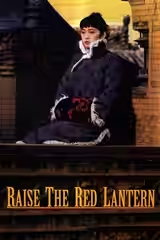
Raise the Red Lantern (1991)

11 reviews from 11 publications. Critics’ score 79: 9 positive, 2 mixed, 0 negative.

Back to our review of Raise the Red Lantern

79
Positive
9
Mixed
2
Negative
0

Most critics admire it, and nearly all of them start with the look. The praise clusters on Zhang Yimou’s colour and framing: the bold reds, the still, symmetrical compositions, the lantern-lighting rituals, and a household shot so tightly that the film feels sealed. Gong Li’s performance is named in almost every review as the reason the thing holds together. Many read it as a political allegory, about the treatment of women first and feudal power in China second.

The spread is wide, from full marks to the middle. The reservations cluster on familiarity. Time Out finds Zhang revisiting the ground of his earlier films and doing it less imaginatively; The New Yorker asks whether a film can be too beautiful and misses the emotional force of Ju Dou. Radio Times, though warm, also ranks it below that film. Roger Ebert and The New York Times, both approving, treat it as absorbing melodrama rather than tragedy.

Radio Times
★★★★★ · David Parkinson
100

Although a lesser film than Ju Dou, this is still one of the jewels of Chinese cinema in the 1990s. Zhang Yimou fashions a compelling and at times erotic story about the repression of women in 1920s China through exceptional use of bright colour, symbolic compositions, stylised sets and rural landscape, with standout performances from Gong Li and He Caifei.

Read the full review →
Empire
1 January 2000 · David Parkinson
90*

The film is a haunting, beautiful study of repression and women's subjugation in a feudal Chinese household, with Zhang's aesthetic subtlety and Gong Li's performance making it compelling and courageous.

Read the full review →
Evening Standard
5 April 2012 · Derek Malcom
90*

The film had a startling international impact as a claustrophobic, richly beautiful political allegory and romantic tragedy set in 1920s China; Gong Li's presence is essential to its success.

Read the full review →
Los Angeles Times
13 March 1992 · Kevin Thomas
90*

Zhang Yimou delivers a calmly shattering portrait of systematic oppression of women in a 1920s noble household, with astonishing beauty and terror that evokes Greek or Shakespearean tragedy. The formal visuals and color use powerfully underscore the rigid rules and power plays among the wives.

Read the full review →
The Guardian
30 March 2000 · Derek Malcolm
85*

The critic calls the film marvellously structured, richly imagined and well-acted, with a central performance that holds attention throughout, and deems it Yimou's most resonant and perhaps most lavish work. He singles out the rich colours, claustrophobic atmosphere and the way the film captures the scent of sex, jealousy and impending disaster through Gong Li's preparation for the marital bed.

Read the full review →
Slant Magazine
3 March 2007 · Steven Boone
80*

The critic praises Zhang Yimou's sober, still visual style that heightens the melodrama and socio-historical resonance of a young woman's entrapment as a concubine. He singles out the economical static compositions, the first close-up of Gong Li, and the lantern-lighting rituals as creating a claustrophobic indictment of feudal society.

Read the full review →
RogerEbert.com
27 March 1992 · Roger Ebert
70*

The film draws viewers into the sealed, hothouse world of a rich man's household where four wives compete for favor through rituals and intrigues. It works as absorbing melodrama while highlighting the cruelty beneath the opulent visuals and performances, especially Gong Li's.

Read the full review →
The New York Times
20 March 1992 · Janet Maslin
70*

The story focuses on the women trapped in a feudal household's rigid rituals and power struggles after a new educated wife arrives. It is a beautifully crafted drama with the verve of a soap opera that raises consciousness about their constrained lives.

Read the full review →
Time Out
10 September 2012 · GA
55*

The film elicits a strong sense of déjà vu as it revisits themes from Zhang's earlier works of a young woman struggling in an oppressive patriarchal society. The lavish schematic colours hold considerable appeal, the atypical symmetry and stillness of the compositions stress the strait-jacket mores of a stagnant feudal culture, and the acting is excellent, but one can't help but feel that Zhang has said it all before and more imaginatively.

Read the full review →
The New Yorker
5 March 2007 · Anthony Lane
50*

The critic questions whether a film can be too beautiful while discussing the revival of Zhang Yimou’s 1991 drama about a fourth wife ensnared in household rivalries. It lacks the emotional vigor of 'Ju Dou' yet stands out for its bold color palette and lingering political provocation.

Read the full review →
Eye for Film
12 March 2007 · festival review · Amber Wilkinson
90*

The critic calls it Zhang Yimou’s master work for its beautiful look, haunting themes and sublime performances. They highlight the complex female characters and the film’s dual indictment of the treatment of women and broader political systems in China.

Read the full review →

Ordered by the weight we give each publication, then by score. Scores are normalised to 100; * means inferred from an unrated review. Summaries are ours, not quotations; follow the links for the reviews themselves. How we rate