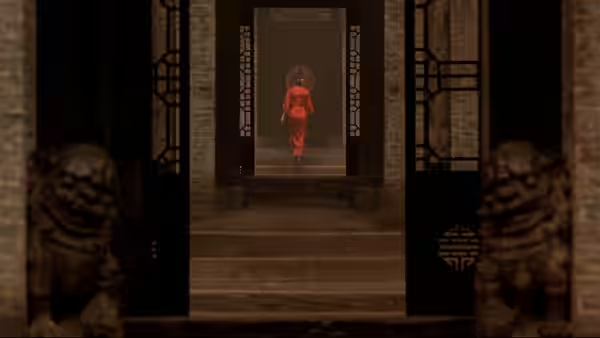
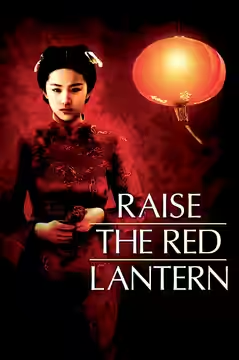
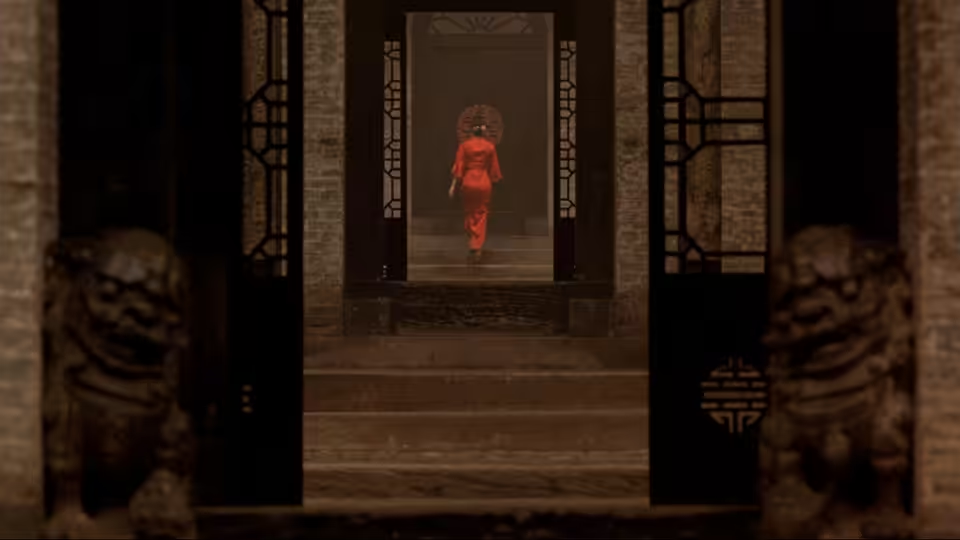
a woman in red walking through a traditional courtyard doorway
Film review

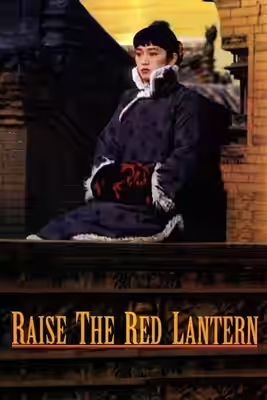
Raise the Red Lantern

1991 · Directed by Zhang Yimou · 2h 05m

In a sentenceFour wives, one husband, and a lighting arrangement nobody can afford to ignore

In 1920s China, Songlian (Gong Li), a young, educated woman, enters the household of Chen Zuoqian (Ma Jingwu) as a new wife. She joins a family in which four wives compete for their husband’s favour and their position depends on rules already established. The lighting of red lanterns forms part of the ceremonies that govern life inside the house, making the competition visible to everyone. Songlian has to find her place among women whose own lives are shaped by the same restrictions, as rivalries and intrigues grow around her.

Fi1m review

Zhang Yimou’s drama of four wives competing for favour is absorbing and deeply upsetting. Gong Li makes the cost of those household rituals painfully clear, though their repetition occasionally presses the point harder than necessary.

Zhang Yimou’s Raise the Red Lantern makes the daily running of a wealthy household frightening enough to sustain an entire drama. Songlian, played by Gong Li, is a young, educated woman entering a marriage in 1920s China, where four wives compete for one man’s favour. We would recommend it to almost anyone prepared for a film about cruelty that proceeds without hurry. The interest lies in how quickly ordinary arrangements become intolerable once we understand who makes the rules and who has to live by them.

Ni Zhen’s screenplay, adapted from a novel by Su Tong, keeps our attention on the women and their struggles within the household. The lantern-lighting rituals make favour visible, so that something apparently private becomes a matter for everyone. We were unnerved by these ceremonies. Their orderly repetition makes the wives’ competition seem as routine as any other household duty. Zhang lets us learn the customs well enough to understand how they can be used against the people obliged to observe them.

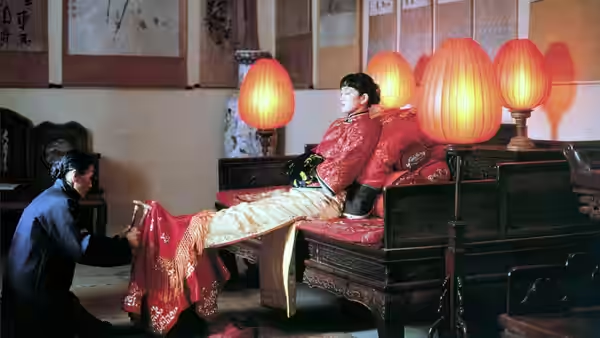
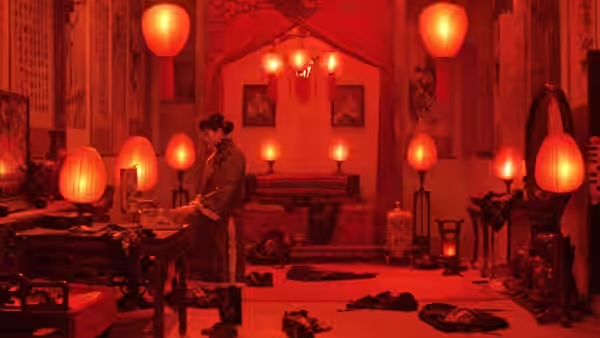
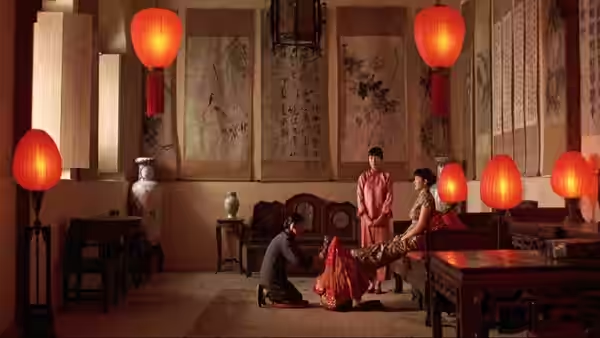
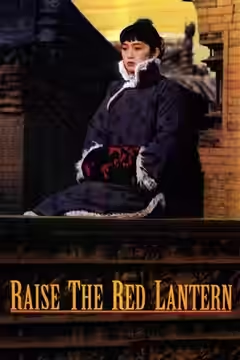
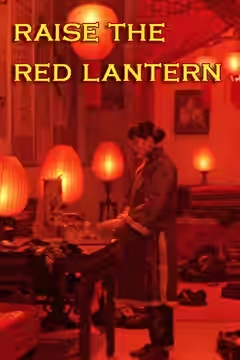
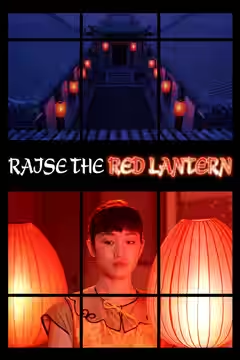
Cinematographers Lun Yang and Zhao Fei use symmetry and stillness to make the restrictions palpable. The women occupy carefully allotted portions of the image, and our eye keeps returning to the arrangements around them. Strong colour gives us plenty to look at without making the place seem welcoming; the stylised sets further limit any sense of escape. The images are pleasurable, which matters, because Zhang needs us to understand the attraction of this wealthy household as well as its cruelty.

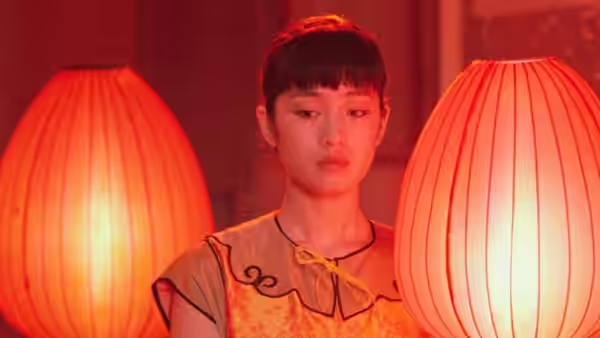
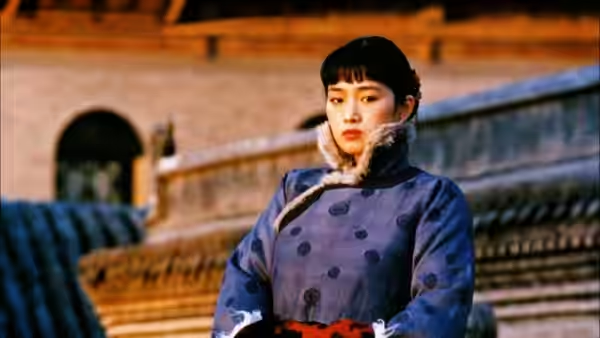
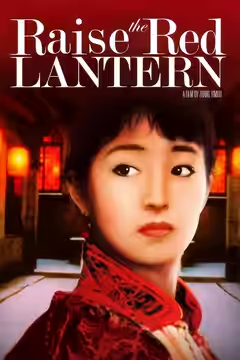
Gong Li prevents all this careful arrangement from turning the women into illustrations. Her first close-up is crucial: we attend to a person before we have learned to admire the surroundings. He Saifei’s Meishan and Cao Cuifen’s Zhuoyun give the rivalries enough force to keep us involved in individual grievances, even when the outcome of a dispute seems less important than the rules governing it. We can understand the women’s resentment without being asked to approve of everything they do.

Du Yuan’s editing gives the still compositions time to become uncomfortable, rather than treating them as pictures to be admired and passed over. The pace is patient, but the competition supplies a reason to keep watching. The music, credited to Naoki Tachikawa and Zhao Jiping, supports the unease without doing the emotional work for the actors. What holds our attention is the effort each woman makes to secure an advantage, and the small amount of freedom success could actually buy.

There is a cost to such control. Some of the repeated ceremonies make the same point, and Zhang’s symmetrical staging can leave too little room for surprise. Occasionally we feel that he has arranged the women to prove something we already understand about their lives. This is where the film comes closest to making them examples, although the performances keep bringing us back to their quarrels and frustrations.

As domestic melodrama, Raise the Red Lantern is more absorbing than its severe appearance might suggest. The intrigues have the pull of a soap opera, and Zhang allows us the pleasure of following them without making the women’s predicament seem trivial. There is enough individual temperament here to complicate any easy account of victims behaving well and villains behaving badly. Give it an evening when neither of you needs cheering up.

Critical consensus AI synthesised

79
Positive
9
Mixed
2
Negative
0

Most critics admire it, and nearly all of them start with the look. The praise clusters on Zhang Yimou’s colour and framing: the bold reds, the still, symmetrical compositions, the lantern-lighting rituals, and a household shot so tightly that the film feels sealed. Gong Li’s performance is named in almost every review as the reason the thing holds together. Many read it as a political allegory, about the treatment of women first and feudal power in China second.

The spread is wide, from full marks to the middle. The reservations cluster on familiarity. Time Out finds Zhang revisiting the ground of his earlier films and doing it less imaginatively; The New Yorker asks whether a film can be too beautiful and misses the emotional force of Ju Dou. Radio Times, though warm, also ranks it below that film. Roger Ebert and The New York Times, both approving, treat it as absorbing melodrama rather than tragedy.

Radio Times
★★★★★ · David Parkinson
100

Although a lesser film than Ju Dou, this is still one of the jewels of Chinese cinema in the 1990s. Zhang Yimou fashions a compelling and at times erotic story about the repression of women in 1920s China through exceptional use of bright colour, symbolic compositions, stylised sets and rural landscape, with standout performances from Gong Li and He Caifei.

Read the full review →
Empire
1 January 2000 · David Parkinson
90*

The film is a haunting, beautiful study of repression and women's subjugation in a feudal Chinese household, with Zhang's aesthetic subtlety and Gong Li's performance making it compelling and courageous.

Read the full review →
Evening Standard
5 April 2012 · Derek Malcom
90*

The film had a startling international impact as a claustrophobic, richly beautiful political allegory and romantic tragedy set in 1920s China; Gong Li's presence is essential to its success.

Read the full review →
Los Angeles Times
13 March 1992 · Kevin Thomas
90*

Zhang Yimou delivers a calmly shattering portrait of systematic oppression of women in a 1920s noble household, with astonishing beauty and terror that evokes Greek or Shakespearean tragedy. The formal visuals and color use powerfully underscore the rigid rules and power plays among the wives.

Read the full review →
The Guardian
30 March 2000 · Derek Malcolm
85*

The critic calls the film marvellously structured, richly imagined and well-acted, with a central performance that holds attention throughout, and deems it Yimou's most resonant and perhaps most lavish work. He singles out the rich colours, claustrophobic atmosphere and the way the film captures the scent of sex, jealousy and impending disaster through Gong Li's preparation for the marital bed.

Read the full review →
Slant Magazine
3 March 2007 · Steven Boone
80*

The critic praises Zhang Yimou's sober, still visual style that heightens the melodrama and socio-historical resonance of a young woman's entrapment as a concubine. He singles out the economical static compositions, the first close-up of Gong Li, and the lantern-lighting rituals as creating a claustrophobic indictment of feudal society.

Read the full review →

Straight answers AI written, from our review

Is Raise the Red Lantern worth watching?
Raise the Red Lantern is worth watching for almost anyone prepared for a slow, severe drama about cruelty inside a wealthy household, and we scored it 91. Gong Li keeps the four competing wives from becoming illustrations, though the repeated lantern ceremonies sometimes press a point already made. Save it for an evening when neither of you needs cheering up.

How long is Raise the Red Lantern, and what is it rated?
Raise the Red Lantern runs 2h 05m. It is a drama film.
Where can I watch Raise the Red Lantern in the US?
Raise the Red Lantern is not on any streaming or rental service in the US at the moment. It is available in 1 other country; change your country at the top of the page to see where. Availability is checked daily.
How does Raise the Red Lantern compare to The Heiress?
Raise the Red Lantern and The Heiress both find cruelty inside a respectable family home, but Zhang Yimou works through colour, symmetry and ritual where William Wyler relies on exact performances and plain speech. We would put either in front of anyone. Choose the Zhang for images that grow uncomfortable, the Wyler for the colder, more intimate wound.
Is Raise the Red Lantern based on a true story or a book?
Raise the Red Lantern is based on a novel by Su Tong, adapted for the screen by Ni Zhen, not on a true story. The film keeps its attention on the women and the household rules that govern them, and no knowledge of the book is needed to follow the rivalries. Zhang teaches us the customs as Songlian learns them.
What should I watch after Raise the Red Lantern?
After Raise the Red Lantern, try The Heiress (1949, Fi1m 90): For precise performances and the cruelty concealed inside a respectable family home. Then The Servant (1963, Fi1m 89): Another household where daily routines become a struggle over who has power; and A Separation (2011, Fi1m 93): Family obligations become a tense dispute that refuses to offer easy judgements.

Cast

Awards

Academy Awards, 1992

Nominated
Best International Feature Film

International Submission to the Academy Awards, 1992

Nominated
International Submission to the Academy Awards

If you liked this, try…

  1. The Heiress (1949, Fi1m 90)For precise performances and the cruelty concealed inside a respectable family home.

  2. The Servant (1963, Fi1m 89)Another household where daily routines become a struggle over who has power.

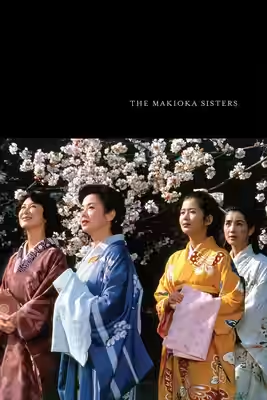
  3. The Makioka Sisters (1983) · not reviewed yetFor another patient study of women constrained by family expectations and custom.

  4. A Separation (2011, Fi1m 93)Family obligations become a tense dispute that refuses to offer easy judgements.

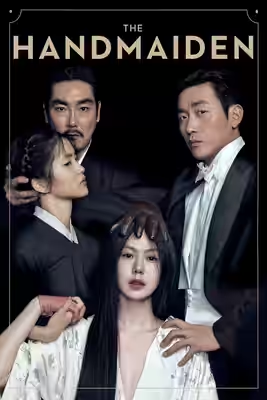
  5. The Handmaiden (2016, Fi1m 85)A more mischievous, explicit drama of women negotiating a wealthy household’s rules.

Free account

Know what to watch tonight

Two lists that know where things are streaming, collections you can share, your own score beside ours, and Discover that remembers what you have seen.

  • Want to see, sorted by what is streaming now
  • Seen, with your score out of ten
  • No adverts, ever