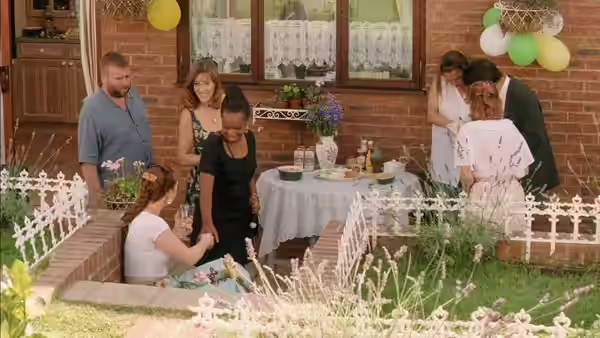
Cynthia (Brenda Blethyn) and Hortense (Marianne Jean-Baptiste) toasting with wine at a table
Film review

Secrets & Lies

1996 · Directed by Mike Leigh · 2h 22m · MPA R

In a sentenceEveryone in this family needs a quiet word, and nobody seems capable of one

Hortense Cumberbatch (Marianne Jean-Baptiste) has never met her mother. Cynthia Purley (Brenda Blethyn) has a shock for her family and a daughter, Roxanne (Claire Rushbrook), who drives her to distraction. Maurice Purley (Timothy Spall) never speaks to his niece, while Monica Purley (Phyllis Logan) cannot talk to her husband. Mike Leigh’s drama follows these people through the difficulties of family life, where a relationship can mean years of familiarity without much understanding. Hortense’s lack of contact with her mother sits alongside the problems of relatives who know one another but struggle to say what matters.

Fi1m review

Mike Leigh’s family drama is funny, painful and worth an uninterrupted evening. Brenda Blethyn and Marianne Jean-Baptiste make these difficult conversations matter, even when the writing spells out feelings we have already understood.

Secrets & Lies is a deeply moving family drama, though Mike Leigh sometimes presses an emotion his actors have already made clear. He takes family unhappiness seriously without expecting anyone to stop being difficult for our benefit. Cynthia is driven to distraction by Roxanne; Maurice does not speak to his niece; Monica cannot talk to her husband. Alongside these troubled relationships is Hortense, who has never met her mother.

Brenda Blethyn gives Cynthia an exhausting nervous energy, and Leigh lets her be funny without dismissing her distress. Her exasperation with Roxanne can be unreasonable, and the performance does not ask us to pretend otherwise. We laughed at Cynthia’s fussing, then wished we had been kinder; Blethyn makes the hurt beneath it difficult to ignore. Claire Rushbrook gives Roxanne enough resistance to keep us from simply accepting her mother’s account of their difficulties.

Marianne Jean-Baptiste gives Hortense a steadiness that is essential beside Blethyn, without suggesting that she has fewer needs or less at stake. She makes listening worth watching, so our attention need not follow whoever is making the most noise. Timothy Spall brings a burdened warmth to Maurice, whose distance from his niece is another instance of relatives failing to communicate. Phyllis Logan’s Monica makes the inability to talk to a husband feel painfully intimate, even before we try to account for it.

Dick Pope’s cinematography keeps our attention on the effort involved in facing another person. Faces are allowed to be awkward, and the images do not tidy up feelings the actors are struggling to express. Alison Chitty’s production design gives the class differences weight without making someone’s surroundings a complete explanation of their behaviour. The film looks inhabited, and we believe these people had lives before we arrived to watch them argue.

Jon Gregory’s editing is patient with difficult talk, and much of the film’s credibility depends on the time it gives the actors. At 142 minutes, however, it occasionally lets an exchange continue after its emotional point has reached us. Andrew Dickson’s music adds to the tenderness, but we find the extra encouragement less useful when Blethyn has already shown us the hurt. The actors are persuasive enough for Leigh to trust them a little more.

Leigh lets people be loving and irritating in the same conversation, which makes this more persuasive than many family melodramas. Nobody has to become pleasant before we take their unhappiness seriously. The humour helps, since a familiar complaint can be funny to everyone except the person making it. Leigh’s writing can strain when it insists on the importance of speaking honestly, but the performances keep returning us to the embarrassment and effort of actually doing so.

Set aside an evening when slow conversation will not feel like an obstacle. At home, this is a film to watch together without filling its pauses with talk of our own. The kettle can wait.


Critical consensus AI synthesised

85
Positive
11
Mixed
0
Negative
0

Most critics approve, and for the same reasons. The praise clusters around Mike Leigh’s improvisational method, which several reviews credit with producing scenes that feel lived rather than written, and around a cast that works as a true ensemble. Brenda Blethyn’s Cynthia is the performance singled out most often, described as funny and painful in the same breath, with Timothy Spall named beside her more than once. The long two-shot in which mother and daughter first sit down together is the scene critics keep returning to. Many also note the film is warmer than Leigh’s earlier work without losing its eye for class and suburban detail.

The spread is narrow. Variety finds the pacing slack and the structure loose in places, and one or two others mention the slow build without minding it. The Independent reads the film as sentimental melodrama and means it kindly, which is where the only real disagreement sits: how far Leigh’s turn towards hope is a gain. Nobody argues it is a loss.

RogerEbert.com
1 January 1996 · Roger Ebert
95*

Ebert praises Leigh’s precise direction and the film’s emotional depth, highlighting how the story unfolds through authentic character interactions and long unbroken takes that reveal hidden truths and family dynamics. He singles out the performances, especially Brenda Blethyn’s transformation of Cynthia, for their compassion and realism amid comedy and pain.

Read the full review →
Los Angeles Times
4 October 1996 · Kenneth Turan
90*

Turan calls the film a piercingly honest and accessible work that captures the complexities of human experience and emotional truth. He highlights the powerful two-shot scene where Cynthia confronts her past and the organic depth brought by Leigh’s improvisational method.

Read the full review →
The Guardian
23 May 1996 · Jonathan Romney
90*

The film is a miraculous achievement in capturing the richness and banality of everyday Britain. Leigh's ensemble performances gel perfectly, delivering both comedy and harrowing emotion through finely observed suburban lives.

Read the full review →
The New York Times
27 September 1996 · festival review · Janet Maslin
90*

The critic praises the film's tender and wrenching revelations and Brenda Blethyn's heart-rending performance as Cynthia. It singles out the emotional immediacy and the way the story captures inner light through its characters.

Read the full review →
Empire
1 January 2015 · David Cavanagh
85*

The critic calls it hilarious and as touching a film as any Leigh has made, returning to bittersweet suburban comedy. He singles out the superb dialogue, running gags, and strong ensemble performances for praise.

Read the full review →
Slant Magazine
18 February 2005 · Eric Henderson
85*

Leigh's familial dramedy excels in scenes that shift from fever pitch to meditative calm, centering on cathartic breakthroughs and class differences. The reunion between mother and daughter stands out for its raw, volcanic emotion and bittersweet healing.

Read the full review →

Straight answers AI written, from our review

Is Secrets & Lies worth watching?
Secrets & Lies is worth an uninterrupted evening for anyone who can sit with 142 minutes of difficult family conversation, and we scored it 88. Brenda Blethyn and Marianne Jean-Baptiste make the awkward exchanges matter, though Mike Leigh sometimes spells out feelings the actors have already shown. It is funny as well as painful, which helps.
How long is Secrets & Lies, and what is it rated?
Secrets & Lies runs 2h 22m and is rated R by the MPA in the US. It is a drama film.
Where can I watch Secrets & Lies in the US?
Secrets & Lies is streaming on HBO Max, Amazon Prime Video and The Roku Channel in the US, and it is also available to rent from Apple TV and Amazon Prime Video from $3.99. Availability is checked daily; the links above go straight to each service.
How violent or frightening is Secrets & Lies, and is it suitable for children?
Secrets & Lies is a UK 15 with no violence to speak of; the difficulty is emotional, not physical. Its arguments and long, uncomfortable conversations about family and adoption are pitched at adults and older teenagers, and younger children would find the slow, talk-heavy pace an ordeal rather than a fright. The squeamish have nothing to fear.
How does Secrets & Lies compare to Another Year?
Secrets & Lies and Another Year are both Mike Leigh films about family unhappiness and the kindness that cannot fix it, and we think Another Year is the slightly finer of the two. Secrets & Lies is longer and rawer, with Brenda Blethyn's nervous energy at its centre; Another Year is calmer and more certain about who is to blame. Start with whichever mood suits you.
What should I watch after Secrets & Lies?
After Secrets & Lies, try Another Year (2010, Fi1m 87): Leigh returns to family unhappiness, with kindness that cannot solve everything. Then Imitation of Life (1959, Fi1m 86): Motherhood and racial division, treated with a more openly melodramatic force; and A Separation (2011, Fi1m 93): Family loyalties become painfully complicated when everyone has a defensible grievance.

Cast

Awards

Academy Awards, 1997

Nominated
Best Actress
Nominated
Best Director
Nominated
Best Picture
Nominated
Best Supporting Actress

Cannes Film Festival, 1996

Won
Palme d'Or

European Film Award for Best Film, 1996

Nominated
European Film Award for Best Film

If you liked this, try…

  1. Another Year (2010, Fi1m 87)Leigh returns to family unhappiness, with kindness that cannot solve everything.

  2. Still Walking (2008) · not reviewed yetA family gathering where old resentments survive every attempt at ordinary conversation.

  3. Imitation of Life (1959, Fi1m 86)Motherhood and racial division, treated with a more openly melodramatic force.

  4. A Separation (2011, Fi1m 93)Family loyalties become painfully complicated when everyone has a defensible grievance.

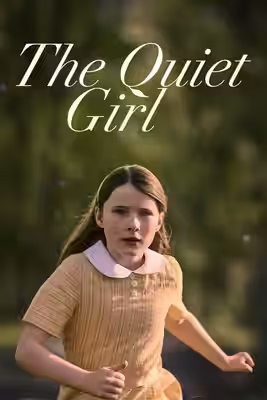
  5. The Quiet Girl (2022, Fi1m 84)A neglected child finds care in a household with troubles of its own.

Free account

Know what to watch tonight

Two lists that know where things are streaming, collections you can share, your own score beside ours, and Discover that remembers what you have seen.

  • Want to see, sorted by what is streaming now
  • Seen, with your score out of ten
  • No adverts, ever