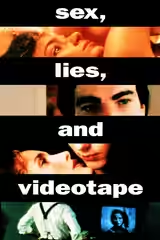
With only 3 reviews in so far, the reviews lean warm but the spread is wide. Most critics take it as an unusually assured debut, praising Soderbergh’s script for its patience with adultery and voyeurism, and the performances for feeling like people rather than positions; several single out the video camera itself as a character. Some note the technical limits of a low budget without minding much.
The one clear dissent comes from The New Yorker, which grants the film its polish and its knack for tension from small materials but finds it a triangle drama with a minor kink, arriving at platitudes about honesty and feelings.
S
Slant Magazine
7 November 2018 · ★★★★/4 · Chuck Bowen
100
The review lauds the Criterion restoration of Soderbergh's debut and its themes of media as both connection and alienation. It praises the film's controlled austerity, sensual completeness, and interrogation of truth versus performance.
Read the full review →L
Los Angeles Times
4 August 1989 · Sheila Benson
90*
The critic calls the film the funniest and saddest American movie in years and possibly the most compelling, praising its elegant revelation of contemporary sexual afflictions and tranquil spell. Soderbergh’s manner of pushing characters into deeper psychological waters is highlighted as a key strength.
Read the full review →H
The Hollywood Reporter
7 February 1989 · festival review · Duane Byrge
90*
The critic praises the film as a penetrating, moving, and darkly funny independent feature that offers witty but touching insights into modern relationships through its characters' inner workings. They single out the layered performances, particularly those of Peter Gallagher, Andie MacDowell, Laura San Giacomo, and James Spader.
Read the full review →N
The New York Times
4 August 1989 · Caryn James
90*
The critic hails Soderbergh’s debut as an astonishing, richly layered tale of sexual greed, fear, love and betrayal that surpasses its advance praise. Graham’s video camera is singled out as a central player in this intricate dance of truth, self-denial and deception.
Read the full review →V
Variety
31 December 1988 · Variety Staff
90*
The review praises the film as a sexy, nuanced, beautifully controlled examination of erotic impulses and inhibitions. It highlights the absorbing conversations about sex and the strong production values despite the low budget.
Read the full review →A
The AV Club
21 January 2016 · A.A. Dowd
85*
The review celebrates the film's impact on indie cinema while praising its compact, idea-packed story of sexual and emotional dysfunction in Baton Rouge. It singles out James Spader's enigmatic performance and the film's prescient take on technology and intimacy.
Read the full review →E
Empire
1 January 2000 · William Thomas
80*
The critic finds the film startling in its handling of taboo subjects like adultery and voyeurism through 1980s technology, and startlingly competent as a debut that won the Palme d'Or. The believable characters and Soderbergh's intriguingly intellectual script are singled out for praise.
Read the full review →I
IndieWire
21 August 2014 · Max O'Connell
80*
The piece revisits Soderbergh's debut as a landmark indie that launched careers and reshaped Sundance and Miramax. It highlights the film's intimate, talky exploration of sex, lies, and emotional disconnection.
Read the full review →R
RogerEbert.com
1 August 1989 · Roger Ebert
75*
The critic finds the film intelligent and never boring but more clever than enlightening, with more intelligence than heart. He singles out the performances of James Spader and Andie MacDowell and the way conversation becomes erotic.
Read the full review →Soderbergh's debut is impressively mature, focusing on the gap between actions and motivations rather than sensationalism. The strong performances and perceptive dialogue make it intellectually and emotionally stimulating.
Read the full review →N
The New Yorker
31 July 1989 · Terrence Rafferty
50*
The review describes the film as a smooth, handsome first feature that generates psychological tension from very little, essentially a triangle drama with a minor kink. It ultimately reduces to dubious truisms about honesty and getting in touch with one’s feelings.
Read the full review →P
Paste
17 August 2017 · Jonah Jeng
90*
Soderbergh subverts the libidinous trappings of sexed-up cinema to expose souls in pain and the psychology behind erotic impulses, turning apparent archetypes into dysfunctional individuals seeking real intimacy. The film respects characters' privacy by not showing the climactic sex act, making a case for intimacy as too personal to be fully captured on camera.
Read the full review →C
Collider
1 June 2024 · Thomas Butt
85*
Soderbergh's debut is a prescient examination of sexual anxiety and its ties to media that rejected glossy 1980s aesthetics and captured Generation X aimlessness. It kickstarted the 1990s indie boom while remaining relevant for its portrayal of repressed intimacy and voyeurism.
Read the full review →The film is described as one of the quietest splashes in Hollywood history and a psychologically driven indie that eschews sleaze for a more thoughtful experience. It spearheaded the independent film movement of the 1990s and laid groundwork for later auteurs.
Read the full review →E
Eye for Film
13 July 2014 · Jennie Kermode
80*
The critic calls it a hugely impressive first feature that launched the independent film craze and won the Palme d'Or. She singles out the strong script and performances for praise while noting technical limitations from its low budget.
Read the full review →P
The Playlist
23 January 2014 · The Playlist Staff
80*
The film was instrumental in launching the modern independent film scene, boosting Sundance, elevating Miramax's marketing strategies, and launching Soderbergh's career. Its success model helped define the indie film's potential for critical acclaim and financial returns.
Read the full review →Ordered by the weight we give each publication, then by score. Scores are normalised to 100; * means inferred from an unrated review. Summaries are ours, not quotations; follow the links for the reviews themselves. How we rate