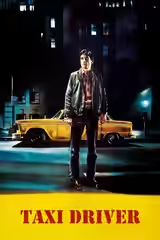
The critics agree, and have done for fifty years. All sixteen reviews are positive, and the praise settles in the same places: Robert De Niro’s wired, withheld performance as Travis Bickle, Bernard Herrmann’s score, and a twitchy, seedy Seventies New York shot largely in natural light. Several single out Paul Schrader’s script for building a case history without lecturing, and Scorsese’s camera for keeping us locked inside Bickle’s head. Most say the film has grown more unsettling with age, and mean it as praise.
The spread is narrow, from strong approval to unqualified, and the differences are of emphasis rather than verdict. RogerEbert.com insists it is a portrait of one mind rather than a New York story; Den of Geek makes the city itself the monster. The AV Club notes its history of being misread as glorifying violence. The Ringer, the coolest of the group, reads it mainly through present-day lonely male rage and finds the ending unsettling rather than satisfying. Nobody calls it comfortable viewing.
R
RogerEbert.com
1 January 1976 · ★★★★/4 · Roger Ebert
100
The film is a brilliant nightmare portrait of Travis Bickle's inner world rather than a New York story. It singles out the subjective camerawork and De Niro's veiled, compelling performance for praise.
Read the full review →T
The Times
3 July 2026 · ★★★★★
100
The critic finds the film a difficult but essential watch on its 50th anniversary re-release, highlighting Robert De Niro's blistering performance and the twitchy depiction of Seventies New York as key strengths.
Read the full review →T
Time Out
6 February 2017 · ★★★★★ · Tom Huddleston
100
The critic calls the film an unflinching plunge into the human soul whose anti-hero Travis Bickle remains painfully relevant, treating him with empathy as a war-scarred, isolated man. They single out Bernard Herrmann’s ominous score and De Niro’s restrained, honest performance as creating an impossibly perfect, evocative tone of dread, pity and New York cool.
Read the full review →E
Empire
1 January 2011 · William Thomas
90*
The critic praises the film's enduring power to unnerve and rivet audiences decades later. Highlights include the tight, darkly funny script by Paul Schrader, Scorsese's directorial fireworks, and De Niro's wired central performance.
Read the full review →L
Los Angeles Times
11 February 1996 · Kenneth Turan
90*
The film remains a powerful and significant work decades later, with its shocking script, De Niro's gutsy performance, and masterful score still making a strong impression. It has become woven into American cultural mythology and its themes of violence and isolation feel increasingly relevant.
Read the full review →S
Slant Magazine
10 April 2011 · Rob Humanick
90*
The critic calls the film a high-water mark of American cinema and Scorsese's possible finest work, commending its immersive subjectivity through Travis Bickle's perspective, De Niro's performance, Bernard Herrmann's score, and its lasting relevance as a character study and commentary on violence and media.
Read the full review →G
The Guardian
19 August 1976
90*
The critic calls Taxi Driver a cinematic tour de force and one of the most significant films of 1976. It is praised as a gritty, urgent snapshot of New York’s seedier side that reflects American alienation with unerring accuracy, anchored by Robert De Niro’s compelling performance.
Read the full review →V
Variety
4 February 1976 · A.D. Murphy
90*
The film is a powerful, frighteningly plausible case history of a quiet loner turning violent, with excellent credit to Scorsese and a smash performance by De Niro. It singles out the quasi-documentary look, Herrmann's score, and the brutal climactic sequence.
Read the full review →A
The AV Club
16 January 2014 · A.A. Dowd
85*
The critic praises Taxi Driver as a powerful, enduring classic about madness and alienation in the city, highlighting its immersive atmosphere, De Niro's performance, and Scorsese's direction despite its divisive legacy and potential misreadings as glorifying violence.
Read the full review →N
The New York Times
15 February 1976 · Vincent Canby
80*
Scorsese's film offers one of the most compelling portraits of a psychotic personality on screen, with De Niro superb in the lead. The review highlights the screenplay's case-history approach and the violent intensity of the climax.
Read the full review →E
Eye for Film
13 May 2011 · Jennie Kermode
90*
The critic calls it an extraordinary film with De Niro delivering a powerhouse performance as Travis Bickle. She praises the supporting cast, cinematography using natural light, and the score for capturing the protagonist's shifting moods.
Read the full review →D
Den of Geek
8 February 2018 · Tony Sokol
85*
The critic calls Taxi Driver a deeply nuanced masterpiece that portrays New York City itself as a looming monster spawning sociopathic killers. They single out its prescient vision of urban decay and the lush, impressionistic beauty of its nocturnal street photography for praise.
Read the full review →C
Collider
16 August 2022 · B+ · William Fischer
83
The critic finds the film a surreal, nightmarish portrayal of pathological isolation that holds up artistically and feels relevant today; praises Scorsese’s direction, De Niro’s performance, and Schrader’s script for painting Bickle’s portrait without didacticism.
Read the full review →F
Film Stories
9 February 2026 · Ryan Lambie
80*
The critic highlights Taxi Driver's blood-drenched finale as a horrifying fever dream that remains powerfully shocking due to its gritty realism and matter-of-fact violence. They praise Scorsese's detached, unflinching approach to depicting the ugliness of brutality as a standout element.
Read the full review →P
Polygon
8 February 2026 · Jesse Hassenger
80*
The critic finds Taxi Driver still disturbingly contemporary half a century later, with its portrayal of incoherent personal politics and lonely rage feeling chillingly familiar in the present. De Niro's performance is singled out for vividly conveying the character's mixed-up motivations without exploitation.
Read the full review →R
The Ringer
30 July 2018 · Lindsay Zoladz
75*
The critic argues that Taxi Driver is already the Taxi Driver for the age of Trump and incels, eerily prescient in its depiction of lonely, entitled male rage. The surreal ending and themes of rejection and violence are highlighted as particularly resonant and unsettling today.
Read the full review →Ordered by the weight we give each publication, then by score. Scores are normalised to 100; * means inferred from an unrated review. Summaries are ours, not quotations; follow the links for the reviews themselves. How we rate