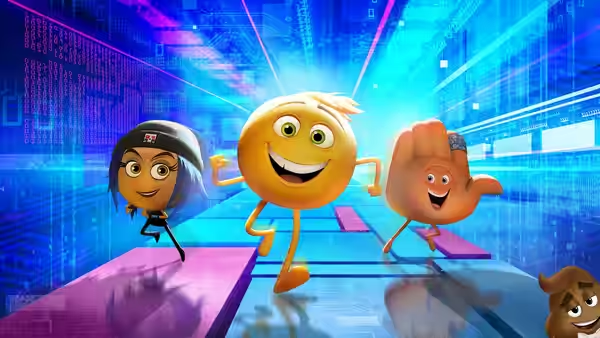
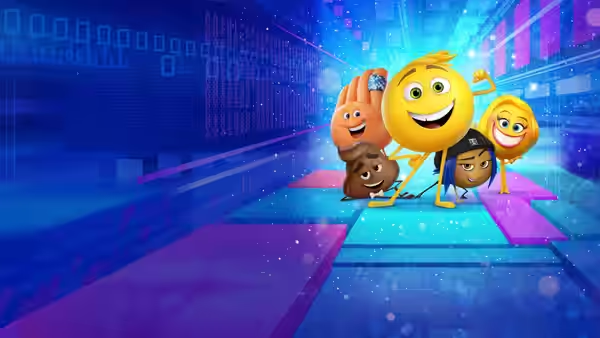
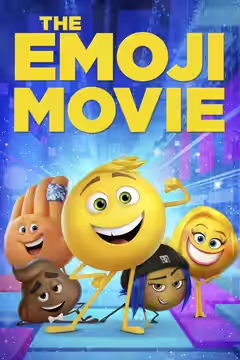
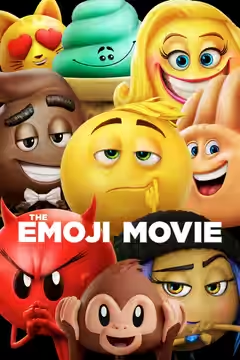
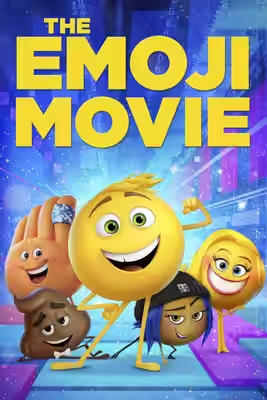
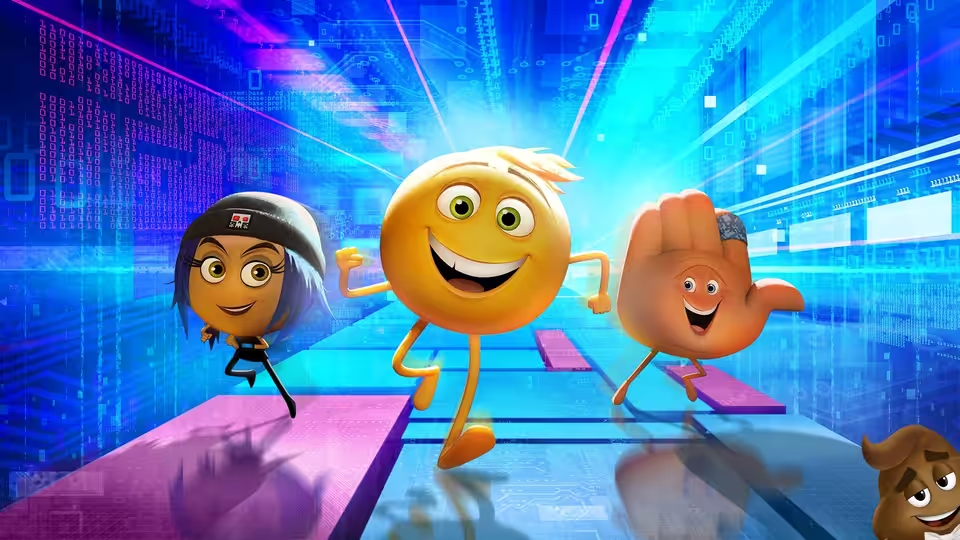
Gene (T.J. Miller) runs with Jailbreak (Anna Faris) and Hi-5 (James Corden) along glowing tiles
Film review

The Emoji Movie

2017 · Directed by Tony Leondis · 1h 26m · MPA PG

In a sentenceEighty-six minutes inside a smartphone made us nostalgic for a landline

Gene (T.J. Miller) is a meh emoji living inside a smartphone, where faces and symbols have voices and personalities. He struggles to fit in, and his search for acceptance takes him through the phone’s apps. His fellow inhabitants include Hi-5 (James Corden), Jailbreak (Anna Faris) and Smiler (Maya Rudolph). Familiar software supplies the locations and obstacles as the action moves around inside the device. Gene wants to find a place for himself among the other emojis, whose identities are tied to the emotions and gestures they represent.

Plays from YouTube when you press play; nothing loads from them until then.

Fi1m review

Tony Leondis turns a workable smartphone premise into a dull trip through familiar apps. Bright colours and occasional slapstick cannot rescue the thin characters, tired lessons or persistent sense of being advertised at.

The film has a workable idea for a family comedy: give the little symbols in a phone lives of their own. There is room there for jokes about how much people try to say with a face and how often it goes wrong. Tony Leondis directs an 86-minute film that spends too much of that opportunity travelling between apps, with a familiar lesson about self-acceptance attached. It is dull, heavily branded and short of jokes, though the bright animation supplies occasional scraps of pleasure.

The screenplay, by Tony Leondis, Eric Siegel and Mike White, asks us to care about Gene’s difficulty fitting in. That is a serviceable starting point, particularly for a character whose purpose is to express a feeling. But the film rarely finds anything peculiar to emojis in its self-acceptance story; almost any talking object could deliver these lessons. The rules inside the phone are muddled, and the dialogue spends too much energy making familiar points. Gene needs a personality worth following through all those apps.

T.J. Miller voices Gene, with James Corden as Hi-5 and Anna Faris as Jailbreak, but none gets enough help from the writing. Their characters are thinly drawn, and the performers cannot make the dialogue feel less preassembled. Maya Rudolph voices Smiler, while Patrick Stewart supplies Poop, a casting decision that seems to expect the credit itself to get a laugh. A capable voice cast has been given too few opportunities to be funny.

Carlos Zaragoza’s production design makes the inside of the smartphone a bright, busy place, and the changes of scenery have some appeal. For brief stretches, the simple pleasure of animated bodies in motion is enough. The slapstick works better than the conversations, partly because it does not have to stop and announce a lesson. The colours help keep the journey watchable, although the places themselves seldom reward a longer look.

William J. Caparella’s editing keeps the app-hopping moving, but the succession of destinations grows wearing. There is little time to enjoy a situation before the film has another piece of software to visit, and movement alone cannot give the jokes better timing. Patrick Doyle’s music cannot make the adventure involving when the writing has done so little to make its characters matter. The running time is modest, yet the journey feels padded by stops that add little beyond a change of surroundings.

We grew bored with the app tour, then irritated by how much attention Spotify and Dropbox received while the characters remained so thin. Recognisable software is a reasonable thing to find inside a smartphone, and brand names need not prevent a scene from being funny. Here, though, recognition is repeatedly offered as entertainment in itself. Candy Crush is familiar; its appearance still needs a worthwhile joke. The product placement becomes more conspicuous because there is so little else to hold our attention.

An animated family comedy does not need an elaborate plot, but it does need some curiosity about the creatures or objects it has brought to life. This one seems satisfied that talking emojis are enough, and most critics are right to find that thin. There are flashes of competent slapstick and enough colour to occupy a small child for a while. We would still choose something that gives the child a better joke and the accompanying adult a reason to stay.

Critical consensus AI synthesised

22
Positive
0
Mixed
0
Negative
21

The reviews are unanimous, and not in the film’s favour. All twenty-one call it a failure, and most reach for the same word: cynical. The recurring complaint is product placement, with named apps folded into the story until several critics decide the plot exists to sell them. The self-acceptance message is called stale, and the debt to Inside Out is noted more than once. What faint credit there is goes to the smartphone world-building and some passable slapstick, which a few think will hold small children.

Where they part is on how angry to be. The Los Angeles Times shrugs and calls it exactly what you would expect, and Radio Times and Den of Geek think it is not quite as bad as its reputation. At the other end, The Times and The Telegraph treat it as an affront, and Time Out argues it is harmful to the children it is aimed at. Nobody in either camp suggests parents will enjoy it.

Radio Times
★★ · Dave Aldridge
40

The critic says the film isn't quite as awful as its negative publicity suggests, though its shabby plot and unexceptional design will probably annoy adults more than the target young audience. Blatant product plugs for apps like Candy Crush are noted.

Read the full review →
The AV Club
27 July 2017 · D · Vadim Rizov
37

The critic describes it as a severely debased Inside Out set inside a smartphone, using app-hopping as an excuse for heavy product placement and corporate synergy. It singles out the clichéd self-acceptance plot and pervasive cynicism for complaint.

Read the full review →
Los Angeles Times
27 July 2017 · Katie Walsh
30*

The movie is exactly what one expects and can be summed up as 'meh,' a perfect reflection of its main character with no surprises or greatness. It is not terrible but offers little reason to choose it over reading a book or talking to another person.

Read the full review →
The Hollywood Reporter
27 July 2017 · THR Staff
30*

The critic finds the film a very dumb project that fails to match the cleverness of The Lego Movie, offering fast colorful visuals for kids but nearly nothing for parents. It singles out the incoherent plot, product placement, and lame dialogue for complaint while noting some effective slapstick adventure and eye candy.

Read the full review →
The Independent
2 August 2017 · ★★☆☆☆
30*

The critic finds it lacklustre and cookie-cutter compared to better animated films, with a premise that feels cumbersome and irritating in practice despite the bright colours and noise.

Read the full review →
Vulture
27 July 2017 · Emily Yoshida
30*

The critic calls it one of the darkest and most dismaying films ostensibly made for children, cynically selling smartphone wonder through branding and product placement. It singles out the rubber-faced emoji redesign and the bland self-empowerment message drowned in corporate obligations for complaint.

Read the full review →

Straight answers AI written, from our review

Is The Emoji Movie worth watching?
The Emoji Movie is not worth watching for most families, and we scored it 27. Tony Leondis has a workable idea, giving the symbols in a phone lives of their own, but spends 86 minutes touring apps with thin characters, a familiar lesson about self-acceptance and a persistent sense of being advertised at. The bright animation and occasional slapstick may occupy a small child for a while; the accompanying adult gets little.
How long is The Emoji Movie, and what is it rated?
The Emoji Movie runs 1h 26m and is rated PG by the MPA in the US. It is an animation and family film.
Where can I watch The Emoji Movie in the US?
The Emoji Movie is streaming on Amazon Prime Video in the US, and it is also available to rent from Amazon Prime Video and Apple TV from $3.99. Availability is checked daily; the links above go straight to each service.
How does The Emoji Movie compare to Wreck-It Ralph?
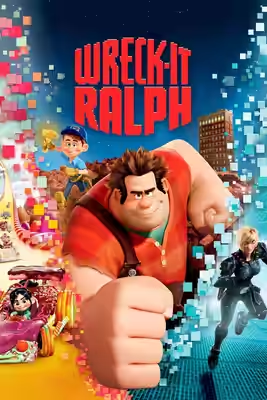
Wreck-It Ralph is the better film by a wide margin, and the one we recommend beside The Emoji Movie. Both build a playground inside a machine, but Rich Moore's arcade comedy has clear rules, sharper jokes and characters worth following, with a first half hour as inventive as anything Disney has made in years. The emoji film hops between apps without giving Gene a personality that rewards the trip.
What should I watch after The Emoji Movie?
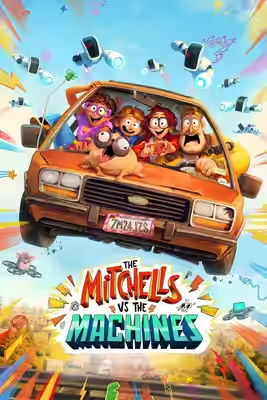
After The Emoji Movie, try Wreck-It Ralph (2012, Fi1m 70): A digital playground with clear rules, sharper jokes and characters worth following. Then Ernest & Celestine (2012, Fi1m 84): A bear and a mouse make friendship matter without a sermon about acceptance; and The Mitchells vs. the Machines (2021, Fi1m 76): A family faces troublesome technology, with enough affection to support the frantic jokes.

Cast

Awards

Kids' Choice Award for Favorite Animated Movie, 2018

Nominated
Kids' Choice Award for Favorite Animated Movie

Golden Raspberry Award for Worst Picture, 2017

Won
Golden Raspberry Award for Worst Picture

If you liked this, try…

  1. Wreck-It Ralph (2012, Fi1m 70)A digital playground with clear rules, sharper jokes and characters worth following.

  2. Ernest & Celestine (2012, Fi1m 84)A bear and a mouse make friendship matter without a sermon about acceptance.

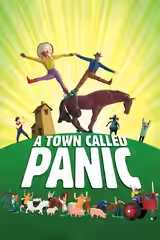
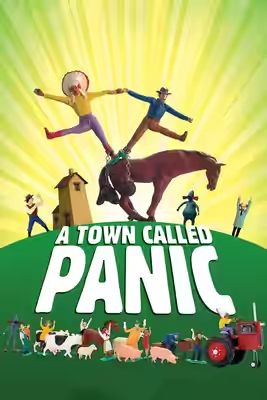
  3. A Town Called Panic (2009) · not reviewed yetTalking toys cause trouble in a small community, with far better comic timing.

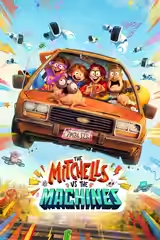
  4. The Mitchells vs. the Machines (2021, Fi1m 76)A family faces troublesome technology, with enough affection to support the frantic jokes.

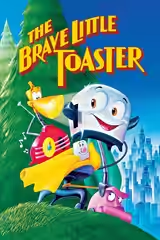
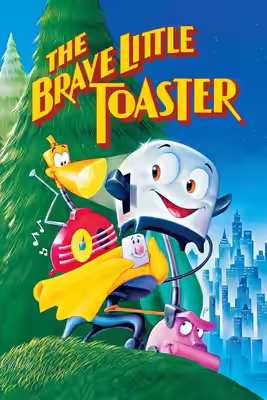
  5. The Brave Little Toaster (1987, Fi1m 77)Household appliances acquire personalities through their behaviour, making an unlikely journey worth taking.

Free account

Know what to watch tonight

Two lists that know where things are streaming, collections you can share, your own score beside ours, and Discover that remembers what you have seen.

  • Want to see, sorted by what is streaming now
  • Seen, with your score out of ten
  • No adverts, ever