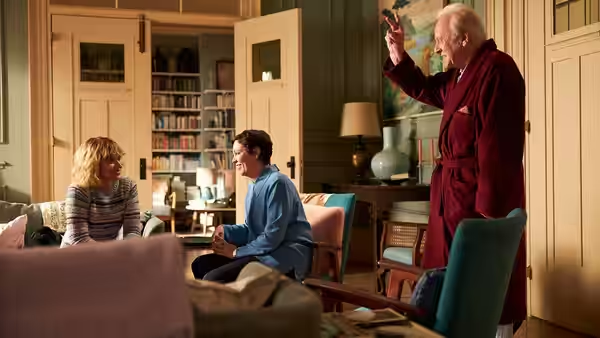
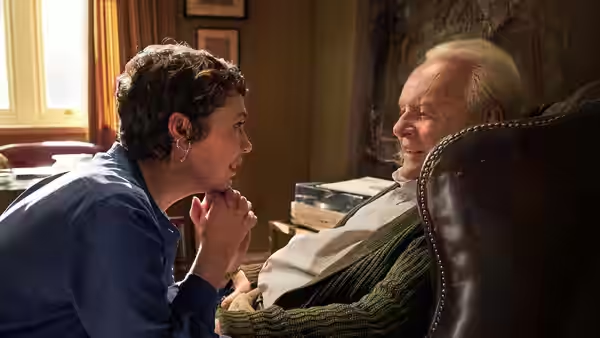
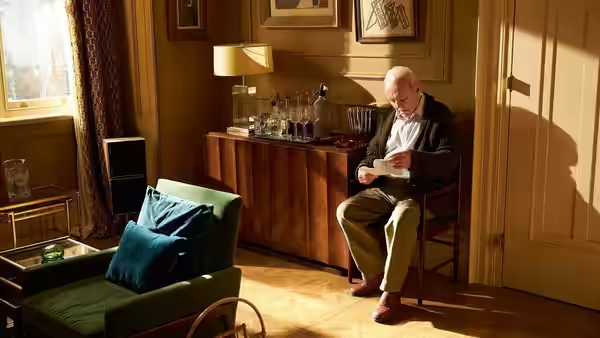
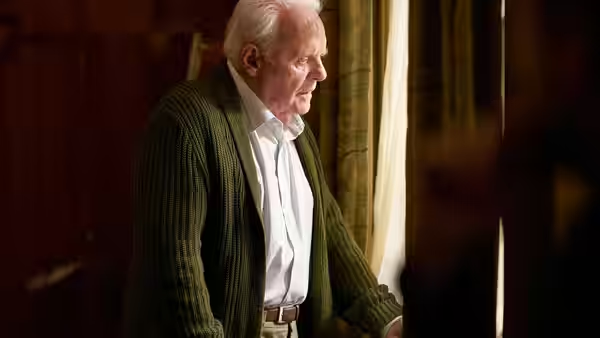
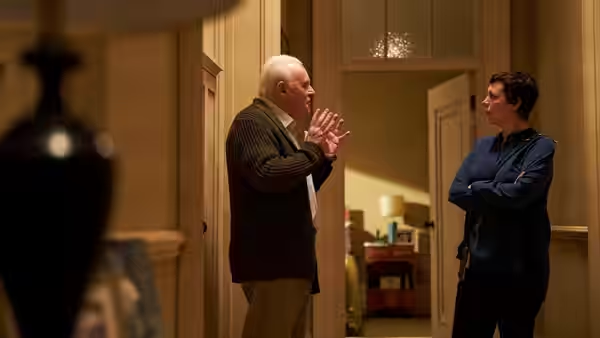
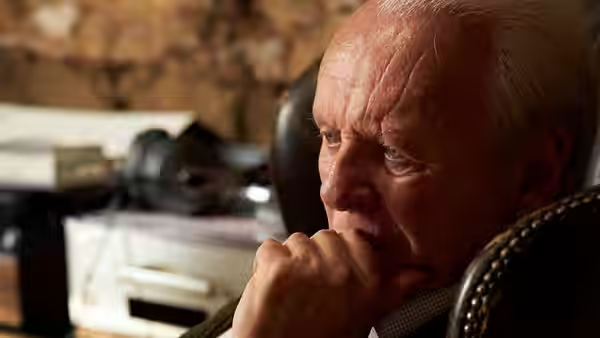
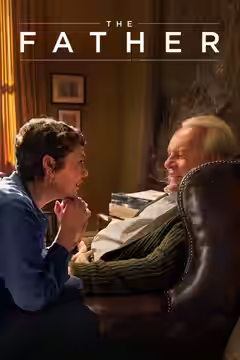
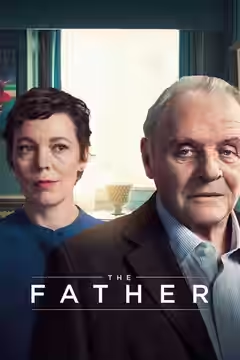
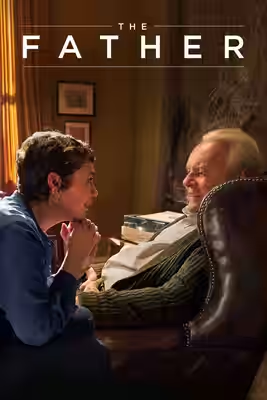
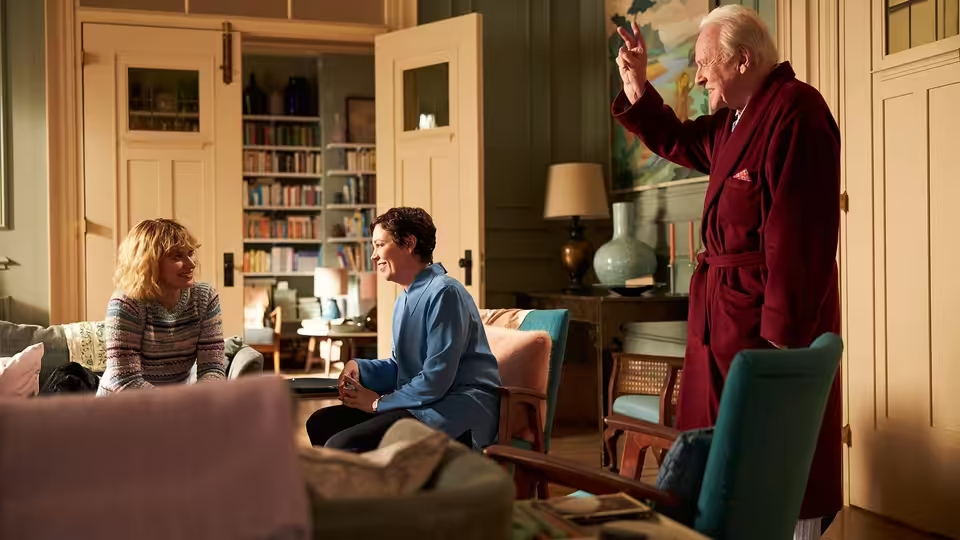
Anthony (Anthony Hopkins) stands gesturing in a living room as a woman and man watch
Film review

The Father

2020 · Directed by Florian Zeller · 1h 37m · MPA PG-13

In a sentenceAnthony Hopkins makes a familiar sitting room feel like somewhere we should not have been left alone

Anthony (Anthony Hopkins) is an ageing man with dementia who remains convinced he can trust his own account of things. His daughter Anne (Olivia Colman) tries to navigate a relationship increasingly shaped by his confusion. In the flat around him, familiar details shift and conversations become difficult to place. People he ought to recognise no longer offer certainty, and his confidence gives way to suspicion. Florian Zeller’s drama follows events from Anthony’s perspective, leaving the audience to work out what is happening with much the same unreliable information he has.

Plays from YouTube when you press play; nothing loads from them until then.

Fi1m review

Florian Zeller’s dementia drama is frightening and compassionate, with Anthony Hopkins and Olivia Colman giving painfully precise performances. A few repetitions feel overworked, but the shifting flat makes Anthony’s confusion distressingly immediate.

The Father asks us to follow a man who can no longer rely on his memory, without giving us a dependable version of events to keep in reserve. Florian Zeller, directing a screenplay he wrote with Christopher Hampton, makes that uncertainty frightening without treating Anthony as a curiosity. We recommend it for the acting and the way it makes an ordinary flat difficult to recognise. At 97 minutes, it is also about as much of this particular fear as we can bear at once.

Anthony Hopkins gives Anthony enough pride and charm for us to understand why he resists anyone else’s account of what is happening. His anger can be ugly, and Hopkins does not soften it simply because its cause deserves compassion. What makes the performance hurt is the speed with which his authority becomes uncertain: the man insisting he knows better suddenly cannot be sure. We are allowed to find him difficult without being allowed to dismiss his fear.

Olivia Colman’s Anne gives the film someone else whose distress matters, even when Anthony cannot take it in. Colman makes the effort of dealing with him visible without asking us to applaud her patience. There is love here, but also the strain of having to remain attentive to someone who may turn mean. Their scenes together hurt because neither performance reduces this relationship to a patient and a dutiful daughter.

Peter Francis’s production design does much of the frightening work. Details in the flat change, and a place we thought we knew stops helping us understand what is happening. We were frightened by how little it took to make us distrust an ordinary flat. Ben Smithard’s cinematography gives those domestic surroundings enough attention for us to start examining the rooms as closely as the people.

Yorgos Lamprinos’s editing makes conversations and changes of time difficult to fit into a secure sequence. A cut cannot be relied upon to take us where we expect, and we begin to share Anthony’s suspicion that something has gone wrong around him. The technique belongs as readily to psychological horror as to a family drama. Each time we try to put the events in order, Hopkins makes us attend to what the confusion is doing to Anthony.

There are moments when the construction becomes too noticeable. Some repeated conversations prompt us to work out the trick, and for a while that feels like the wrong thing to be doing in the company of these people. The flat itself remains disturbing enough to justify the limited setting. Ludovico Einaudi’s music encourages sympathy for Anthony, but Hopkins has already made his fear plain enough.

A drama about illness can become a long wait for an actor to make the speech that tells us how to feel. Zeller asks more of us: to keep attending to Anthony when understanding him becomes difficult. That makes this a demanding choice for anyone who has known dementia at close quarters. Leave some quiet time afterwards.
Critical consensus AI synthesised

88
Positive
22
Mixed
0
Negative
0

The reviews for The Father are as united as they come: every one is positive. The praise clusters on Anthony Hopkins, whom most critics describe as at or near the peak of his powers, playing a proud man whose dignity comes apart in front of us. Olivia Colman’s daughter is singled out nearly as often. Critics admire Florian Zeller’s decision to tell the story from inside Anthony’s confusion, so that the flat, the furniture and the faces change without warning. Several say it plays more like a horror film than a drama. The editing and production design are credited with doing the quiet work.

Where the reviews part, they do so only slightly. The spread runs from good to exceptional, with nothing mixed or negative. The one recurring reservation is that the film never quite escapes the play it came from; The Playlist finds it stage-bound, going in circles without enough cinematic tension or surprise. A few others share the thought.

Slant Magazine
13 December 2020 · ★★★★
100

Zeller's adaptation yokes viewers to the man's distorted reality with frightening ease, creating a quietly terrifying drama. Hopkins delivers a subtle, well-calibrated performance at the center of the shifting perspective.

Read the full review →
The Times
11 June 2021 · ★★★★★ · Kevin Maher
100

The review hails the film as one of the great cinematic experiences of the decade, with Hopkins peerless in a crushingly sad, viscerally thrilling adaptation that deploys every formal weapon in the filmmaker's arsenal.

Read the full review →
Evening Standard
11 June 2021 · Charlotte O'Sullivan
90*

The film is a brilliant, thrilling portrayal that places the viewer in the eye of the dementia storm, finding humour in the chaos alongside menace and tragedy. It raises profound questions about care and will likely move audiences to tears.

Read the full review →
The Guardian
10 June 2021 · Peter Bradshaw
90*

The critic praises Hopkins's moving, Oscar-winning performance as a man with dementia and Colman's intelligent turn as his daughter. The film is commended for its disorienting time slips, powerful theatrical effects, and portrayal of grief for someone still alive.

Read the full review →
The Hollywood Reporter
27 January 2020 · festival review · Todd McCarthy
90*

The critic calls it the best film about aging since Amour, praising its insightful, subtle look at dementia. Hopkins delivers a stupendous performance as the proud man in denial, marking an outstanding directorial debut for Zeller.

Read the full review →
Vulture
26 February 2021
90*

The film is a masterful and agonizing drama about dementia, terrifyingly unfolding from the unmoored perspective of cognitive decline. Hopkins deftly shows the loss of dignity while the story remains gorgeously crafted.

Read the full review →

Straight answers AI written, from our review

Is The Father worth watching?
The Father is worth watching for anyone who can bear a drama that makes dementia frightening rather than sentimental, and we scored it 89. Anthony Hopkins and Olivia Colman are painfully precise, and the shifting flat puts us inside Anthony's confusion. It is a demanding choice for anyone who has known the illness at close quarters.
How long is The Father, and what is it rated?
The Father runs 1h 37m and is rated PG-13 by the MPA in the US. It is a drama film.
Where can I watch The Father in the US?
The Father is streaming on Amazon Prime Video in the US, and it is also available to rent from Amazon Prime Video and Apple TV from $3.99. Availability is checked daily; the links above go straight to each service.
How violent or frightening is The Father, and is it suitable for children?
The Father is a 12A with no real violence, but it is frightening in the way psychological horror is frightening. Familiar rooms change, conversations refuse to fit into sequence, and Anthony's anger can be ugly. Younger children will find little to hold them; teenagers and adults should know it is upsetting rather than gory.
How does The Father compare to Amour?
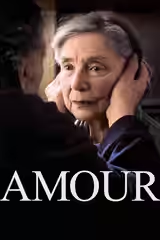
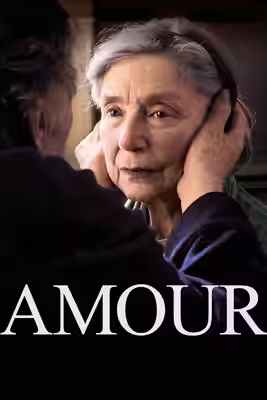
The Father and Amour are both unsparing about illness inside a family, but The Father puts us inside the confusion of the man with dementia, while Amour watches a marriage under the strain of care from outside. The Father is the more frightening and the more inventive; Amour is the more restrained, sometimes oppressively so. Choose The Father for immediacy, Amour for a slower study of devotion.
What should I watch after The Father?
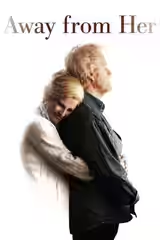
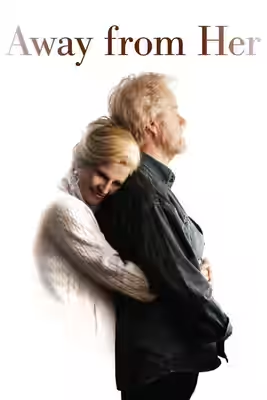
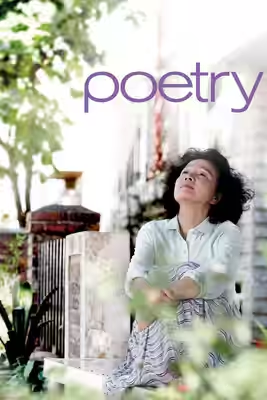
After The Father, try Amour (2012, Fi1m 88): For another unsparing account of love tested by the daily work of care. Then Away from Her (2006, Fi1m 82): For a gentler approach to memory loss, with no easy reassurance; and Poetry (2010, Fi1m 87): For patient attention to ageing, compromised memory and difficult moral choices.

Cast

Awards

César Award for Best Foreign Film, 2022

Won
César Award for Best Foreign Film

Academy Awards, 2021

Nominated
Best Film Editing
Nominated
Best Picture
Nominated
Best Production Design
Nominated
Best Supporting Actress
Won
Best Actor
Won
Best Writing, Adapted Screenplay

European Film Award for Best Actor, 2021

Won
European Film Award for Best Actor

European Film Award for Best Director, 2021

Nominated
European Film Award for Best Director

European Film Award for Best Film, 2021

Nominated
European Film Award for Best Film

European Film Award for Best Screenwriter, 2021

Won
European Film Award for Best Screenwriter

If you liked this, try…

  1. Amour (2012, Fi1m 88)For another unsparing account of love tested by the daily work of care.

  2. Away from Her (2006, Fi1m 82)For a gentler approach to memory loss, with no easy reassurance.

  3. Poetry (2010, Fi1m 87)For patient attention to ageing, compromised memory and difficult moral choices.

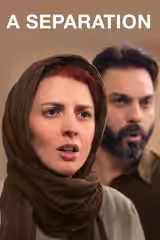
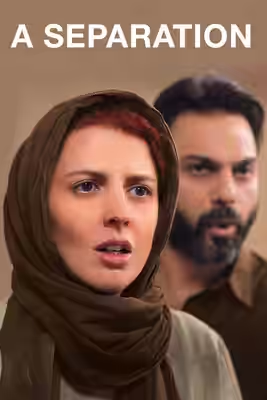
  4. A Separation (2011, Fi1m 93)For family obligations examined closely enough that nobody gets an easy defence.

  5. Wild Strawberries (1957, Fi1m 88)For another old man’s uncertain passage through memory, regret and family.

Free account

Know what to watch tonight

Two lists that know where things are streaming, collections you can share, your own score beside ours, and Discover that remembers what you have seen.

  • Want to see, sorted by what is streaming now
  • Seen, with your score out of ten
  • No adverts, ever