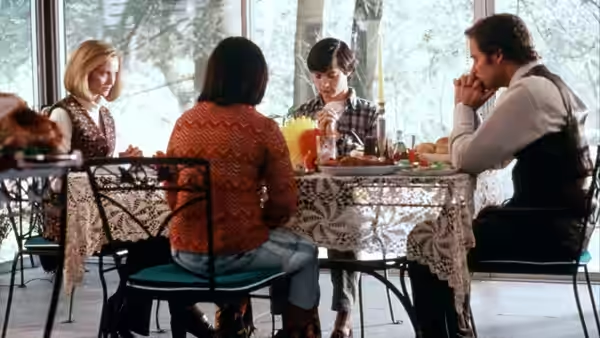
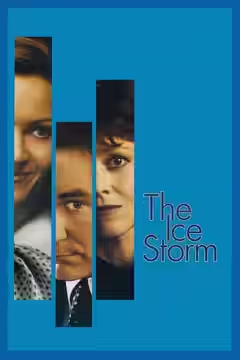
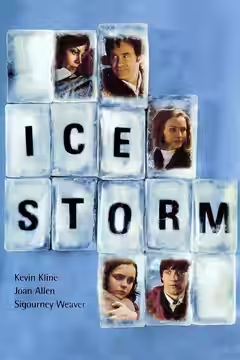
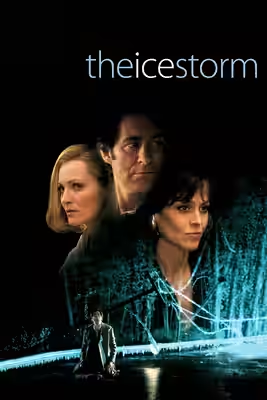
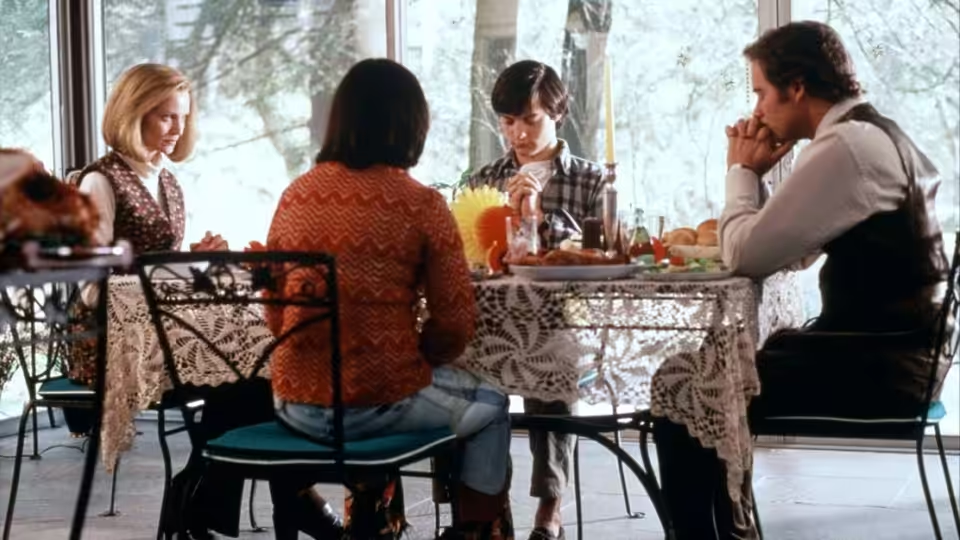
Ben Hood (Kevin Kline) and family seated at a dining table with Janey Carver (Sigourney Weaver)
Film review

The Ice Storm

1997 · Directed by Ang Lee · 1h 53m · MPA R

In a sentenceThe parents are experimenting with freedom; the children might prefer a competent adult

In 1973, two families in suburban Connecticut struggle with changing expectations of marriage, parenthood and personal freedom. Kevin Kline and Joan Allen play Ben and Elena Hood; Sigourney Weaver and Jamey Sheridan play Janey and Jim Carver. Around them, Wendy and Paul Hood (Christina Ricci and Tobey Maguire) and Mikey and Sandy Carver (Elijah Wood and Adam Hann-Byrd) face their own uncertainties about growing up. As the adults try to reconcile what they want with what family life requires, the younger generation observes their example and negotiates the same shifting rules.

Fi1m review

Ang Lee’s family drama is funny, uncomfortable and quietly moving, with Joan Allen particularly good at showing how hard composure can be. The weather symbolism is overworked, but the performances make it worth the discomfort.

Ang Lee’s The Ice Storm takes the newly negotiable rules of family life in 1973 and watches people make an awkward business of them. It is a perceptive, often funny drama, and the cast makes its sadness matter. The Hoods and the Carvers live in suburban Connecticut, where personal freedom seems to involve a good deal of consideration for oneself. Lee is alert to the hypocrisy, but he does not treat unhappiness as a punishment these people have earned. That generosity is the main reason to watch.

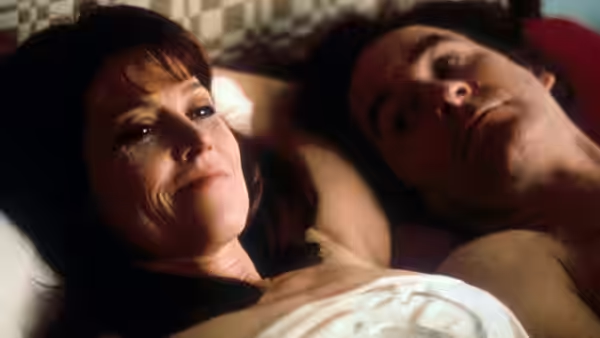
James Schamus’s screenplay, adapted from Rick Moody’s novel, gives the adults enough intelligence to explain themselves without necessarily understanding themselves. Kevin Kline’s Ben Hood is especially good at making confidence look like something that might not last through the next conversation. Sigourney Weaver’s Janey Carver is harder to read, and Weaver makes that reserve interesting without inviting us to congratulate it. The comedy comes from people wanting to seem more comfortable with their choices than they are.

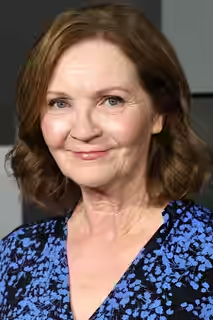
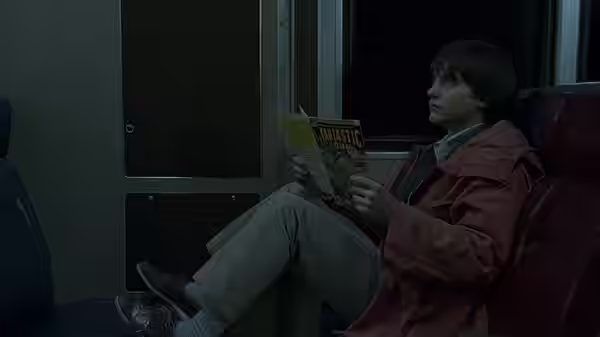
We were moved by Joan Allen’s Elena, because Allen makes keeping her face composed look like hard work. She gives the film someone to care about without asking us to excuse everyone else. Christina Ricci’s Wendy brings a more abrasive watchfulness to the younger generation. With Tobey Maguire, Elijah Wood and Adam Hann-Byrd, she helps stop the children becoming a convenient group of innocents against whom the adults can be judged.

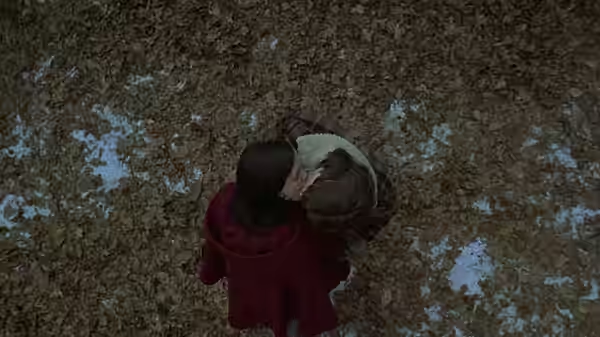
Frederick Elmes’s photography gives the frozen landscape an eerie beauty, though it never makes the place inviting. Mark Friedberg’s production design establishes the early-1970s surroundings without making the homes feel like displays, and Carol Oditz’s costumes have the same lived-in quality. The fashions are sometimes funny, but we are never merely waiting for the next unfortunate outfit. Lee lets the period detail remain ordinary to the people who live among it, which keeps us looking at their behaviour.

Mychael Danna’s score is quietly troubling, and its sadness stays with us after the more comic behaviour has passed. Tim Squyres’s editing keeps the households and generations in contact without making every connection laborious. The movement from social comedy into sorrow is handled with particular care, with enough continuity in the performances to prevent the change feeling imposed. Lee continues to pay attention to the awkward people who made us laugh when their unhappiness becomes harder to bear.

The reservation is that Lee and Schamus sometimes press the connection between the weather and these unhappy households too firmly. We have understood the title before the film has finished making sure we have understood it. That emphasis can make the drama feel more arranged than the acting deserves, and the coolness of Lee’s approach sometimes keeps us at a distance. A little less insistence would give us more room to attend to the faces without being reminded what the ice represents.

Among dramas about dissatisfied suburban families, this one is unusually willing to let foolish people remain worthy of attention. Its patience can be mistaken for indifference, though Allen and the younger cast make that a difficult reading to sustain. At 113 minutes, it gives a sizeable ensemble enough space without turning every character into a separate case study. Watch it for the actors, and allow for the occasional explanation of something they have already made clear.
Critical consensus AI synthesised

80
Positive
6
Mixed
0
Negative
0

The reviews are consistently positive about The Ice Storm, with praise centred on Ang Lee’s controlled direction, the ensemble performances and the precise recreation of 1970s suburban life. Most critics find the portrait of family dysfunction both perceptive and quietly affecting, with social satire sharpening its account of frustrated desires and generational strain. The script and period detail draw repeated approval for making the families’ awkwardness and hypocrisy feel specific to their surroundings.

The differences concern how close the film lets its audience get. The New Yorker finds its neutral, clinical approach intelligent but emotionally remote, while other reviews find sadness and empathy in that restraint. The AV Club admires the performances and period detail but considers the metaphors heavy-handed. The spread is otherwise narrow: reservations qualify a broadly shared appreciation of the film’s wit, careful observation and refusal of easy reassurance.

Empire
1 January 2000 · Angie Errigo
85*

The critic praises Ang Lee's outstanding direction in adapting the novel, highlighting the film's sharp social satire, universal details of longing, and seamless tonal shift from farce to profound tragedy, supported by a dazzling ensemble cast.

Read the full review →
The AV Club
19 March 2008 · B+ · Scott Tobias
83

The film captures the awkward transition of the American family in 1973 suburbs, highlighting hypocrisy in the counterculture's influence more than loose morals. It excels in strong performances, period detail, and a poignant coda despite heavy-handed metaphors.

Read the full review →
Slant Magazine
24 March 2008 · Arthur Ryel-Lindsey
80*

Ang Lee's film examines tradition versus change and societal expectations versus individual desires through intertwined family conflicts in 1973 Connecticut. It succeeds as a period piece thanks to Lee's outsider perspective, strong period recreation, and masterful handling of the storm-night climax.

Read the full review →
Time Out
7 January 2015 · GA
80*

The critic calls the film a gem of witty, perceptive observation in its tragi-comic portrait of two Connecticut families. They single out the meticulous script, strong performances, elegant direction and spot-on recreation of early-1970s fads and socio-political atmosphere.

Read the full review →
The New Yorker
22 September 1997 · Daphne Merkin
70*

The film is intelligent but curiously remote in documenting suburban anomie and family dysfunction without assigning blame. Its scrupulously neutral, clinical approach makes it intriguing though somewhat baffling.

Read the full review →
The Independent
7 February 1998 · HHHH · Ryan Gilbey

The critic finds the film a compelling, bleak portrait of dysfunctional families in 1970s suburbia, praising its European-style acting, haunting score, and refusal to offer easy resolutions or transformations.

Read the full review →

Straight answers AI written, from our review

Is The Ice Storm worth watching?
The Ice Storm is worth watching for anyone who likes patient, uncomfortable drama about families, and we scored it 85. Joan Allen and Kevin Kline make the unhappiness of two suburban households in 1973 funny and then sad, and the young cast keep the children from becoming mere victims. Our reservation is that the weather symbolism is pressed too firmly.
How long is The Ice Storm, and what is it rated?
The Ice Storm runs 1h 53m and is rated R by the MPA in the US. It is a drama film.
Where can I watch The Ice Storm in the US?
The Ice Storm is available to rent from Amazon Prime Video and Apple TV from $3.99. Availability is checked daily; the links above go straight to each service.
How violent or frightening is The Ice Storm, and is it suitable for children?
The Ice Storm carries a UK 15 certificate and is not suitable for children. It is a drama about adults and teenagers negotiating sex, marriage and personal freedom in 1973, and its discomfort comes from behaviour rather than violence or frights. Older teenagers may find the children's perspective recognisable; younger viewers will find little in it for them.
How does The Ice Storm compare to Ordinary People?
The Ice Storm and Ordinary People are both dramas about families who keep up appearances rather than talk, and both are led by a mother whose composure costs her. Lee's film is the cooler and funnier of the two, with a larger ensemble and a broader view of a whole neighbourhood; Redford's is more direct in its grief and explains itself more than it needs to.
Is The Ice Storm based on a true story or a book?
The Ice Storm is adapted from Rick Moody's novel of the same name, not from a true story, though it is set among real changes to American family life in 1973. James Schamus's screenplay gives the adults enough intelligence to explain themselves without understanding themselves. Knowing the book is not necessary; the film stands on its performances.
What should I watch after The Ice Storm?
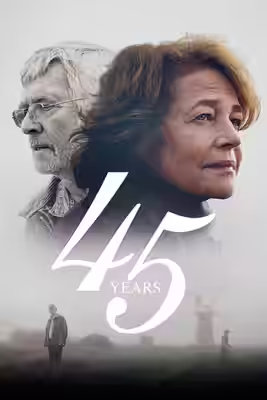
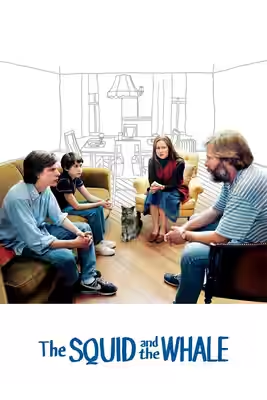
After The Ice Storm, try Ordinary People (1980, Fi1m 81): Another household where keeping up appearances makes grief harder to discuss. Then The Garden of the Finzi-Continis (1970, Fi1m 78): Comfortable lives continue while history makes their private unhappiness look dangerously sheltered; and 45 Years (2015, Fi1m 88): Charlotte Rampling makes a marriage’s buried anxieties visible in almost imperceptible adjustments.

Cast

If you liked this, try…

  1. Ordinary People (1980, Fi1m 81)Another household where keeping up appearances makes grief harder to discuss.

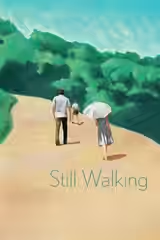
  2. Still Walking (2008) · not reviewed yetFamily resentments emerge through meals, small courtesies and carefully remembered disappointments.

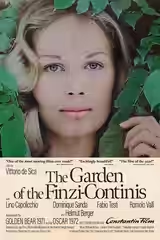
  3. The Garden of the Finzi-Continis (1970, Fi1m 78)Comfortable lives continue while history makes their private unhappiness look dangerously sheltered.

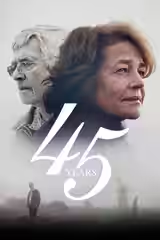
  4. 45 Years (2015, Fi1m 88)Charlotte Rampling makes a marriage’s buried anxieties visible in almost imperceptible adjustments.

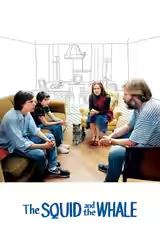
  5. The Squid and the Whale (2005, Fi1m 83)Parents explain themselves at length while their children absorb the damage.

Free account

Know what to watch tonight

Two lists that know where things are streaming, collections you can share, your own score beside ours, and Discover that remembers what you have seen.

  • Want to see, sorted by what is streaming now
  • Seen, with your score out of ten
  • No adverts, ever