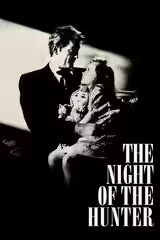
Most critics agree, and the agreement runs deep. Nearly every review treats Charles Laughton’s only film as a director as a singular piece of American cinema, and the praise clusters in two places: Robert Mitchum’s preacher, described again and again as charming and chilling in the same breath, and Stanley Cortez’s black-and-white photography, with its hard shadows, silhouettes and, above all, the river sequence, which several reviews pick out as the passage that makes the film dreamlike rather than merely grim. Lillian Gish’s counterweight to Mitchum gets a quieter round of approval.
The reservations are few and mostly old. The one negative review, The New Yorker in 1955, finds the film uneven and heavy with allegory, while admiring the performances. The New York Times, the same week, thinks the story softens at the end. Sight and Sound is the only recent voice with a caveat, noting moments of broad comedy that hold it just short of the front rank. Otherwise the spread is narrow.
L
Little White Lies
16 January 2014 · 5/5/4 · Mark Asch
100
The critic calls it a welcome revival and one of classic cinema’s great uncategorisable outliers that returns triumphantly to the big screen. They single out its unique mix of Christian parable, folk tale and social concerns, along with the striking Carpenter Gothic visuals by Stanley Cortez and Lillian Gish’s performance.
Read the full review →T
Time Out
14 January 2014 · ★★★★★ · Tom Huddleston
100
The review hails the film as cutting a clear line between innocence and depravity in Charles Laughton’s sole directorial effort. It singles out Robert Mitchum’s performance as the heart of absolute darkness and the masterful black-and-white contrasts that make it the most haunted and dreamlike of American films.
Read the full review →A
The AV Club
1 December 2010 · A · Scott Tobias
95
The critic deems it the greatest directorial one-off in cinema history, praising its elemental power rooted in American conflicts of sin, violence, and good versus evil. Mitchum's dark charisma and Cortez's shadows create terror, while the river sequence offers poetic allure.
Read the full review →E
Empire
1 January 2011 · Adam Smith
90*
The critic deems it one of the finest movies ever made, lauding Mitchum's magnetic performance as the preacher villain and the film's innovative direction and lyrical river sequence.
Read the full review →L
Los Angeles Times
14 November 2010 · Dennis Lim
90*
The review presents the film as a timeless masterpiece blending Expressionism, folk tale, and parable, noting its initial mixed reception and later acclaim. It singles out the child's-eye view and the contrast between Mitchum's villain and Gish's benevolence for praise.
Read the full review →R
RogerEbert.com
24 November 1996 · Roger Ebert
90*
The critic calls it one of the greatest American films, praising its expressionistic style, timeless quality, and unforgettable villain. He highlights the visual fantasy and Mitchum's iconic performance as elements that make it enduring despite its initial failure.
Read the full review →S
Slant Magazine
20 September 2001 · Ed Gonzalez
90*
The critic calls the film one of the most twisted evocations of godliness gone awry. Laughton's delirious compositions evoke a Grimm landscape where love wars with hate, making it perhaps the best film about spiritual perseverance.
Read the full review →G
The Guardian
19 January 2014 · Mark Kermode
90*
A restored version of Charles Laughton's sole directorial outing shows the movie has lost none of its haunting visual power. Unforgettably haunting images make this a perennially unsettling masterpiece.
Read the full review →I
The Independent
1 April 1999
90*
The critic calls the film one of the greatest American films, praising its lyrical strangeness, technical brilliance in photography, and status as a masterpiece despite its initial failure.
Read the full review →T
The Telegraph
17 January 2014
90*
The rereleased 1955 thriller still has the power to shock despite its flaws. It has grown in stature over the decades and is now regarded as a masterpiece of American cinema.
Read the full review →S
Sight and Sound
17 January 2014
80*
The piece celebrates Laughton’s beautiful and terrifying masterpiece as one of the strangest and finest films of 1950s Hollywood, with its expressionist style and nightmare atmosphere. It singles out Mitchum’s performance for praise while noting occasional broad-comedy moments that keep the film just short of the very greatest achievements.
Read the full review →E
Evening Standard
10 April 2012
70*
The review highlights the re-release of Laughton's only film as a genuine film noir and intriguing cautionary melodrama, noting Mitchum's casting as the homicidal preacher.
Read the full review →N
The New York Times
30 September 1955 · Bosley Crowther
70*
The review describes the film as a weird and intriguing horror story with stark visuals and strong performances, especially Mitchum's chilling preacher. It notes that the story's toughness softens toward the end with a message about children enduring.
Read the full review →N
The New Yorker
1 October 1955 · John McCarten
30*
The critic finds the film uneven, alternately artistic and arty, with too much allegory and heavy-handed contrasts. He praises the performances, especially Mitchum's, and notes it avoids usual movie banalities even if it ultimately fails.
Read the full review →H
HeyUGuys
15 January 2014 · ★★★★★ · Stefan Pape
100
The critic praises the film's timeless themes of greed, faith, and manipulation, highlighting Robert Mitchum's chilling yet charismatic performance as the villainous preacher. They single out the effective use of shadows, silhouettes, and music for enhancing the horror elements.
Read the full review →P
Polygon
21 March 2026 · Oli Welsh
95*
The critic hails the film as an extraordinary, visionary one-and-done masterpiece that blends horror, Southern Gothic, suspense, and dreamlike fable in a unique way. He singles out its unforgettable high-contrast black-and-white imagery, especially the river sequences and expressionistic shadows, as the element that makes it unrepeatable.
Read the full review →E
Eye for Film
21 June 2013 · Robert Munro
90*
The critic describes the film as a brilliant oddity and unsettling vision combining religious allegory, horror, fairytale, and noir, praising the haunting black and white photography and Mitchum's repulsive yet alluring villain performance. They note Lillian Gish's strong supporting role and lament that Laughton directed only this one film.
Read the full review →P
Paste
28 August 2019 · Jim Vorel
90*
The critic praises the film as a grim American fairy tale with ethereal cinematography that was misunderstood upon release but has since become an American classic. He singles out Robert Mitchum's icily seductive performance as the magnetic antagonist Rev. Harry Powell and the distinctive, dreamy visuals for particular acclaim.
Read the full review →Ordered by the weight we give each publication, then by score. Scores are normalised to 100; * means inferred from an unrated review. Summaries are ours, not quotations; follow the links for the reviews themselves. How we rate