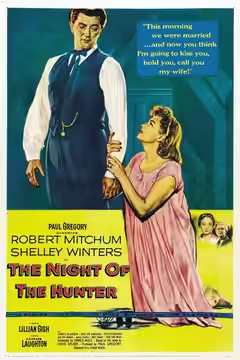
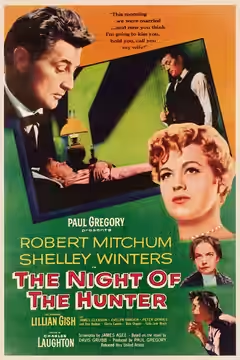
Charles Laughton’s only film as director is one of the strangest and best films fifties Hollywood made: a Depression fairy tale in black and white, with Robert Mitchum as a preacher we are still afraid of. The comedy is broad and the ending soft; neither matters.
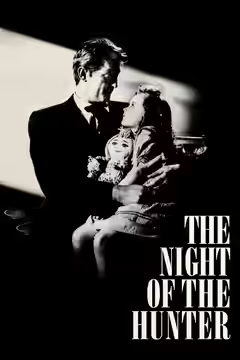
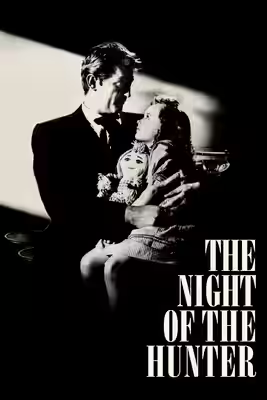
Charles Laughton directed one film and this is it. He was an actor, and it shows in how much he asks of the people in front of the camera and how little he seems to care what a director of 1955 was supposed to do. The Night of the Hunter is taken from Davis Grubb’s novel, adapted by James Agee and Laughton, and it is a fairy tale in the old sense: a wicked man in a black hat, two children with a secret, a river, and an old woman who does not scare. We think it is among the best films Hollywood made in that decade, and we would send a stranger to see it.
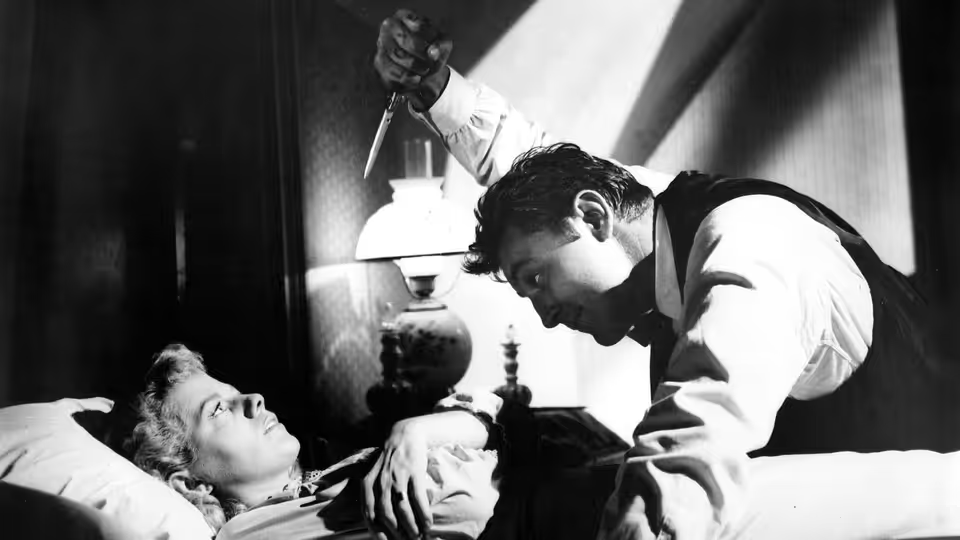
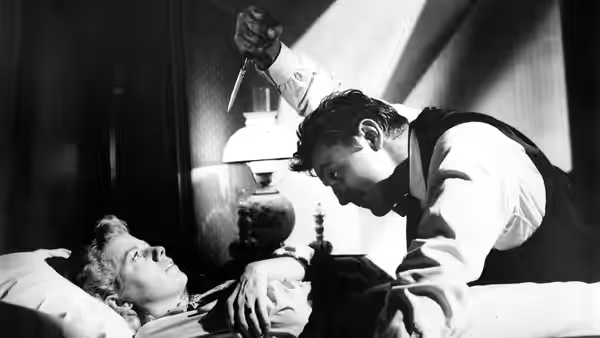
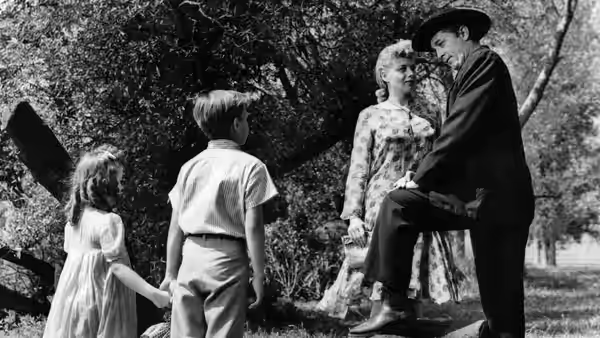
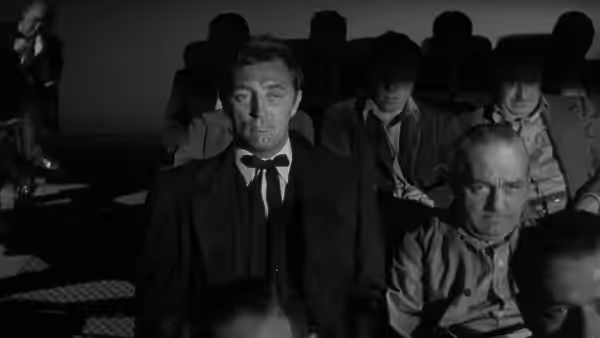
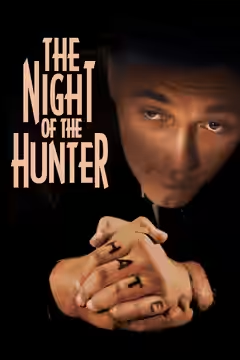
Robert Mitchum plays Harry Powell, who calls himself a preacher and has LOVE tattooed across the fingers of one hand and HATE across the other. Early on he puts the two fists together and wrestles them for the benefit of a small town, and the small town applauds. Mitchum does not hurry, does not raise his voice until he needs to, and sings a hymn, Leaning on the Everlasting Arms, in a warm baritone that turns the words sour. We were frightened of him, properly, in a way that seventy years of imitation have not blunted. What frightened us most was not the knife in his pocket but how quickly everyone around him hands over their trust.
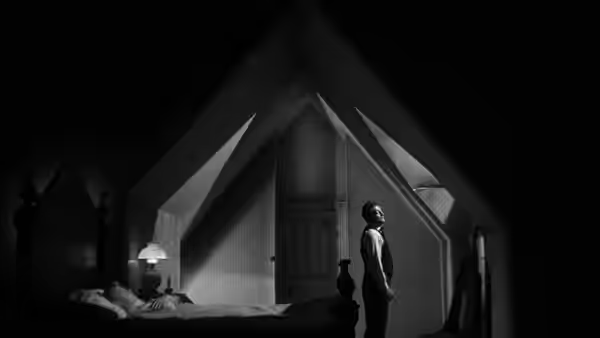
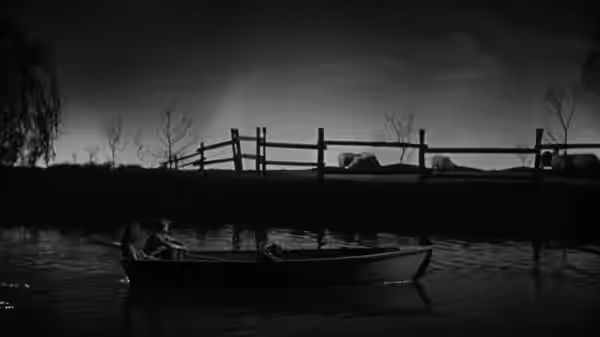
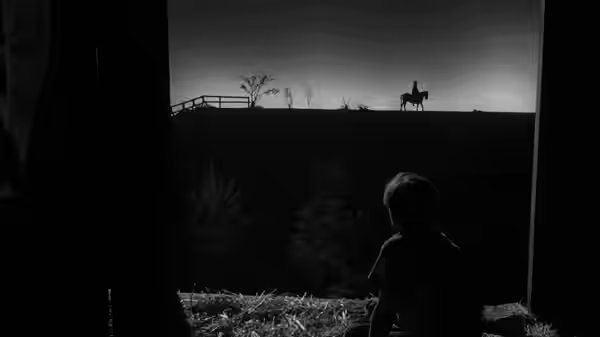
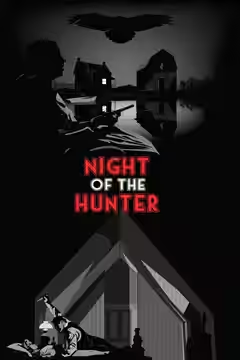
Stanley Cortez shot it in black and white with almost nothing in between. Powell’s shadow falls across a child’s bedroom wall before he does. Willa’s bedroom is lit so that the sloping ceiling becomes the roof of a chapel and the bed an altar, and we knew from the light alone that this marriage would not be one. The town is a painted set under a painted sky and Laughton does not hide it; he wants it to look like the pictures in a storybook, because that is how a child would remember it. When the children take to the river in the second half, Cortez puts a frog, a spider’s web or an owl in the foreground, large as the boat, and the journey plays as something dreamed.
Walter Schumann’s score does a good deal of the storytelling. Powell’s hymn is his calling card, heard before he is seen, and the river gets a lullaby that Schumann hands to a child’s voice over the water. Robert Golden cuts between the children in the boat and the man on the bank so that we always know how far behind he is. Nobody involved seems to have asked whether an audience of 1955 would accept any of this. Most of them did not, and the film failed. It opened in Britain on 24 November 1955 and took decades to find the reputation it has now.
Shelley Winters plays Willa Harper, the widow Powell marries for the money her husband hid, and she does something brave with a small part: she lets Willa want to be punished. Lillian Gish opens the film, telling a Bible story to a ring of children against a sky full of stars, and returns late as Rachel Cooper, an old woman with no patience for a man in a good suit. Gish had been the face of silent cinema, and Laughton uses her as one, all eyes and set jaw. Billy Chapin, as John, carries the middle of the film on a face that has learned too early to give nothing away.
It is not without faults, and they are easy to name. Evelyn Varden and Don Beddoe, as the gossiping Spoons, play their scenes as farce, and the film lurches every time it visits their shop. Sally Jane Bruce, as Pearl, is a small child asked to hit marks, and sometimes she simply hits them. The last few minutes turn soft and start to tell us what we have been watching, which we had worked out. The New Yorker in 1955 found it arty, and we can see the scenes it meant. The reviews since have mostly been raves, and on this one we are with them.
At 93 minutes it wastes nothing, and the 12 certificate is fair: children watching will be frightened, which is the point, and there is nothing on screen they cannot be told about afterwards. Watch it with the lights off and the volume up for the hymn. We were humming it for a week afterwards, and we did not enjoy that.