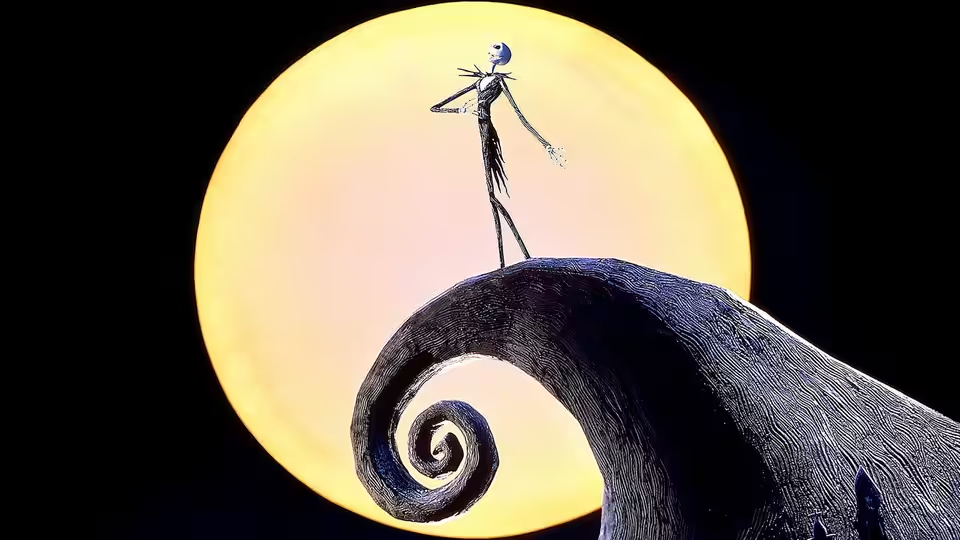
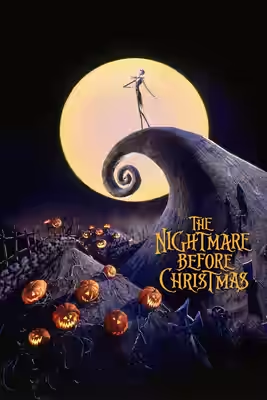
Henry Selick’s stop-motion musical is funny, macabre and affectionate towards its grotesque characters. The story thins out between songs, but the animation and Danny Elfman’s music make it worth forgiving.
Henry Selick’s The Nightmare Before Christmas is an inventive holiday musical that we recommend despite its thin story. Tim Burton provides that story and is among the producers, but Selick directs the stop-motion animation, and the distinction matters when so much depends on movement. The film asks us to enjoy its grotesque characters before expecting us to care what happens to them. The 76-minute running time is sensible, though the middle still drags.
Chris Sarandon gives Jack Skellington his speaking voice, while Danny Elfman sings for him and supplies the music. The two voices make a convincing character, with no distracting sense of a handover whenever a song begins. Elfman’s elaborate writing suits these creatures: there is room for theatrical showing off, and the performers take it. Some melodies fade quickly afterwards, but while the numbers are under way there is plenty to enjoy in their bustle and oddness.
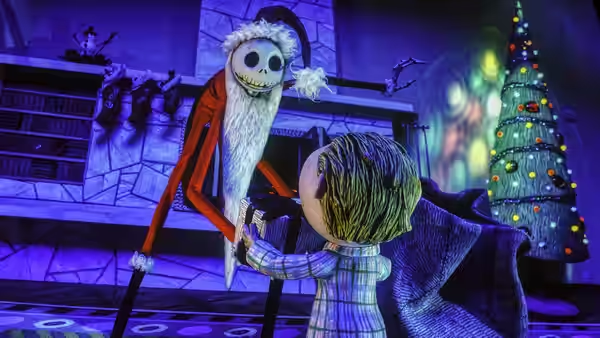
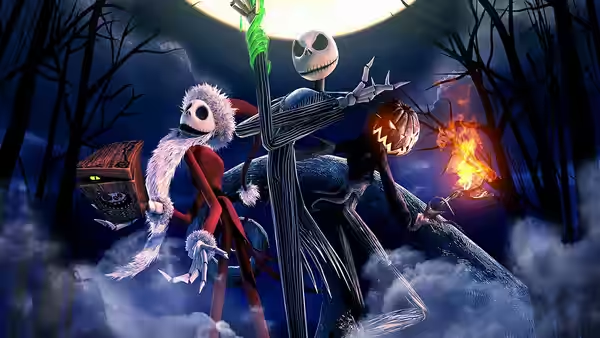
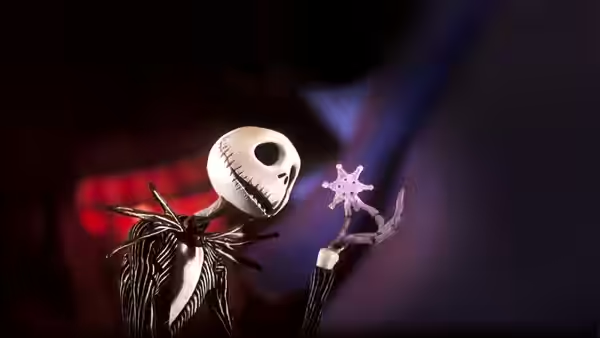
Pete Kozachik’s cinematography gives the sets depth and the figures a solidity that makes them satisfying simply to look at. These peculiar bodies appear to occupy actual space, and we can appreciate their shapes as they move through it. The designs invite us to inspect the edges of the image without making the central action difficult to follow. Both the Halloween and Christmas sequences make good use of this density of detail.
We laughed with uncomplicated pleasure at the dance scenes, where the grotesque figures become an ensemble without losing their individual oddness. Stan Webb’s editing is particularly effective here, keeping the movement readable while allowing the numbers to gather energy. Selick does not need to make the characters look less peculiar to make their company inviting. There is affection in the way they perform together, and it keeps the film from becoming a display of ingenious but tiresome ugliness.
Caroline Thompson’s screenplay has more trouble getting from one attraction to the next. The middle loses momentum, and another curious face or an elaborate musical passage cannot quite disguise the lack of dramatic development. We wanted a stronger reason for each new number beyond the understandable wish to hear Elfman and watch the animation again. That is a limitation worth stating in a film this short, especially when the music occasionally gives a modest piece of storytelling more ceremony than it needs.
Catherine O’Hara’s Sally brings a welcome softness to the voices, while Ken Page’s Oogie Boogie gives the musical its more demonstrative side. The performances help explain why the sweetness survives all the macabre decoration. A family fantasy can become exhausting when every unusual-looking creature has to advertise how loveable it is. Here, the characters are allowed to remain peculiar, and the film trusts us to enjoy that.
The PG certificate is worth noting, but it should not be mistaken for a promise of cosy Christmas viewing. The ghoulish imagery is part of the attraction, particularly for older children and adults who find conventional festive sweetness hard going. Anyone hoping for a strongly plotted musical will need to forgive the slackness between its attractions. Choose it when the prospect of another reassuring Christmas film begins to feel like a threat.