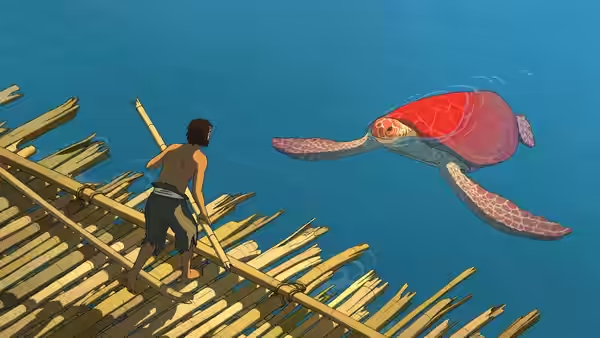
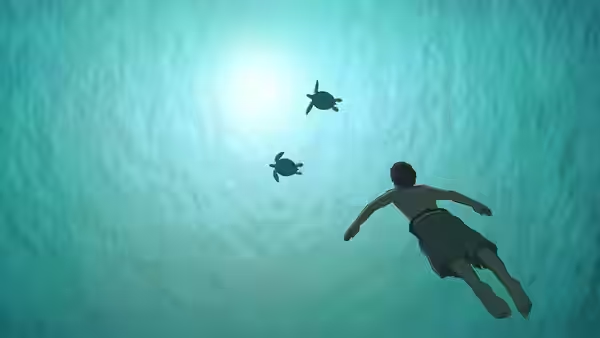
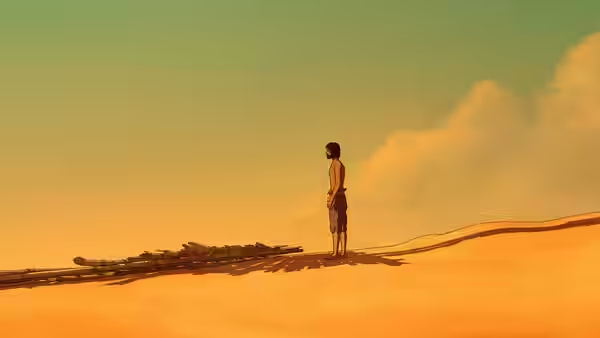
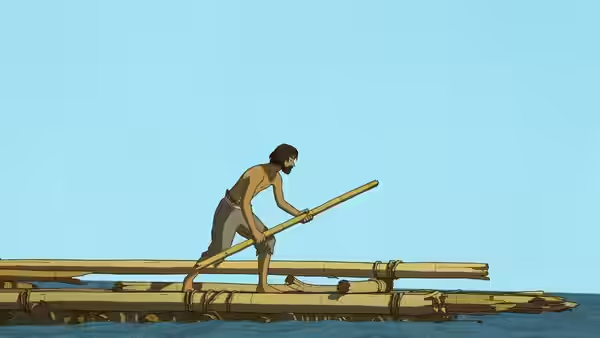
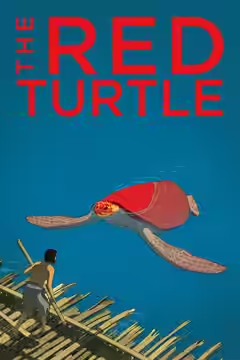
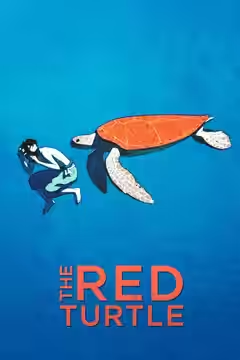
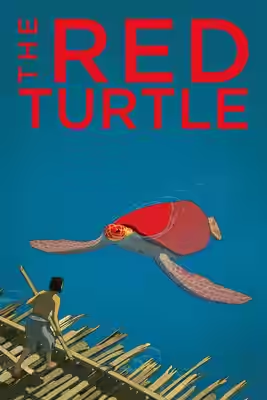
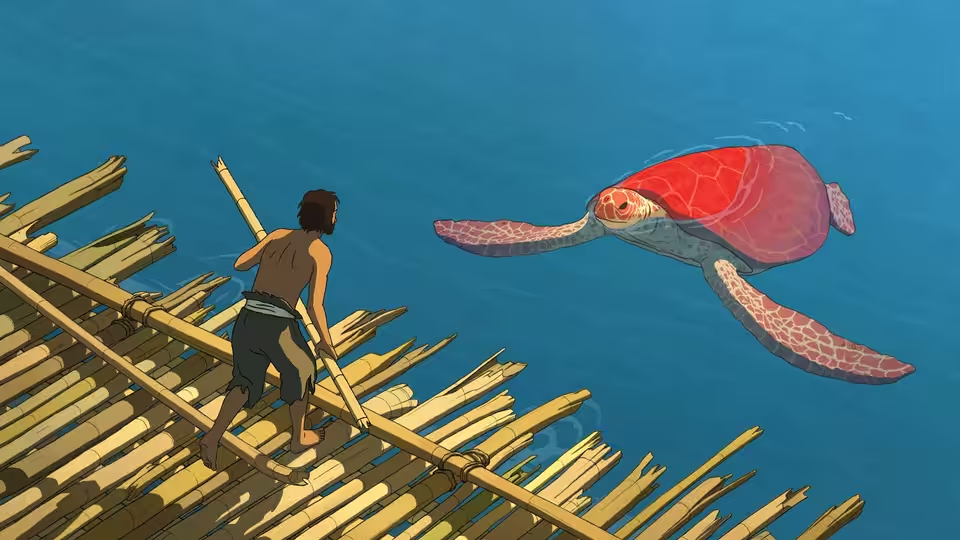
A man stands on a wooden raft facing a large red turtle in the sea
Film review

The Red Turtle

2016 · Directed by Michaël Dudok de Wit · 1h 21m · MPA PG

In a sentenceThe crabs get on with their day while the human makes everything difficult

A man is stranded on a desert island and sets about trying to leave. A red turtle stands in his way, thwarting his efforts to escape across the sea. He has to contend with the demands of survival as well as a creature whose behaviour he cannot explain. Crabs provide smaller distractions, carrying on with their own lives while his attempts come to nothing. Told without spoken dialogue, the story follows his struggle with the island and its surrounding water, where persistence alone does not seem likely to get him far. The voice cast includes Barbara Beretta, Baptiste Goy and Tom Hudson.

Plays from YouTube when you press play; nothing loads from them until then.

Fi1m review

Michaël Dudok de Wit makes a moving, occasionally over-scored island fable from spare drawings and a man’s thwarted escape. Its patience rewards attention, though the quiet stretches will not suit every family evening.

The Red Turtle asks us to spend time with a man who wants to be somewhere else. Stranded on an island, he tries to escape, and a turtle prevents him; the early struggle is simple enough to follow without a word. Michaël Dudok de Wit, who writes and directs, trusts that situation to hold our attention before asking anything more of us. It does, and this is a fine, affecting film, with a little too much musical encouragement when it could afford to leave us alone.

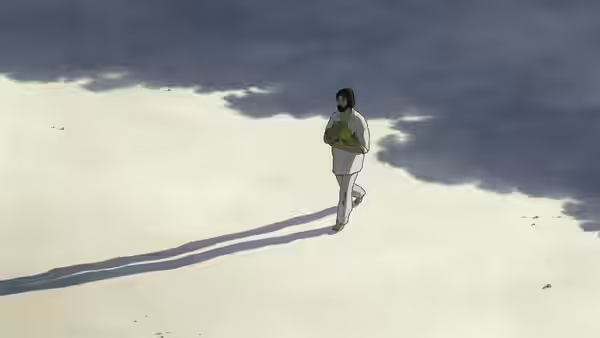
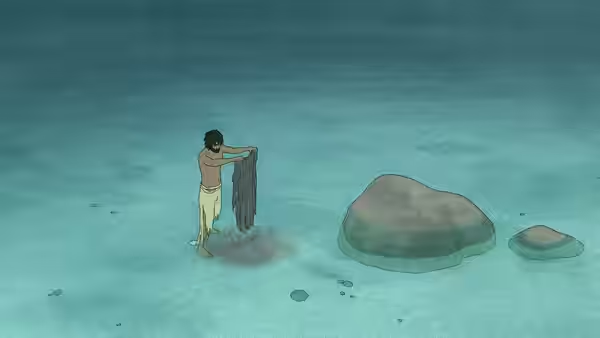
The drawing is spare enough that the man never competes with his surroundings for attention. That makes his predicament more frightening: the sea has weight and changeable moods, while he looks ill-equipped to cope with it. We were more anxious than we expected to be during his futile attempts to leave. The animation makes his effort legible without needing detailed features, while the crabs carry on without looking especially concerned about his predicament.

Much of the pleasure is in watching how little the pictures need. The line remains clear, the light changes the feel of the island, and colour keeps the surrounding water from becoming a flat expanse to be crossed. The sea is beautiful, but we never forget what it might do to the man. Michaël Dudok de Wit gives the natural world enough attention that we can understand why the man wants to escape without wishing the film would hurry him away.

Céline Kélépikis’s editing gives the man’s repeated efforts time to register. There is room to recognise his determination, then to feel the frustration of seeing it fail, and the deliberate pace gives the small movements of the island’s creatures proper attention. At 81 minutes, the film is short, but its unhurried stretches can feel longer if its simple predicament has not caught our interest. We would not promise that every child drawn to an animated turtle will welcome so much time without conversation.

The music is the less restrained part of the film. Laurent Perez del Mar supplies warmth and helps a story without speech communicate readily, but sometimes the score pushes a tender feeling past the point where it feels earned. The drawings are already doing enough, and the extra insistence briefly makes us conscious of being persuaded. It is a modest complaint, though an important one in a film that otherwise gives us time to respond for ourselves.

The film also makes a welcome case for animation that expects concentration. It can be enjoyed as a survival story without having every encounter translated into a lesson about humanity’s place in nature. The fantasy remains strange, and anyone wanting its mysteries explained may find that frustrating. We did not need an explanation, because the early struggle for survival had made the man worth caring about.

It deserves to be watched without distractions. The absence of dialogue should not be mistaken for permission to drift in and out; the small changes in a drawing deserve the same attention as an actor’s face. Children may take to its animals and its strangeness, but the leisurely pace is a real consideration, whatever the viewer’s age. We recommend it for a quiet evening, with the phones elsewhere.

Critical consensus AI synthesised

81
Positive
22
Mixed
0
Negative
1

Most critics warmly endorse The Red Turtle, with praise centred on its spare hand-drawn animation and its ability to tell an emotionally involving story without dialogue. The reviews repeatedly admire the precise lines, light and colour, alongside the attention to nature as both a threat and a source of companionship. Many find that the meditative pacing and simple survival story allow its broader concerns with solitude, family and the cycle of life to emerge without forcing them.

Agreement is strong, though enthusiasm ranges from quiet admiration to deep affection, with one sharply negative dissent. Reservations concern the thinness of the narrative, the slow pace’s appeal to younger viewers and occasional sentimentality. The Hollywood Reporter admires the animation but finds the score too sentimental and the story simplistic. The Financial Times goes further, finding little drama and weak character drawing, though it responds more favourably to the sequences at sea.

Radio Times
★★★★★ · Trevor Johnston
100

The critic praises this wordless animated feature as having the timeless certainty of an old folk tale, with meditative pacing and exquisite line-drawing. It delivers nail-biting drama, romance and profound engagement with the cycle of life in a one-of-a-kind viewing experience.

Read the full review →
Los Angeles Times
17 November 2016 · Kenneth Turan
90*

The review calls the dialogue-free film a visually stunning poetic fable concerned with the rhythms of nature and the wonders of ordinary life. It praises the simple yet realistic animation style and how the story enlarges the spirit while delivering dramatic events.

Read the full review →
Slant Magazine
15 January 2017 · Chuck Bowen
90*

The review commends the film's pointed simplicity, transcendental refinement, and pared-down animation that evokes a dreamlike state and empathy with nature. It singles out the poignant transformation and poetic ending for their existential fairy-tale resonance.

Read the full review →
The AV Club
16 November 2016 · A- · Noel Murray
90

The review highlights the film's artful European visual style and gripping primal survival tale as a collaboration with Studio Ghibli. It notes that its elliptical and magical-realist elements may feel overly fanciful to some but ultimately deliver aesthetic beauty and emotional depth.

Read the full review →
The Guardian
28 May 2017 · Peter Bradshaw
90*

The critic calls the wordless animated fable a masterpiece of rapturous minimalism, praising its sublime simplicity, ecological themes and universal cycle of life, death and rebirth expressed through crisp visual storytelling and a haunting score.

Read the full review →
Variety
18 May 2016 · festival review · Peter Debruge
90*

The critic describes the wordless film as a hypnotizing, pure fable that feels timeless, emerging from a unique Studio Ghibli collaboration. It highlights the simple story of a man obstructed by the red turtle and the intuitive, calm Eastern sensibility in its environmental focus.

Read the full review →

Straight answers AI written, from our review

Is The Red Turtle worth watching?
The Red Turtle is worth watching for anyone with the patience for a wordless island fable, and we scored it 84. Michaël Dudok de Wit tells a stranded man's thwarted escape in spare drawings that make the sea feel dangerous, though the score sometimes pushes harder than it needs to. The quiet stretches will not suit every family evening, so watch it undistracted.
How long is The Red Turtle, and what is it rated?
The Red Turtle runs 1h 21m and is rated PG by the MPA in the US. It is an animation and drama film.
Where can I watch The Red Turtle in the US?
The Red Turtle is available to rent from Apple TV and Amazon Prime Video from $3.99. Availability is checked daily; the links above go straight to each service.
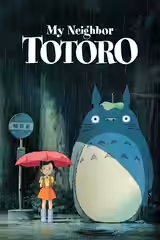
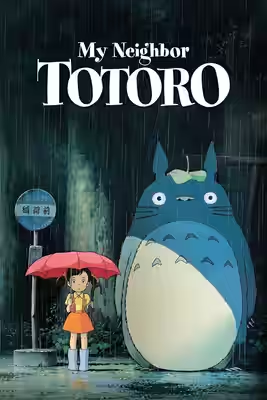
How does The Red Turtle compare to My Neighbor Totoro?
The Red Turtle is the sterner, stranger of the two, and My Neighbor Totoro is the warmer and funnier. Dudok de Wit tells a wordless survival story with an unexplained creature standing in a man's way, while Miyazaki follows children meeting mysterious beings with affection and humour. Totoro is the safer choice for younger children; the Turtle rewards viewers who can sit with silence and mystery.
What should I watch after The Red Turtle?
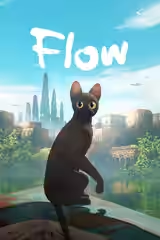
After The Red Turtle, try The Black Stallion (1979, Fi1m 87): An animal encounter and an island ordeal, given time to become absorbing. Then My Neighbour Totoro (1988, Fi1m 89): A gentler encounter with mysterious creatures, told with patience and affection; and Flow (2024, Fi1m 83): Wordless animal survival with a quicker pace and close attention to animal behaviour.

Cast

Awards

Academy Awards, 2017

Nominated
Best Animated Feature

Critics' Choice Awards, 2016

Nominated
Best Animated Feature

European Film Award for Best Animated Feature Film, 2016

Nominated
European Film Award for Best Animated Feature Film

If you liked this, try…

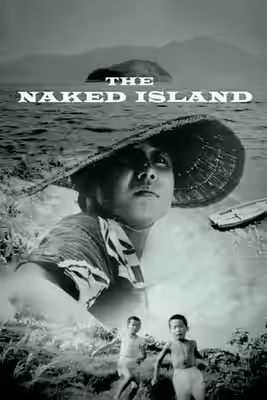
  1. The Naked Island (1960) · not reviewed yetAnother island struggle, with daily labour and family life observed without dialogue.

  2. The Black Stallion (1979, Fi1m 87)An animal encounter and an island ordeal, given time to become absorbing.

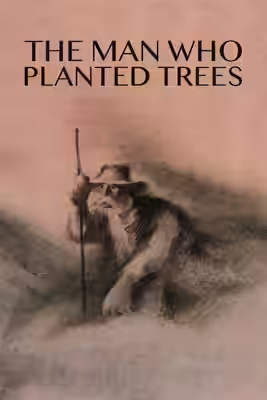
  3. The Man Who Planted Trees (1987) · not reviewed yetPatient, hand-drawn animation finds feeling in the slow work of changing a landscape.

  4. My Neighbour Totoro (1988, Fi1m 89)A gentler encounter with mysterious creatures, told with patience and affection.

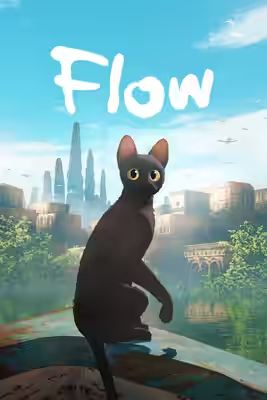
  5. Flow (2024, Fi1m 83)Wordless animal survival with a quicker pace and close attention to animal behaviour.

Free account

Know what to watch tonight

Two lists that know where things are streaming, collections you can share, your own score beside ours, and Discover that remembers what you have seen.

  • Want to see, sorted by what is streaming now
  • Seen, with your score out of ten
  • No adverts, ever