David Lynch’s patient road film earns its warmth through Richard Farnsworth’s unforced performance. Some of the roadside wisdom sounds prepared in advance, but we recommend it for the attention it gives to ordinary people.
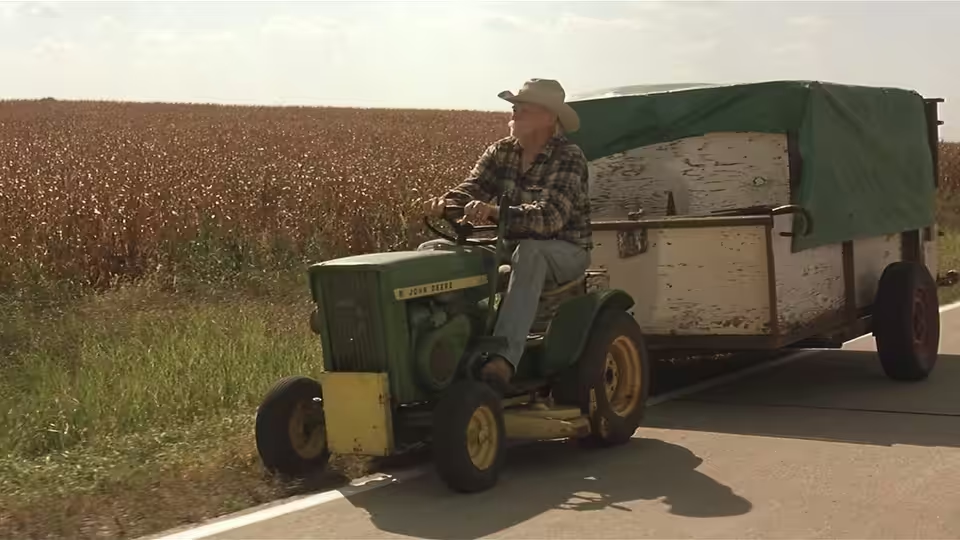
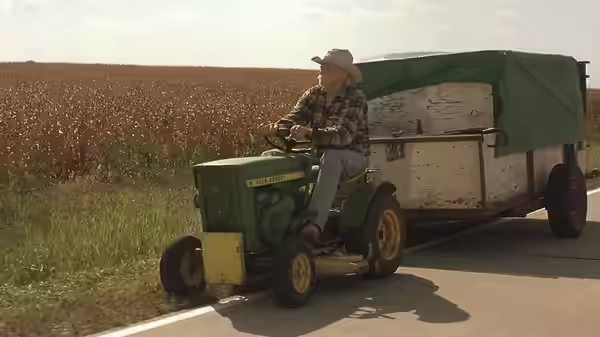
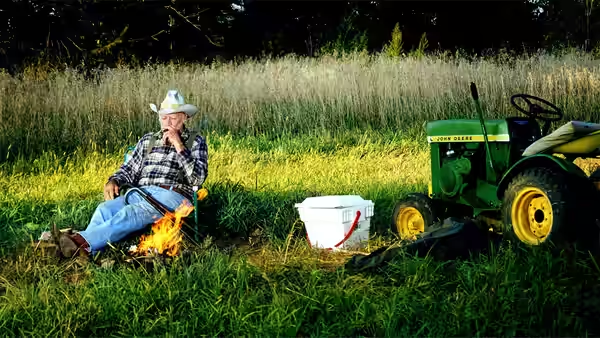
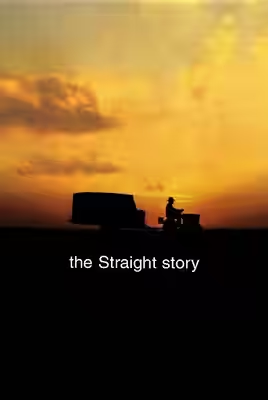
David Lynch asks us to take a lawnmower journey seriously, and we do. The Straight Story is a patient, affecting road film whose occasional fondness for homespun wisdom cannot spoil Richard Farnsworth’s performance. An elderly war veteran travelling through the American heartland could easily become someone everyone stops to praise. Farnsworth gives Alvin enough reserve to prevent that. We care about him without feeling that every expression has been chosen to make us care.
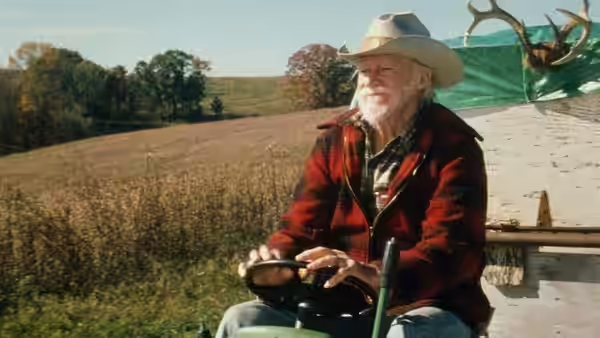
Farnsworth does little to announce how much Alvin carries with him. His manner is unforced, and the sadness never feels like a request for sympathy. We were moved more than we expected by those glassy eyes and the effort of keeping his face composed. They make the conversations about loss feel like something Alvin has had to live with, and can still find difficult to discuss. Lynch is right to give this face so much of our time.
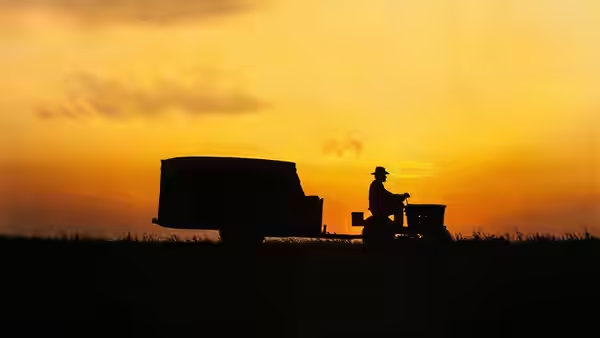
Freddie Francis’s cinematography gives the landscape time to register without making Alvin disappear inside it. We notice the country he passes through, but the picture never becomes merely an invitation to admire the view. Jack Fisk’s production design is similarly unobtrusive, keeping the everyday surroundings plain enough that we attend to the people in them. That restraint matters in a film so ready to admire ordinary life. Too much picturesque detail would make its affection harder to believe.
Mary Sweeney’s editing accepts the pace of Alvin’s transport and makes that slowness engrossing. At 112 minutes, the film needs us to enjoy listening as much as the prospect of arriving anywhere. Sweeney gives the conversations room, allowing the performances to determine how long our attention stays with someone. Angelo Badalamenti’s music supplies warmth without making Alvin’s modest progress sound heroic. It suits a film that takes its traveller seriously while retaining a sense of how unusual his transport is.
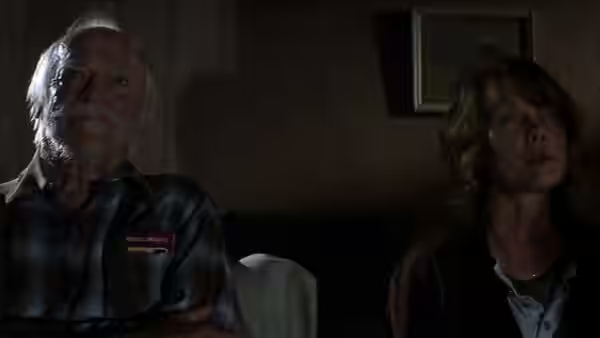
The screenplay, by Sweeney and John Roach, is less reliable when the people Alvin meets seem ready with a useful lesson. Some of that folk wisdom sounds too neatly prepared for a casual conversation, and the oddness of certain encounters can feel imposed. We become conscious of Lynch arranging an eccentric when we would rather he let someone speak. Sissy Spacek’s performance as Rose helps keep the human scale intact. Her sensitivity makes the more obviously written exchanges elsewhere a little harder to overlook.
For a road film, this gets an unusual amount of interest from people being decent to one another. That could be dull, and Lynch’s dry humour helps prevent the encounters from becoming a succession of demonstrations of good behaviour. The warmth also leaves space for regret, with Farnsworth never suggesting that Alvin’s years have made everything simple. His performance gives the film enough sadness to make its kindness matter, even when the dialogue becomes too instructive.
The film asks for patience, particularly from anyone who expects a journey to provide a regular supply of incidents. We would make the time for it, with the caveat that some of its people are wiser than people tend to be in casual conversation. Watch it when there is no need to hurry on to something else.