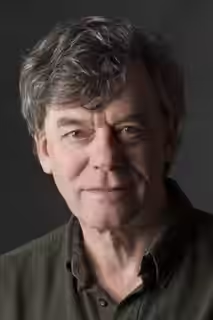
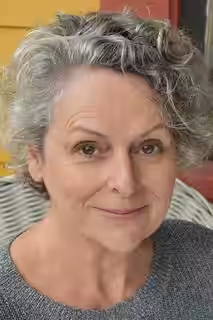
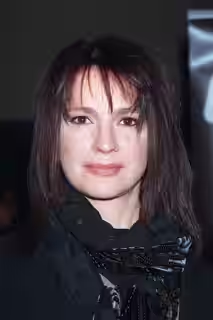
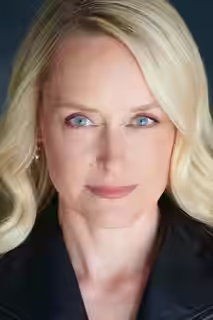
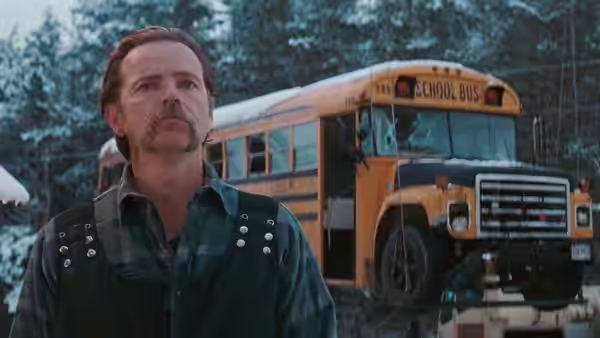
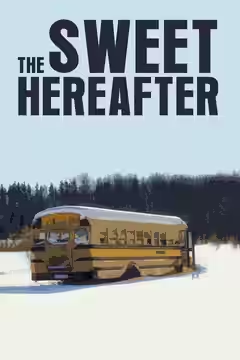
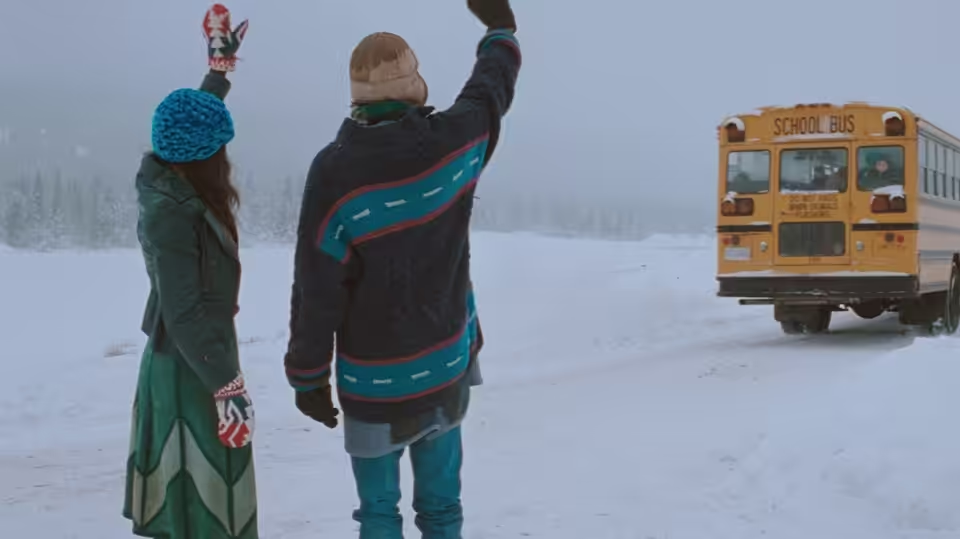
a man and woman waving at a school bus on a snowy road
Film review

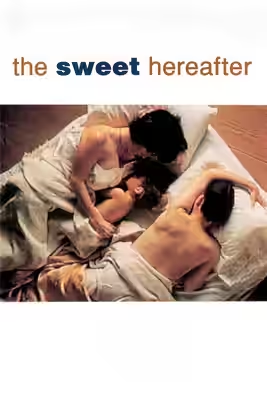
The Sweet Hereafter

1997 · Directed by Atom Egoyan · 1h 52m · MPA R

In a sentenceA lawsuit is a painfully small thing to offer people who want their children back

A school bus accident kills children in a small town, leaving families to live with a loss they share but cannot necessarily face together. Mitchell Stephens (Ian Holm), a lawyer, becomes involved in a lawsuit, bringing his own experience of loss into his dealings with the bereaved. As the community responds to his intervention, questions of responsibility become tangled with grief, guilt and anger. Atom Egoyan adapts Russell Banks’s novel through a narrative that moves out of chronological order. Sarah Polley, Bruce Greenwood and Gabrielle Rose are among the cast.

Fi1m review

Atom Egoyan’s drama about a bereaved town is painful, patient and worth the effort. Ian Holm and Sarah Polley make its silences matter, although the fragmented storytelling occasionally makes us too conscious of how carefully everything has been arranged.

The Sweet Hereafter is a patient, deeply moving drama about what people hope blame will do for them. Adapting Russell Banks’s novel, writer-director Atom Egoyan follows a small town after a school bus accident kills children and a lawyer becomes involved in a lawsuit. The legal process promises something can be done. Egoyan is attentive to why bereaved people might need to believe that promise.

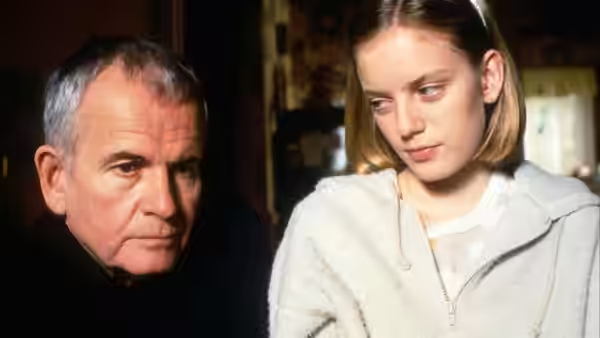
Ian Holm plays Mitchell Stephens with enough professional assurance to make his intervention plausible and enough pain to make it unsettling. His own loss complicates what might otherwise be a straightforward portrait of a man exploiting other people’s misery. We were moved by Holm because the lawyer’s grief remains visible through his attempts to be useful. Egoyan allows us to question what Stephens is doing without deciding that everything about him is false.

Sarah Polley plays Nicole Burnell with a reserve that makes us attend to her silences. The performance never seems to ask for sympathy, which makes the distress more persuasive when we feel it. Gabrielle Rose and Bruce Greenwood help make the community feel composed of separate people, each deserving attention beyond their usefulness to the lawyer’s case. The supporting performances retain that same restraint, allowing considerable pain to register without insisting that we notice every moment of it.

Susan Shipton’s editing moves between different points in time without making the exercise a puzzle to be solved. What matters is how one encounter changes our understanding of another, and how people remain caught up in experiences that are supposedly behind them. We have to pay attention, but the effort usually brings us closer to the characters. Egoyan and Shipton keep the lawsuit from becoming the only thing there is to follow.

Paul Sarossy’s snowy widescreen images give the town space without making it feel free of what has happened. The beauty is uncomfortable: we can appreciate the landscape while recognising that it offers the people living there no practical consolation. Phillip Barker’s production design helps us believe that people lived here before there was a legal case to bring. The town remains credible as somewhere people have homes and habits.

Mychael Danna’s score is affecting, though it is also where the film’s careful shaping becomes hardest to ignore. Alongside the fragmented chronology and the composed images, it can make sorrow feel too thoroughly prepared for us. There are moments when the actors have already done enough, and the music seems to be asking for a further response. At 112 minutes, the film gives the performances the time they need; occasionally, we wish it would leave them alone a little more.

The appeal of many legal dramas is the prospect of someone finally explaining what happened. Egoyan is more interested in why an explanation might be needed, and how a lawyer’s involvement changes a bereaved community. That gives the film patience with people whose conduct is not always easy to like. We recommend it, with a warning about both the subject and the concentration its broken chronology demands. Choose an evening when you can give these people your full attention.
Critical consensus AI synthesised

88
Positive
6
Mixed
0
Negative
0

The reviews are strongly positive, with praise centred on Egoyan’s restrained handling of grief and the performances that give it emotional force. Most critics find that the fragmented chronology deepens the account of a community living with loss, rather than keeping its pain at a distance. Ian Holm draws particular praise, while Sarah Polley and the wider ensemble also receive attention. The adaptation is repeatedly credited with preserving complexity without resorting to melodrama.

The spread is narrow, and differences concern emphasis more than approval. Some critics stress the moral questions surrounding the lawyer’s intervention; others focus on the film’s tenderness and interest in recovery. Time Out offers a specific reservation: its sensitive treatment of grief, guilt and anger may not yield fresh insights into how tragedy changes a community. That qualification sits alongside praise for its performances, editing, photography and atmosphere.

RogerEbert.com
23 December 1997 · ★★★★/4 · Roger Ebert
100

The film is a tender, unflinching lament for survivors of grief after a school bus accident kills 14 children in a small town. Ebert praises Egoyan's non-linear structure and Ian Holm's subtle performance as the lawyer who mirrors the parents' loss.

Read the full review →
The AV Club
29 March 2002 · Keith Phipps
90*

The critic calls the film Egoyan's best work yet and one of the best of the year. They single out its detached nonlinear style for movingly and truthfully exploring themes of loss and recovery.

Read the full review →
The New York Times
3 October 1997 · festival review · Janet Maslin
90*

Egoyan's wrenching adaptation of Russell Banks' novel uses the bus accident as the basis for a moral inquiry into how a town copes with loss and a lawyer's self-serving intervention. Maslin highlights the film's fragmented narrative and haunting images.

Read the full review →
Los Angeles Times
21 November 1997 · Kenneth Turan
85*

The film is a delicate, assured exploration of tragedy's impact on families, suffused with stately restraint and silences that amplify its emotional power. Turan praises Egoyan's adaptation of the novel and its focus on healing amid loss.

Read the full review →
The New Yorker
17 November 1997 · Daphne Merkin
85*

Egoyan's sober adaptation excels as one of the best book-to-film translations, with Ian Holm's volcanic performance anchoring the story of grief and a lawsuit in a rural community. Merkin singles out the restraint and strong ensemble, especially Sarah Polley.

Read the full review →
Variety
16 May 1997 · festival review · Brendan Kelly
80*

Egoyan's most ambitious work is a rich, complex meditation on a small town's response to tragedy, retaining unconventional style while gaining emotional weight. Kelly notes the skillful avoidance of melodrama and strong performances from the ensemble.

Read the full review →

Straight answers AI written, from our review

Is The Sweet Hereafter worth watching?
The Sweet Hereafter is worth watching for anyone prepared for a patient, painful drama about a small town after a school bus accident kills its children, and we scored it 88. Ian Holm and Sarah Polley are the reasons to see it. The story is told out of order and needs concentration, so choose an evening when you can give it your full attention.
How long is The Sweet Hereafter, and what is it rated?
The Sweet Hereafter runs 1h 52m and is rated R by the MPA in the US. It is a drama film.
Where can I watch The Sweet Hereafter in the US?
The Sweet Hereafter is available to rent from Amazon Prime Video from $5.99. Availability is checked daily; the links above go straight to each service.
How violent or frightening is The Sweet Hereafter, and is it suitable for children?
The Sweet Hereafter carries a UK 15 certificate and is not suitable for children, less for anything shown on screen than for its subject: a school bus accident that kills children and the grief and blame that follow. There is no horror or spectacle here. The distress is quiet and sustained, and anyone raw from a recent loss should approach it with care.
How does The Sweet Hereafter compare to Three Colors: Blue?
The Sweet Hereafter follows a whole town and a lawsuit after a school bus accident, where Three Colors: Blue stays close to one bereaved woman played by Juliette Binoche. Egoyan's film is the broader and more demanding of the two, with a fragmented chronology that asks for concentration; Kieślowski's is the tighter and more controlled. Both let their music press a little too hard, and we recommend both.
Is The Sweet Hereafter based on a true story or a book?
The Sweet Hereafter is adapted from a novel by Russell Banks, not from a true story. Atom Egoyan, who wrote and directed, tells it out of chronological order, so the film demands attention rather than familiarity with the source. You do not need to have read the book; the performances carry everything the film wants you to understand.
What should I watch after The Sweet Hereafter?
After The Sweet Hereafter, try Three Colours: Blue (1993, Fi1m 88): Another patient study of bereavement, with music doing some of the hardest work. Then Ordinary People (1980, Fi1m 81): Family grief emerges through ordinary conversations, and the performances earn the distress; and A Separation (2011, Fi1m 93): Private pain becomes a legal dispute without making anyone conveniently innocent.

Cast

Awards

Academy Awards, 1998

Nominated
Best Director

Academy of Canadian Cinema and Television Award for Best Motion Picture, 1997

Won
Academy of Canadian Cinema and Television Award for Best Motion Picture

Cannes Film Festival, 1997

Won
Cannes Film Festival Grand Prix

Toronto International Film Festival Award for Best Canadian Film, 1997

Won
Toronto International Film Festival Award for Best Canadian Film

If you liked this, try…

  1. Three Colours: Blue (1993, Fi1m 88)Another patient study of bereavement, with music doing some of the hardest work.

  2. Ordinary People (1980, Fi1m 81)Family grief emerges through ordinary conversations, and the performances earn the distress.

  3. A Separation (2011, Fi1m 93)Private pain becomes a legal dispute without making anyone conveniently innocent.

  4. Drive My Car (2021, Fi1m 88)For its patience with grief and the things people cannot say directly.

  5. Don't Look Now (1973, Fi1m 90)Grief makes every look and sound suspect in a less reassuring Venice.

Free account

Know what to watch tonight

Two lists that know where things are streaming, collections you can share, your own score beside ours, and Discover that remembers what you have seen.

  • Want to see, sorted by what is streaming now
  • Seen, with your score out of ten
  • No adverts, ever