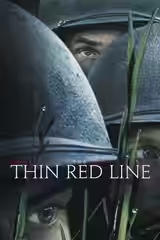
Most critics admire it, and the praise gathers around the same things: Malick’s images of the Pacific, the way the natural world is filmed as indifferent to the fighting, and the layered voice-overs that turn a Guadalcanal combat picture into a meditation on war, nature and death. Several reviewers set it against Saving Private Ryan, released the same year, and prefer Malick’s refusal of spectacle. Later reappraisals are warmer than the first notices.
The reservations cluster around shape. Even admirers concede the film meanders, and a good number of critics, particularly on first release, find it without a central character or dramatic focus, drifting into hazy poetic effects. Variety expects it to frustrate mainstream audiences; The New York Times calls it intermittently brilliant at best. The spread is wide, from near-unqualified admiration to one outright dismissal. That dissent, from Eye for Film, finds it pretentious and heavy-handed, though it singles out Jim Caviezel’s performance as the private who goes absent among the islanders.
A
The AV Club
6 October 2010 · A · Keith Phipps
95
The critic highlights how Malick blends the grim WWII story with philosophical voiceovers and nature imagery to explore a pantheistic view of existence and struggle. The film's beauty and coherence make its ambitious ideas feel earned rather than pretentious.
Read the full review →E
Empire
1 January 2003 · William Thomas
90*
A major work from a major artist that reaches beyond entertainment to touch the profound; a glorious return for Malick after 20 years.
Read the full review →F
Film Comment
· Gavin Smith
90*
The critic praises the film as a unique lyric epic poem on war that balances romanticism and dispassion while evading mythic spectacle, unlike Saving Private Ryan. It singles out the film's use of light, voiceover, and Witt's transcendent perspective for conveying the duality of horror and rapture in existence.
Read the full review →S
Slant Magazine
28 September 2010 · Rob Humanick
90*
The critic calls the film a profound philosophical and artistic achievement that surpasses other 1998 war films in depth, praising its ensemble cast, visual poetry, and exploration of war, nature, and humanity. It fuses spiritual inquiry with narrative in a way that defines cinema's essence.
Read the full review →Malick's masterpiece is an extraordinary, profoundly rich war movie and mythic pantheist meditation on conflict, violence and death in nature. Its multiple voice-overs, flora and fauna imagery, and central metaphor of paradise lost make it a genuinely epic ciné-poem.
Read the full review →L
Little White Lies
13 October 2016 · Taylor Burns
85*
The critic hails Malick’s film as a stunning meditation on the natural world’s indifference to war rather than a conventional combat story. The lush Pacific imagery and transcendental voice-overs are singled out as the picture’s soul.
Read the full review →A totally engrossing film, a near free-form essay in texture and ideas that grips despite being narrative-free; Malick's return will go down as one of the finest films of the year.
Read the full review →L
Los Angeles Times
26 September 2010
75*
Highlights the film's trance-like battle scenes and rich network of opposing forces like fear of death and awe for life, praising its hallucinatory imagery and thematic depth on nature and humanity in this Criterion re-release review.
Read the full review →R
RogerEbert.com
8 January 1999 · ★★★/4 · Roger Ebert
75
Ebert finds the film fascinating yet schizophrenic, with actors pursuing realism while Malick offers poetic detachment. He praises the battle geography and visual poetry but notes the director’s ideas about war are heartfelt but not profound.
Read the full review →S
Sight and Sound
· Geoffrey Macnab
70*
Malick's first film in 20 years is a personal, poetic vision of war as messy and absurd, with random shifts in mood, breathtaking beauty and metaphysical inquiry. It succeeds as an utterly personal big-budget war film thanks to its imagery and voiceovers, though some characters are reduced to sketches.
Read the full review →N
The New Yorker
21 December 1998 · Anthony Lane
65*
Calls the film ravishingly strange and notes its intense physicality and helpless poetry, but deems it infuriating for lacking a core character and grabbing then brushing off interest; ultimately spooked by its Rousseauist vision of war and nature.
Read the full review →G
The Guardian
26 February 1999
60*
The critic describes Malick's poetic adaptation as a singular war film that defies simple appraisal, being in equal parts earthy and high-flown. It is touched by brilliance but sometimes feels like a pious, wishy-washy folly.
Read the full review →I
The Independent
25 February 1999
60*
The film is rambling and incoherent in places but luminously beautiful and ambitious; Malick has created an introspective war movie unlike any other.
Read the full review →N
The New York Times
23 December 1998 · Janet Maslin
55*
Praises Malick's visual genius and the film's ravishing natural beauty fused with psychic elements, but finds it intermittently brilliant at best, drifting into hazy poetic effects and meandering without plot or focused character development.
Read the full review →V
Variety
20 December 1998 · Todd McCarthy
50*
The film is a complex, highly talented work with intellectual and philosophical ambitions that will captivate some critics and serious viewers, but its abstract nature, emotional remoteness and lack of dramatic focus will frustrate mainstream audiences. It presents a worldly paradise devastated by man’s irrepressible impulse to destroy, realized through ravishing visuals and extensive voiceover commentaries.
Read the full review →/
/Film
28 December 2018 · Joshua Meyer
90*
The film retains its poetic power two decades later as one of the best of the 1990s. It explores the duality of the human spirit through its visual poetry and ensemble performances amid war and nature.
Read the full review →C
Consequence
21 February 2016 · Collin Brennan
85*
It is one of the most moving war epics ever made, a poetic yet brutal meditation on human nature that was robbed of the Best Picture Oscar. The film emphasizes downtime and authenticity over conventional heroism.
Read the full review →P
Paste
28 July 2011 · Paste Staff
70*
The film was initially the most divisive of Malick's works but is now being reappraised as a unique, non-narrative art film rather than a traditional Hollywood war movie. It stands apart from expectations set by Saving Private Ryan.
Read the full review →E
Eye for Film
19 January 2001 · Angus Wolfe Murray
30*
The critic finds the film pretentious and lacking originality in its anti-war message, turning the Guadalcanal story into a heavy-handed ecological poem with too much voice-over introspection. He singles out Jim Caviezel's memorable performance as the private who goes AWOL among the natives as the standout element amid otherwise forgettable star cameos.
Read the full review →Ordered by the weight we give each publication, then by score. Scores are normalised to 100; * means inferred from an unrated review. Summaries are ours, not quotations; follow the links for the reviews themselves. How we rate