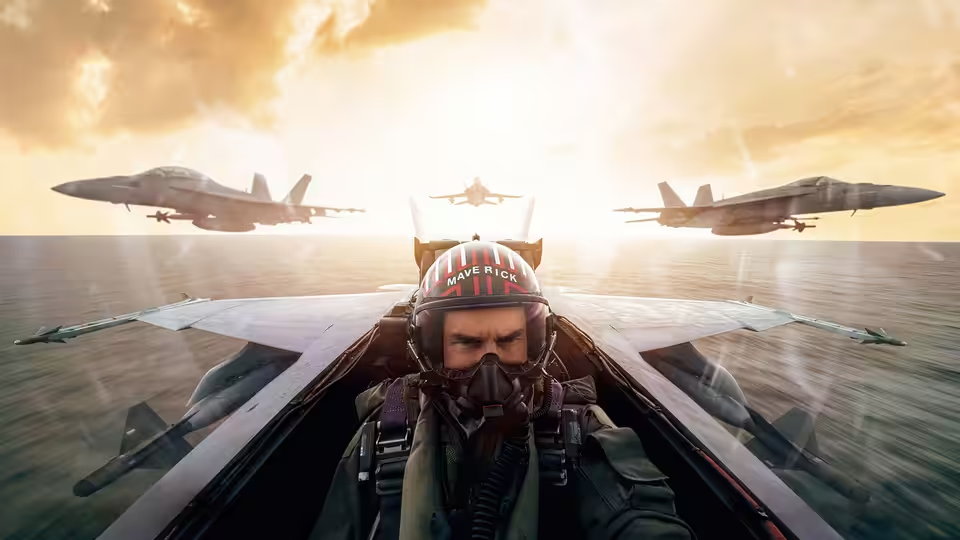
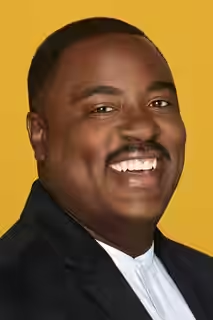
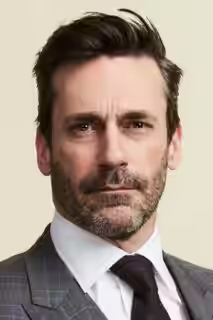
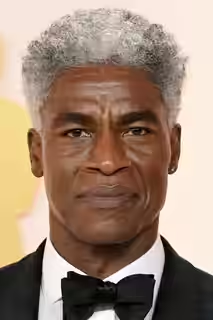
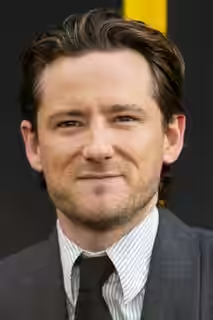
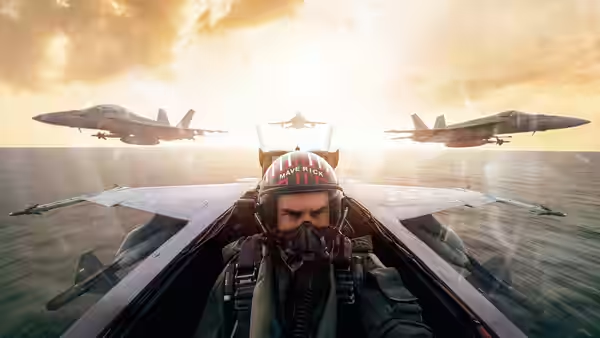
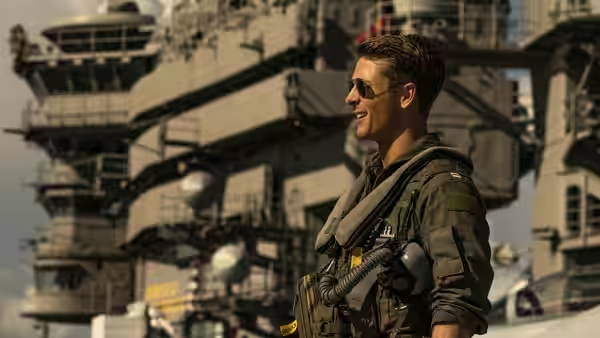
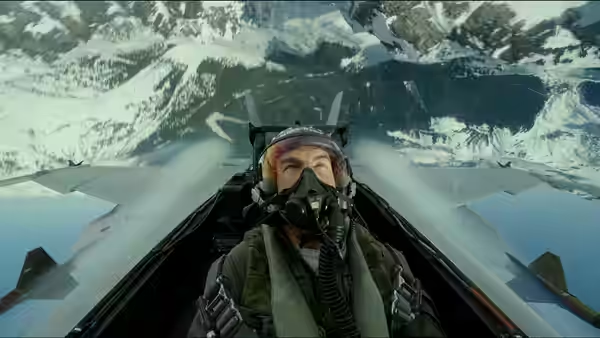
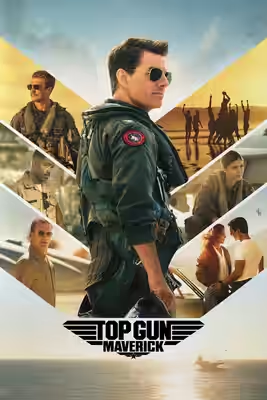
Joseph Kosinski puts Tom Cruise back in a fighter jet, and Claudio Miranda’s cameras ride in the cockpit with him, so the sky and the strain on the faces are real. The story is the 1986 one again with the enemy left blank. It barely matters.
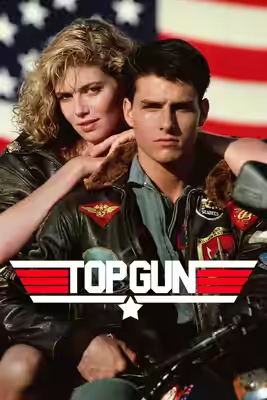
Thirty-six years after Tony Scott’s Top Gun, Pete ‘Maverick’ Mitchell is still a captain, which he treats as a point of pride and the Navy treats as a diagnosis. Joseph Kosinski’s sequel sends him back to the school that made him, to train young pilots for a strike none of them is expected to survive. The script, by Christopher McQuarrie, Eric Warren Singer and Ehren Kruger, is the old one with the serial numbers filed off. The flying is not. We recommend it, with the caveat that everything worth having in it happens in the air.
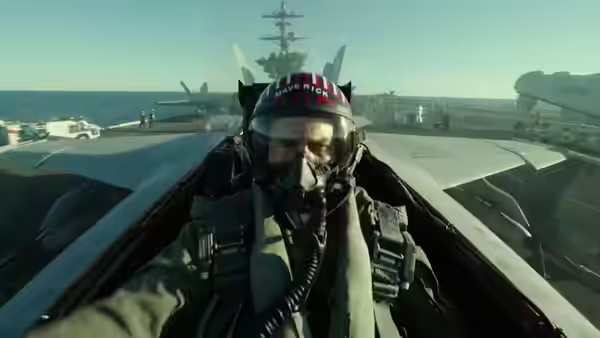
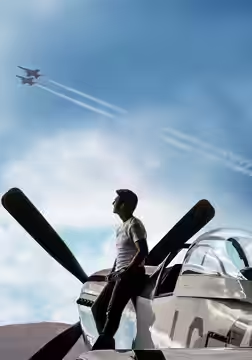
Claudio Miranda shoots it, and the difference is that the actors are in the aircraft and the sky behind them is real. The cameras sit in the cockpit looking back, so what we watch is a face being pushed out of shape by its own weight while the horizon rolls over its shoulder. We felt it in the stomach. The moment Cruise hauls up out of a canyon, his cheeks drag downwards, the picture goes white at the edges, and we realised nobody had drawn any of it.
Eddie Hamilton cuts the flying so that you always know where everyone is, which sounds like a small thing and is the whole job. The geometry holds through sequences that would turn to noise in most hands. Hans Zimmer and Harold Faltermeyer bring back Faltermeyer’s old synthesiser theme under a great deal of brass, and the film opens on the same carrier deck at the same golden hour with the same song as in 1986. It is shameless about this and knows we will forgive it. We did.
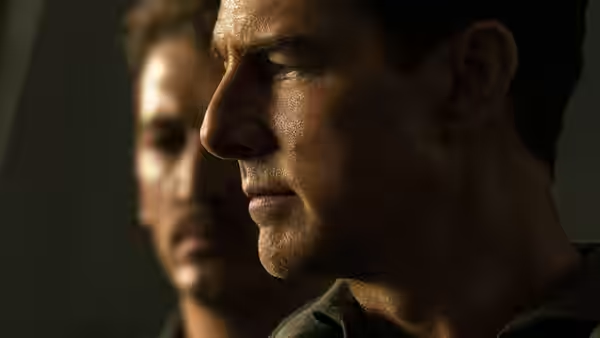
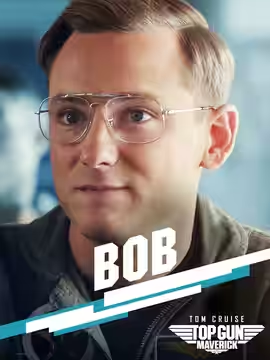
Cruise plays Maverick as a man who has never once wondered whether he was wrong. It works because the film keeps putting him in front of admirals who tell him he is finished: Jon Hamm’s Cyclone does this with his jaw, Charles Parnell’s Warlock with a sigh. Miles Teller’s Rooster, son of the wingman Maverick lost in the first film, wears a moustache and a grievance, both inherited. Glen Powell is the find. His Hangman is a grin on legs, certain he is the best pilot present, and Powell makes you like him for it. Monica Barbaro’s Phoenix and Lewis Pullman’s Bob get one scene each and then go back to being call signs.
Val Kilmer returns as Iceman, now an admiral, for a few minutes in a quiet house, and most of what he says he types on a screen. It moved us more than we thought this film had any right to, and what did it was Cruise waiting for him to finish, the film for once not hurrying anyone. Jennifer Connelly’s Penny Benjamin, who runs the bar where the pilots drink, is given a boat, a daughter and a great deal of patience, and not much to play.
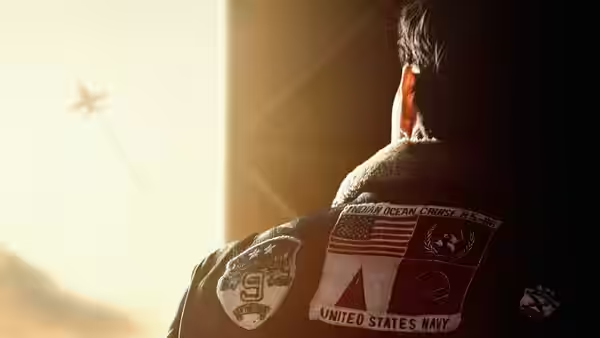
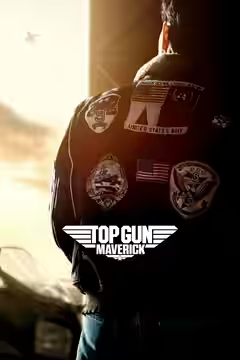
The trouble is the world outside the cockpit. The target is a uranium plant in a country nobody names, and the mission is laid out like a level in a game: so many minutes to the coast, so many seconds in the canyon, then climb. Jeremy Hindle’s production design spends its care on the bar, the Hard Deck, all wood and neon and old photographs, and gives the enemy snow, a dam and nothing else. Marlene Stewart’s patched leather jackets tell us more about these people than the dialogue does. A blank enemy keeps the film clear of politics and leaves no one to be afraid of; every obstacle Maverick meets is a rule, and every rule bends for him. The middle of its 131 minutes is training runs and a game on the beach with the shirts off, and we found ourselves checking the time until the film went back into the air.
Against the original it is the better film by a distance: cleaner, kinder, less vain. Most critics have been warmer still, and we think they forgave the script because the pictures had already won them over. See it on the largest screen you can find, and do not ask who the enemy is; the film has decided you would rather not know.