David Cronenberg’s horror about a cable boss who tunes into a torture broadcast is as unsettling now as it was in 1983, for about an hour, and then the plot comes apart in his hands. See it anyway; nothing else looks like it.
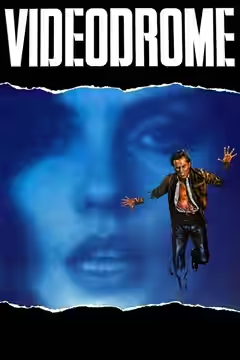
Max Renn (James Woods) runs a cable channel in Toronto that shows soft pornography and cheap violence after midnight, and he says, more than once, that he is looking for something harder. He finds it. Videodrome, pirated off a satellite by his technician Harlan (Peter Dvorsky), is an hour of torture in a clay-walled room with no story attached, and Renn wants to buy it. David Cronenberg, who wrote and directed, made this in 1983, and for about an hour it is frightening, funny and quite unlike anything made before or since. Then it loses its grip, and we will come to that.
What Cronenberg is after is not the torture but what watching does to the watcher. Renn’s chat-show opponent, Professor Brian O’Blivion (Jack Creley), exists only on videotape and lectures, from a monitor, on the screen as a part of the eye. His daughter Bianca (Sonja Smits) runs a mission where the homeless are given a cubicle and a set each instead of soup. Masha (Lynne Gorman), who supplies Renn’s softcore, tells him Videodrome is not acting. Nobody in this film simply watches television. They are fed by it, treated by it or eaten by it, and Cronenberg keeps the joke and the horror running in the same scene.
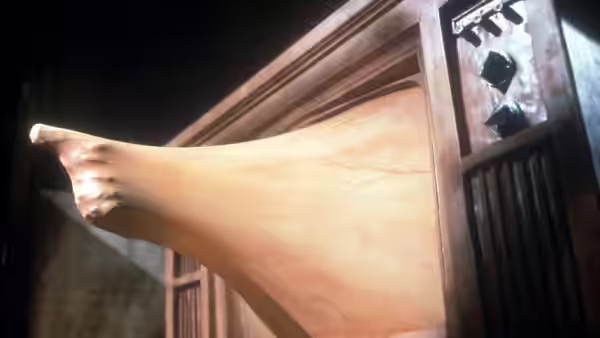
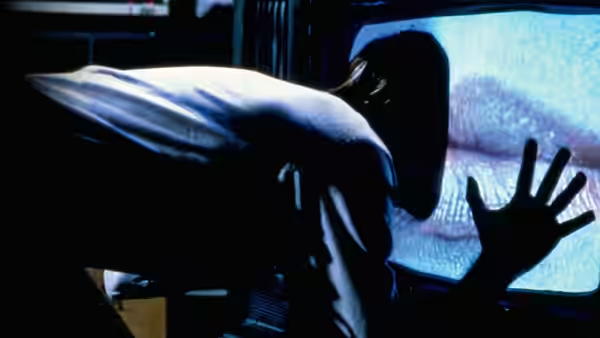
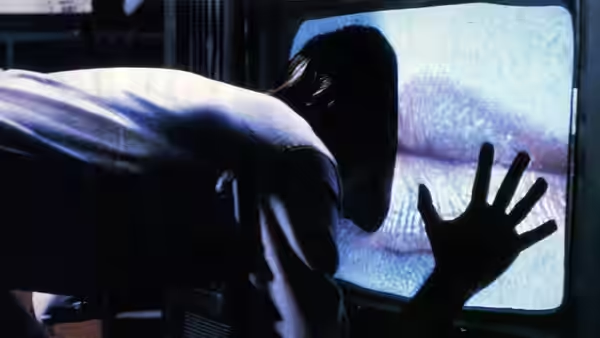
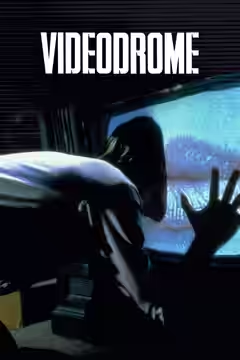
Mark Irwin shoots it in the light of an office on a wet afternoon: beige walls, fluorescent tubes, brown carpet. He does not change any of that when Renn starts to hallucinate. The first time the television set swells, a pair of lips fills the screen and Woods puts his face into it, the room is lit exactly as it was a minute before. We were revolted, and we leaned closer, and we have not entirely trusted a screen since. The effects are built things, rubber and latex and pumps, and they move with a wet weight no computer has yet managed. Howard Shore’s score sounds like an orchestra being swapped for a machine one instrument at a time, and Ronald Sanders cuts between the flat and the hallucinations with no dissolve or chime to tell you which is which. Delphine White puts Debbie Harry’s Nicki Brand in red in a film that is otherwise beige and brown.
Woods is the film. He plays Renn as a man who has spent so long selling other people’s appetites that he has forgotten he has any of his own, and when Nicki Brand, on their first night together, asks him to hurt her, Woods lets you watch him decide. He talks fast, walks fast and is never once likeable, and in the last half hour, when the script has stopped helping, he holds the thing together on nerve. Harry is good and underused; she is the poster, and she is off screen for most of the running time. Leslie Carlson plays Barry Convex, a spectacles salesman who takes an interest in Renn, as the friendliest man in the film, which is the warning.
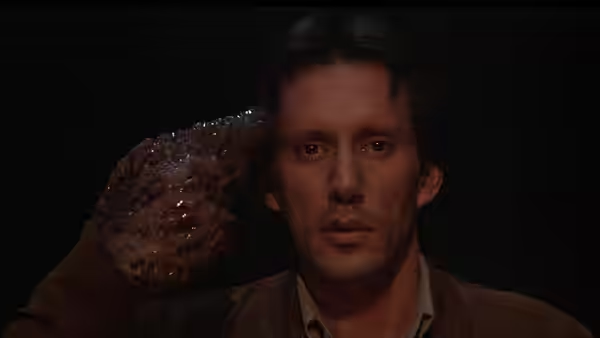
For an hour Cronenberg refuses to explain, and that works because everything on screen is so exact. In the last twenty minutes he starts to explain, and the explanation is a conspiracy plot: a company, a plan, men with guns in corridors. The images stay remarkable, one in particular we would not spoil for anything, but the story around them is the sort of thing a dozen cheaper films had already done, and Cronenberg seems to know it, because he gets through it at speed. Some of the later effects also look like what they are; a hand that is meant to horrify is, second time round, plainly rubber. We were still gripped. We were no longer frightened.
This came two years after Scanners and three before The Fly, and it sits between them in more than the calendar: less tidy than The Fly, far more ambitious than Scanners, and the first of his films in which the ideas and the flesh are the same thing. Most critics now call it prophetic, because we all carry a screen about and press our faces to it. That is true as far as it goes, and it slightly oversells a film that is, at bottom, a nasty, clever 88 minutes about one man and his television.
It carries an 18 certificate and earns it. Watch it late, on the smallest screen in the house, with the lights off, and when it finishes leave the set on for a minute before you touch it.