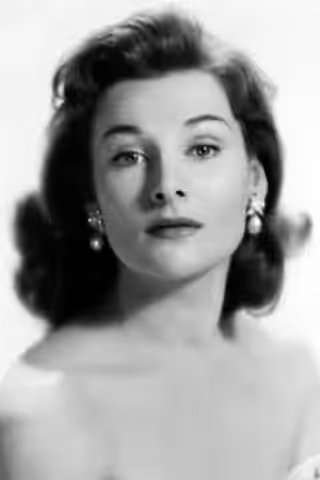
Adrienne Corri spent four decades being the most vivid thing at the edge of the frame: red-haired, quick-tempered on screen, willing to do whatever the scene asked. The parts were rarely the size of her.
Fi1m perspective
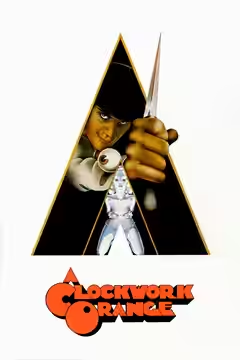
In A Clockwork Orange (1971) she is Mrs Alexander, the woman who answers the door to Alex and his droogs, and what follows is the sequence for which she is most widely remembered. It was shot over four days. By her own account McDowell really hit her, and one set-up went to 39 takes before he said he could not hit her any more. We found her the hardest thing in the film to watch and the quickest thing it forgets: Kubrick's camera stays with Alex, and our review said as much about the whole picture, that it gives too little attention to the people he hurts. Corri is the clearest case of it.
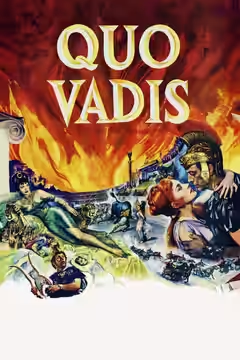
The career before that was longer and thinner than the notoriety suggests. She started on stage in the late 1940s, made her film debut in The Romantic Age (1949) and two years later had an early lead as Valerie in Jean Renoir's The River (1951), shot in India. The same year she was in Quo Vadis (1951). Then came a long run of British pictures through the 1950s and 1960s in which she was mostly given small parts, and the complaint that she could plainly do more than she was asked to do dates from here.
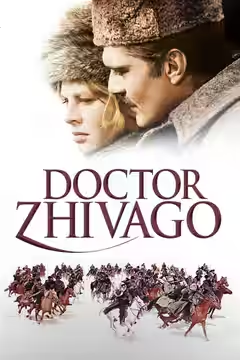
Doctor Zhivago (1965) is the prestige credit, and it is typical. She plays Amelia, Lara's mother, and Lean's film has Julie Christie and Rod Steiger to look at, so it looks at them. We gave it 70 and did not single her out; there was not enough of her to single out. The 1970s were kinder in a lower key. She went into horror, notably as the Gypsy Woman in Hammer's Vampire Circus (1972), and by her own account enjoyed it: "Horror films are my weakness, I love doing them." Alongside this she took Shakespeare on stage and television, Twelfth Night (1969) and Measure for Measure (1979), and kept working in television until 1992.
What she had was heat. Casting directors saw the hair and the temper and used both, and in a villainous or eccentric part she could carry a scene that a duller actor would have let sit. What she lacked was a director who came back. Renoir, Lean and Kubrick each used her once, which is three of the century's great directors and not one second chance.
Start with The River, the one time a major film gave her the lead. Then watch A Clockwork Orange, knowing what our review says about it, and notice how long the film spends on her and how little it spares her.
Biography
Adrienne Corri (born Adrienne Riccoboni) was a Scottish actress. She trained at the Royal Academy of Dramatic Art and made her film debut in 1949. She appeared in numerous films and television productions from the 1950s to the 1990s.
She is known for her role as Mrs. Alexander in Stanley Kubrick's A Clockwork Orange (1971), Amelia in Doctor Zhivago (1965), Valerie in The River (1951), Mena in the Doctor Who serial "The Leisure Hive" (1980), and Therese Douvier in Revenge of the Pink Panther (1978). Other credits include Bunny Lake Is Missing (1965), Vampire Circus (1972) and Madhouse (1974). She had a substantial stage career and appeared in television series such as A Family at War.
Corri wrote the book The Search for Gainsborough (1984). She was married to actor Daniel Massey from 1961 to 1967.