Al Gore's cinema is a lecture: a man, a clicker and a screen, trusting an audience to sit still for graphs if someone makes them intelligible. In 2006 the trust was rewarded. When the films turn from the slides to the man, it runs out.
Fi1m perspective
Al Gore stands beside a graph and waits. The line climbs, the hall goes quiet, and he explains it in the voice of a teacher who wants to know whether the back row has followed. That is his method in both films that carry his name as writer: a presentation on climate change built from graphs, photographs and animations, with stories from his own life, which he has given for years and which, by his own account, he updates almost daily. He does not perform it. He delivers it, with a schoolmasterly formality and the occasional joke, and trusts us to keep up.
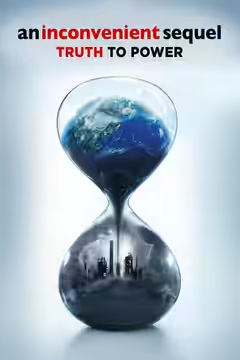
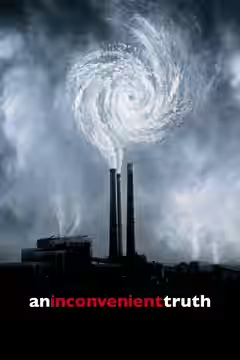
He had a long career in public office before any of this, and the presentation existed before the films; the films are what he did next. Davis Guggenheim filmed the lecture in 2006 as An Inconvenient Truth, and the surprise is how little it needs. Gore explains, illustrates and gives the information time to trouble us, and it does. We were frightened by his account of accelerating warming, because the low-key delivery made us attend to the lines rather than to him. He then set up the Climate Reality Project to train other people to give the same talk, and in 2017 Jon Shenk and Bonni Cohen followed him round the world for An Inconvenient Sequel: Truth to Power.
The trouble, both times, is the man. Guggenheim keeps stopping the lecture to explain the lecturer, with passages of personal history that tell us about a sincerity we could already see. Shenk and Cohen go further and make him the subject, with the lecture moved to the background. Shenk, who also shoots it, stands Gore beside a channel of meltwater in Greenland the width of a road and holds the shot until the roar does the talking, and the Paris section, cut by Don Bernier and Colin Nusbaum as calls and corridors, is the one stretch in either film where Gore is doing something rather than explaining it. But the film cannot pass a ballroom without cutting to the audience on its feet, Jeff Beal puts strings under every speech, and by the hour mark it has settled into a loop of disaster then applause. Gore wrote both films. He did not write himself out of either.
The first film closes on his line: "We have everything that we need to reduce carbon emissions, everything but political will. But in America, the will to act is a renewable resource." It is the best thing he has written for the screen, and the sequel's weakness is that it plainly believes the will in question is his. If you watch one, watch the 2006 film, and watch it for the slides. The man is interesting. The graph is the point.
Biography
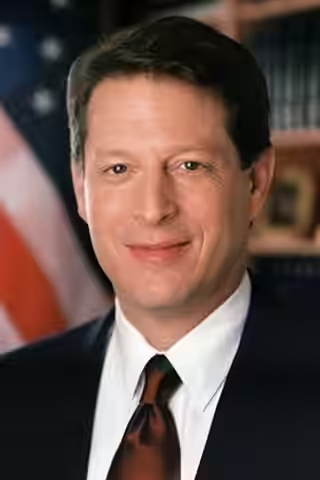
Albert Arnold 'Al' Gore Jr. is an American politician, author and environmental activist who has contributed to several films and television programmes. He served as the 45th Vice President of the United States from 1993 to 2001.
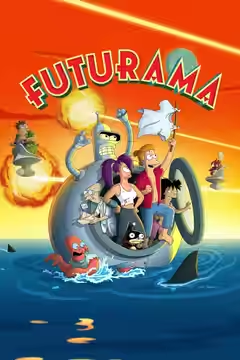
Gore wrote and appeared as himself in the documentary An Inconvenient Truth (2006), directed by Davis Guggenheim. He has also voiced himself in episodes of the animated series Futurama (from 1999) and its film Futurama: Bender's Big Score (2007), and appeared as himself in 30 Rock (2006–2009).
In 2007 Gore shared the Nobel Peace Prize with the Intergovernmental Panel on Climate Change for efforts to build greater knowledge about climate change.