Alex Gansa writes thrillers that turn on a single doubt and hold it for as long as they can. In Homeland he held it for three fine seasons, which is longer than most; the series then kept going for five more.
Fi1m perspective
The Gansa habit, as far as we have seen it, is to put one unanswerable question at the centre of a series and decline to answer it for as long as the audience will stand. In Homeland (2011) the question is whether Nicholas Brody (Damian Lewis), flown home from captivity to a hero's welcome, is an American who survived or a weapon that has been posted back. Carrie Mathison (Claire Danes) asks it with no evidence, no permission and a diagnosis she is hiding. Twelve episodes are built on that doubt and almost nothing else, and it is enough.
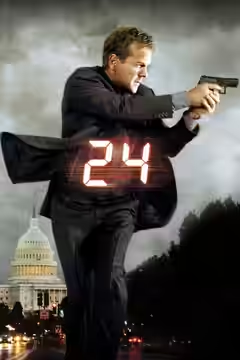
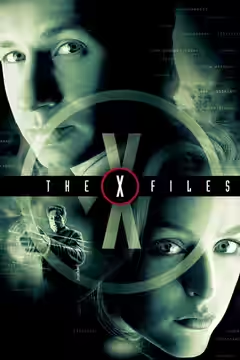
He came up as one half of a pair. He and Howard Gordon began writing together on Beauty and the Beast in the late 1980s and moved to The X-Files (1993) for its first two seasons. Then came a decade largely apart, on other people's programmes (Dawson's Creek, Entourage, Numb3rs) and on two short-lived series of Gansa's own, Maximum Bob (1998) and Wolf Lake (2001), before he rejoined Gordon on 24 for its last two seasons. Our review of The X-Files does not single out his episodes and we will not pretend to. Homeland, built with Gordon and Gideon Raff on Raff's Israeli series Prisoners of War, is the work we can judge him by. On 24 the two of them had spent years asking how the man with the gun stops the bomb; Homeland asks whether the man with the gun might be wrong.
Gansa is good at pilots and good at seasons. The first run of Homeland is as tight and doubtful as any spy thriller television has made. He talks to intelligence professionals and journalists and puts what they tell him on screen, and he is candid about the limits: "We do try to be as accurate as we can, but we take license all over the place." We remember that first season with some discomfort, because for several episodes we wanted Carrie to be proved right and only slowly noticed what that would mean for Brody. That is exactly where the scripts had put us, and Danes and Lewis kept us there.
The doubt cannot last, and a series built on a doubt has a problem the day it is settled. Some viewers found the central mystery slow to resolve across the first two seasons; our complaint runs the other way, that once it is resolved the show has to find a new reason to exist, and it does so five times. Homeland ran to eight seasons and 96 episodes. By our reckoning it had said its piece by the end of the third.
We recommend those three seasons warmly. The rest we leave to viewers who have grown fond of the people in them, which is a legitimate reason to keep watching and not the same as a reason to keep making. Gansa spent nine years becoming an expert in one small, frightened corner of American intelligence. Whatever the next subject is, we would like to see him leave it a little sooner.
Biography
Alex Gansa is an American screenwriter and television producer. He began his career writing for the CBS series Beauty and the Beast (1987) and later served as a writer and supervising producer on the first two seasons of The X-Files (1993), often collaborating with Howard Gordon.
Gansa contributed to Dawson's Creek (1998) and joined the writing staff of 24 (2001) for its seventh season. He co-developed the Showtime series Homeland (2011) with Gordon and Gideon Raff, serving as executive producer and showrunner. His production company is Cherry Pie Productions.
For the Homeland pilot, Gansa shared a Primetime Emmy Award for Outstanding Writing for a Drama Series; the series also won for Outstanding Drama Series.