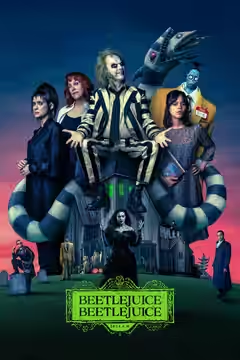
Alfred Gough, always with Miles Millar, takes a famous name, removes the thing everyone knows it for and hands what is left to a teenager. The premises are his best work. Beetlejuice Beetlejuice ran five plots where two would do, and that is typical.
Fi1m perspective
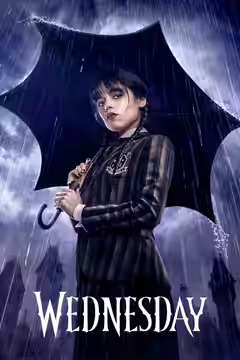
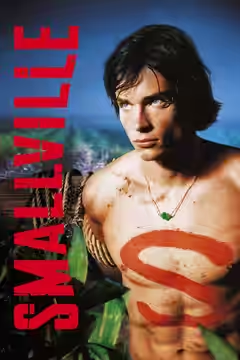
A boy on a Kansas farm can outrun a truck and does not know why. A girl at a boarding school treats the supernatural mystery around her with complete severity, and the severity is the joke. Alfred Gough's scripts, written for a quarter of a century with Miles Millar, start with someone young who has been given something too large for them, and with a famous property stripped of its most famous feature. Smallville (2001) took Superman and removed the cape, the flying and Metropolis. Wednesday (2022) took the Addams girl out of the family house and put her in a school. In Smallville's case the idea is stated in the first hour, and it is a good one.
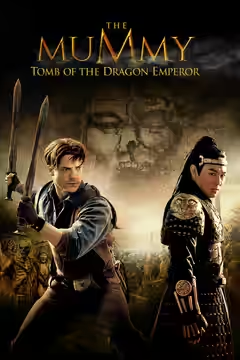
The partnership began in the late 1990s, after the two met at USC, and it has worked the same way since: they break the story together, outline at length and write in the same room. Through the 2000s that produced features, Shanghai Noon (2000), Spider-Man 2 (2004) and The Mummy: Tomb of the Dragon Emperor (2008), while Smallville ran alongside them. They ran that series for seven seasons and left in 2008; it carried on without them until 2011. Into the Badlands (2015) and The Shannara Chronicles (2016) followed, and then Tim Burton, first on Wednesday and then on Beetlejuice Beetlejuice (2024).
What works is the sturdiness. The first two or three seasons of Smallville are proper Tuesday-night television, warm and better acted than they needed to be, chiefly by the Luthors. Wednesday gives Jenna Ortega a heroine whose severity is funny in itself. Beetlejuice Beetlejuice hands Catherine O'Hara the sharpest lines in the film and the one running joke that pays off every time. We laughed at every one of Delia's lines, and somewhere in the middle we noticed we had lost track of which of the five plots we were in and did not much mind, which is the film's problem in a sentence.
What does not work is the same thing each time, at different lengths. Smallville ran to 216 episodes, about a third of them the same episode, and its central romance went round in circles the writers have since admitted regretting. Wednesday keeps its heroine busy with the complications of any teenage sleuth and shows the conventions of school television rather too much respect; Ortega cannot make every predictable development feel like a discovery. Beetlejuice Beetlejuice runs five plots when two would do, and a scene ends when its joke does. Burton is the director who gets the most out of them, because he supplies the tone the pages leave to him.
Gough has said the pair once kept a hard and fast rule never to write more than three lines of exposition. They keep it, too; nobody in their scripts stands still and explains. What they have never rationed is incident. Whatever famous name they take up next, we will want to be there for the idea. We would also, for once, like them to stop at two plots.
Biography
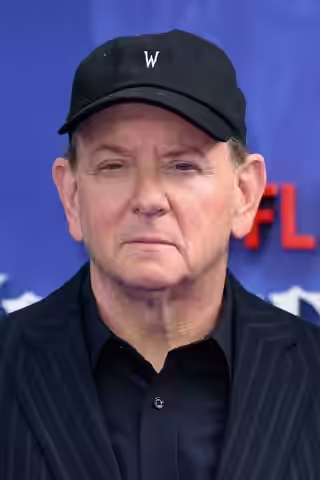
Alfred Gough is an American screenwriter and producer. Born on 22 August 1967 in Leonardtown, Maryland, he graduated from the University of Southern California, where he began his long-term writing partnership with Miles Millar.
Gough and Millar co-created the television series Smallville (2001) and Wednesday (2022). Their film credits include the story for Spider-Man 2 (2004) and screenplays for Shanghai Noon (2000), Shanghai Knights (2003), The Mummy: Tomb of the Dragon Emperor (2008) and Beetlejuice Beetlejuice (2024).